Faculty of Science and Engineering, Doshisha University, 1-3 TataraMiyakodani, Kyotanabe, Kyoto, 610-0321, Japan.
Graduate School of Biostudies, Kyoto University, Yoshida Konoe-cho, Sakyo-ku, Kyoto, 606-8501, Japan.
Sci Rep. 2021 Oct 11;11(1):20099. doi: 10.1038/s41598-021-99711-0.
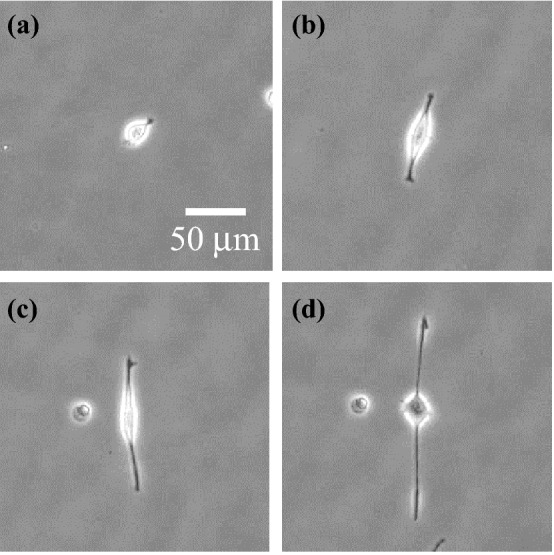
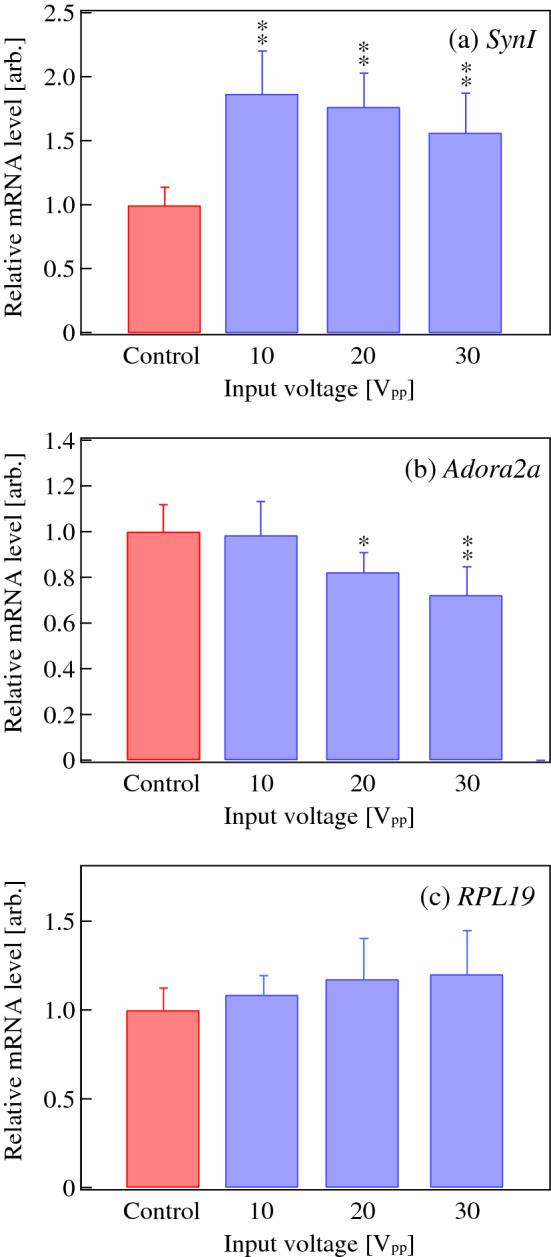
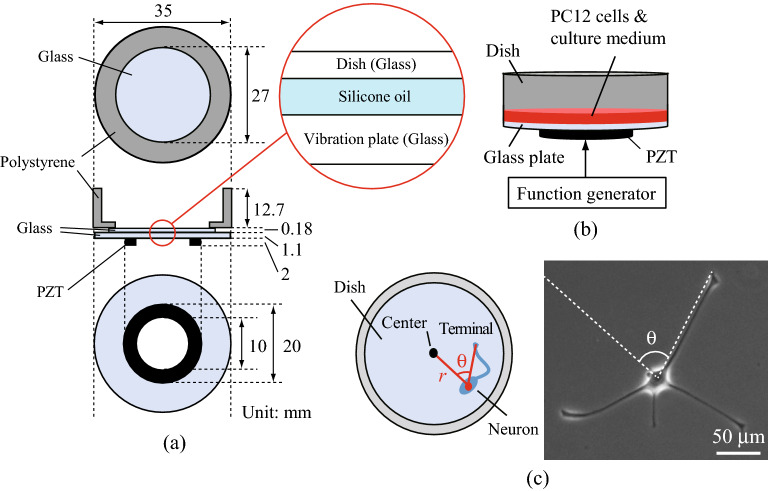
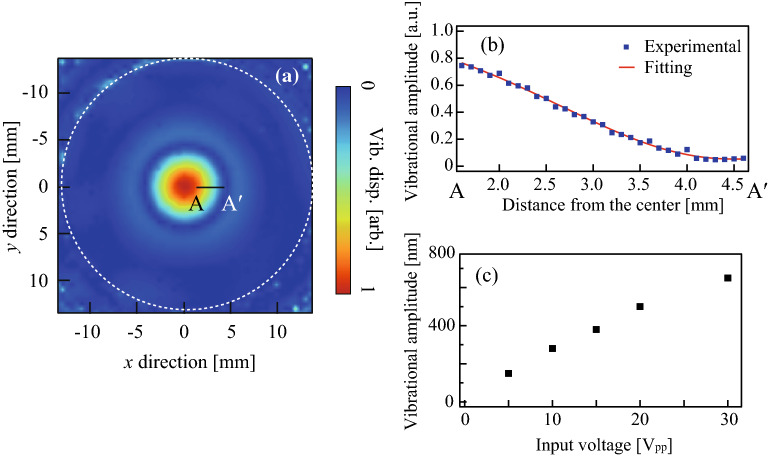
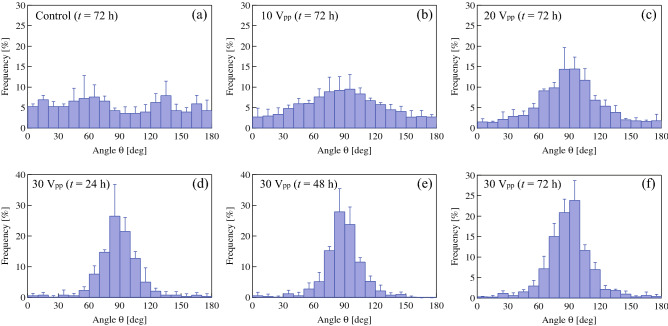
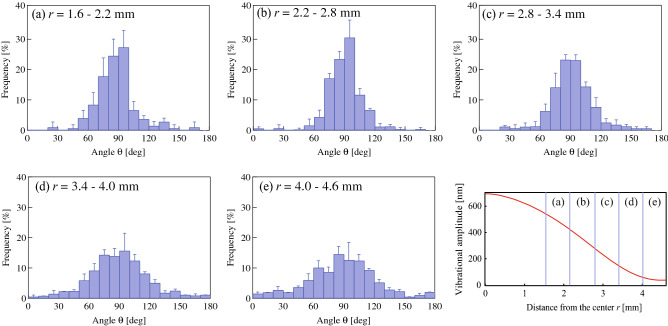
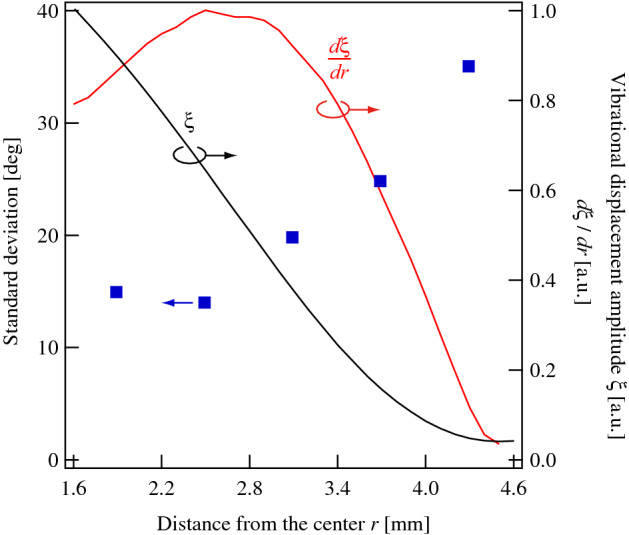
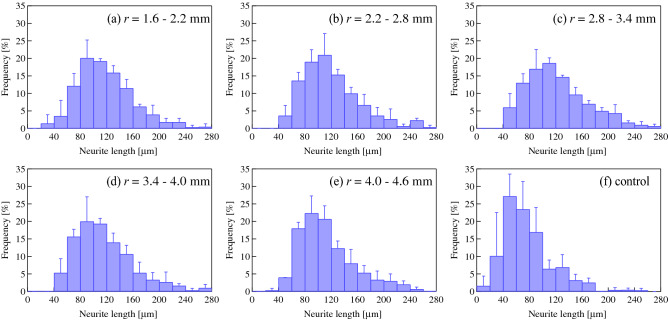
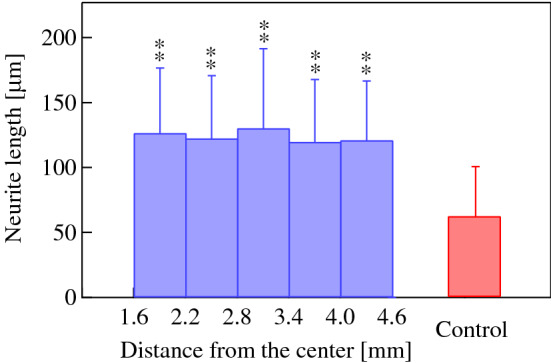
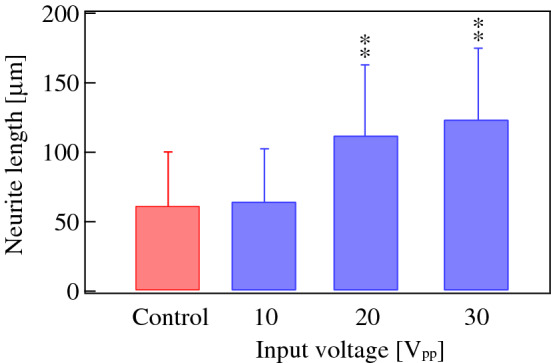
This study investigated a method to control neurite outgrowth direction using ultrasound vibration. An ultrasound cell culture dish comprising a glass-bottom culture surface and a glass disc with an ultrasound transducer was fabricated, and undifferentiated neuron-like PC12 cells were grown on the dish as an adherent culture. The 78 kHz resonant concentric flexural vibration mode of the dish was used to quantitatively evaluate the neurite outgrowth direction and length. Time-lapse imaging of cells was performed for 72 h under ultrasound excitation. Unsonicated neurites grew in random directions, whereas neurite outgrowth was circumferentially oriented during ultrasonication in a power-dependent manner. The neurite orientation correlated with the spatial gradient of the ultrasound vibration, implying that neurites tend to grow in directions along which the vibrational amplitude does not change. Ultrasonication with 30 V for 72 h increased the neurite length by 99.7% compared with that observed in unsonicated cells.
本研究探索了一种使用超声振动控制神经突生长方向的方法。制备了一种包含玻璃底培养表面和带有超声换能器的玻璃盘的超声细胞培养皿,并在培养皿上培养作为贴壁培养的未分化神经元样 PC12 细胞。使用该培养皿的 78kHz 共振同心弯曲振动模式来定量评估神经突的生长方向和长度。在超声激发下进行 72 小时的细胞延时成像。在未超声处理的情况下,神经突随机生长,而在超声处理时,神经突的生长呈圆周方向,且呈功率依赖性。神经突的取向与超声振动的空间梯度相关,这表明神经突倾向于沿振动幅度不变的方向生长。与未超声处理的细胞相比,30V 超声处理 72 小时后,神经突长度增加了 99.7%。