Hoefflin Rouven, Harlander Sabine, Abhari Behnaz A, Peighambari Asin, Adlesic Mojca, Seidel Philipp, Zodel Kyra, Haug Stefan, Göcmen Burulca, Li Yong, Lahrmann Bernd, Grabe Niels, Heide Danijela, Boerries Melanie, Köttgen Anna, Heikenwalder Mathias, Frew Ian J
Department of Medicine I, Medical Center, Faculty of Medicine, University of Freiburg, 79106 Freiburg, Germany.
Institute of Physiology, University of Zurich, 8057 Zurich, Switzerland.
Cancers (Basel). 2021 Sep 25;13(19):4801. doi: 10.3390/cancers13194801.
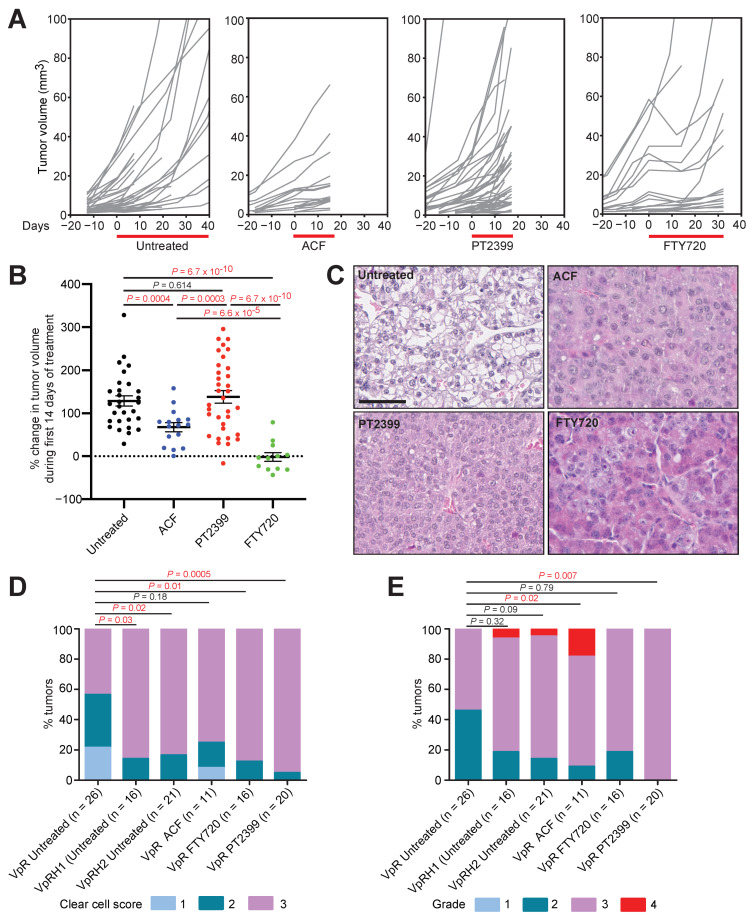
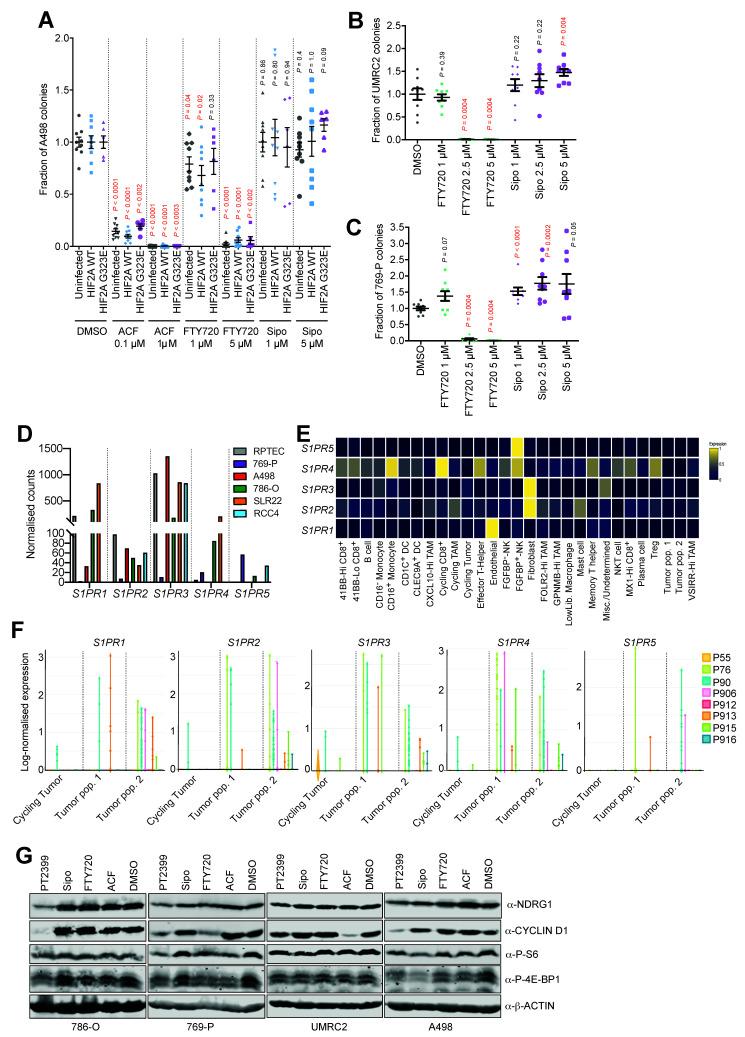
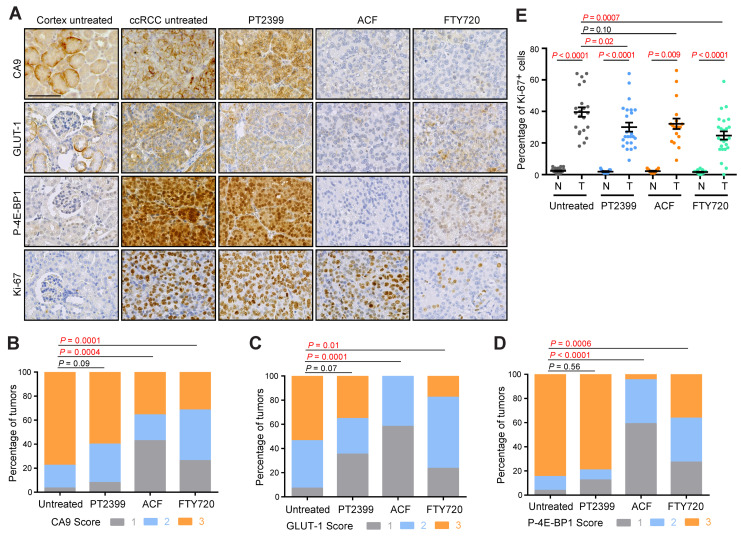
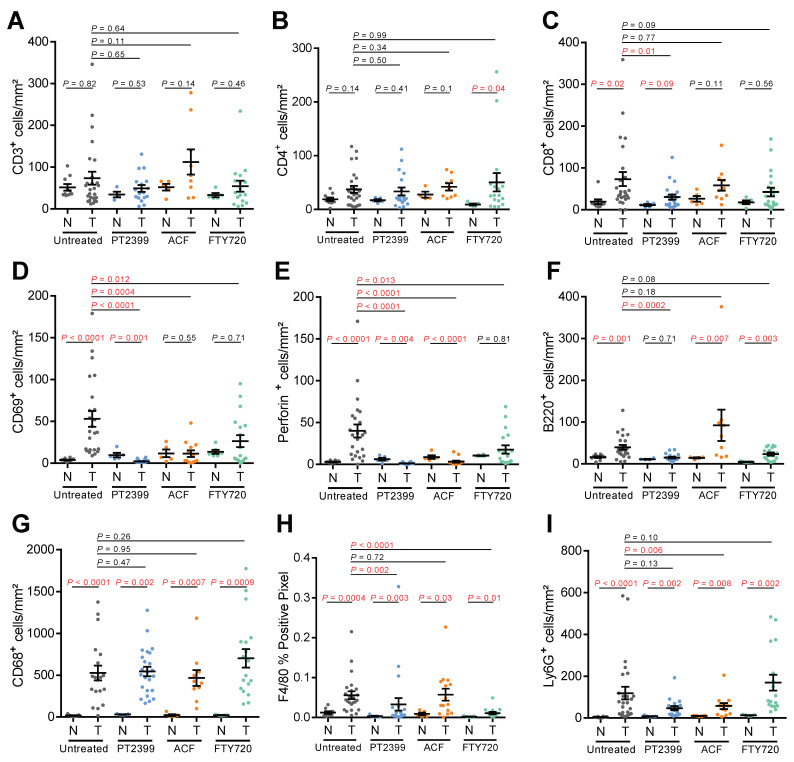
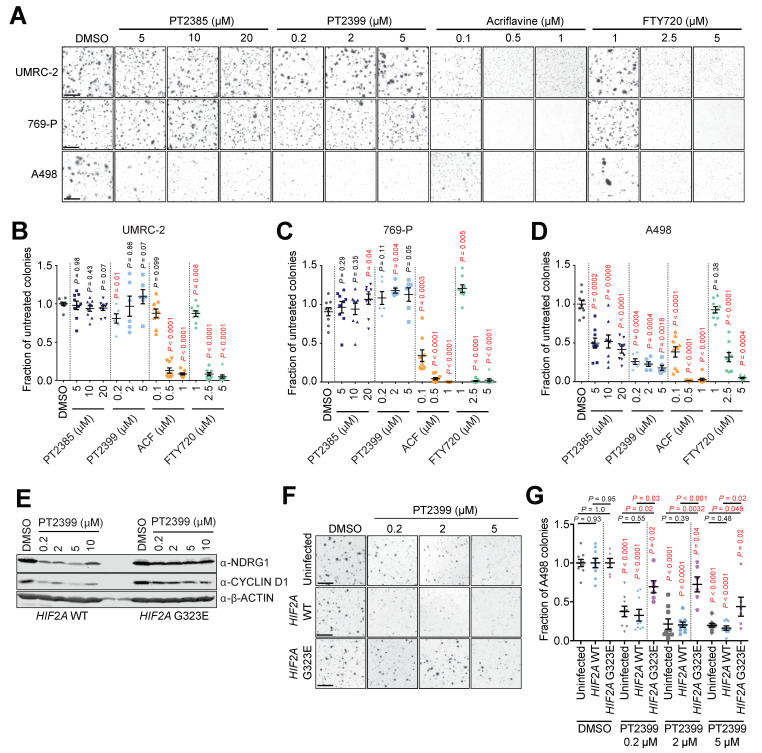
Specific inhibitors of HIF-2α have recently been approved for the treatment of ccRCC in VHL disease patients and have shown encouraging results in clinical trials for metastatic sporadic ccRCC. However, not all patients respond to therapy and pre-clinical and clinical studies indicate that intrinsic as well as acquired resistance mechanisms to HIF-2α inhibitors are likely to represent upcoming clinical challenges. It would be desirable to have additional therapeutic options for the treatment of HIF-2α inhibitor resistant ccRCCs. Here we investigated the effects on tumor growth and on the tumor microenvironment of three different direct and indirect HIF-α inhibitors, namely the HIF-2α-specific inhibitor PT2399, the dual HIF-1α/HIF-2α inhibitor Acriflavine, and the S1P signaling pathway inhibitor FTY720, in the autochthonous mutant ccRCC mouse model and validated these findings in human ccRCC cell culture models. We show that FTY720 and Acriflavine exhibit therapeutic activity in several different settings of HIF-2α inhibitor resistance. We also identify that HIF-2α inhibition strongly suppresses T cell activation in ccRCC. These findings suggest prioritization of sphingosine pathway inhibitors for clinical testing in ccRCC patients and also suggest that HIF-2α inhibitors may inhibit anti-tumor immunity and might therefore be contraindicated for combination therapies with immune checkpoint inhibitors.
HIF-2α特异性抑制剂最近已被批准用于治疗VHL病患者的透明细胞肾细胞癌(ccRCC),并且在转移性散发性ccRCC的临床试验中显示出令人鼓舞的结果。然而,并非所有患者都对治疗有反应,临床前和临床研究表明,对HIF-2α抑制剂的内在以及获得性耐药机制可能构成即将到来的临床挑战。对于治疗对HIF-2α抑制剂耐药的ccRCC,有额外的治疗选择将是可取的。在这里,我们在原位突变ccRCC小鼠模型中研究了三种不同的直接和间接HIF-α抑制剂,即HIF-2α特异性抑制剂PT2399、双HIF-1α/HIF-2α抑制剂吖啶黄素和S1P信号通路抑制剂FTY720对肿瘤生长和肿瘤微环境的影响,并在人ccRCC细胞培养模型中验证了这些发现。我们表明,FTY720和吖啶黄素在几种不同的HIF-2α抑制剂耐药情况下均表现出治疗活性。我们还发现,HIF-2α抑制强烈抑制ccRCC中的T细胞活化。这些发现表明应优先对ccRCC患者进行鞘氨醇途径抑制剂的临床试验,也表明HIF-2α抑制剂可能会抑制抗肿瘤免疫,因此可能禁忌与免疫检查点抑制剂联合治疗。