Ranieri Danilo, Guttieri Luisa, Raffa Salvatore, Torrisi Maria Rosaria, Belleudi Francesca
Department of Clinical and Molecular Medicine, Sapienza University of Rome, 00161 Rome, Italy.
Laboratory of Ultrastructural Pathology, Unit of Medical Genetics and Advanced Cellular Diagnostics,Department of Diagnostic Sciences, Sant'Andrea University Hospital, 00189 Rome, Italy.
Cancers (Basel). 2021 Oct 5;13(19):4993. doi: 10.3390/cancers13194993.
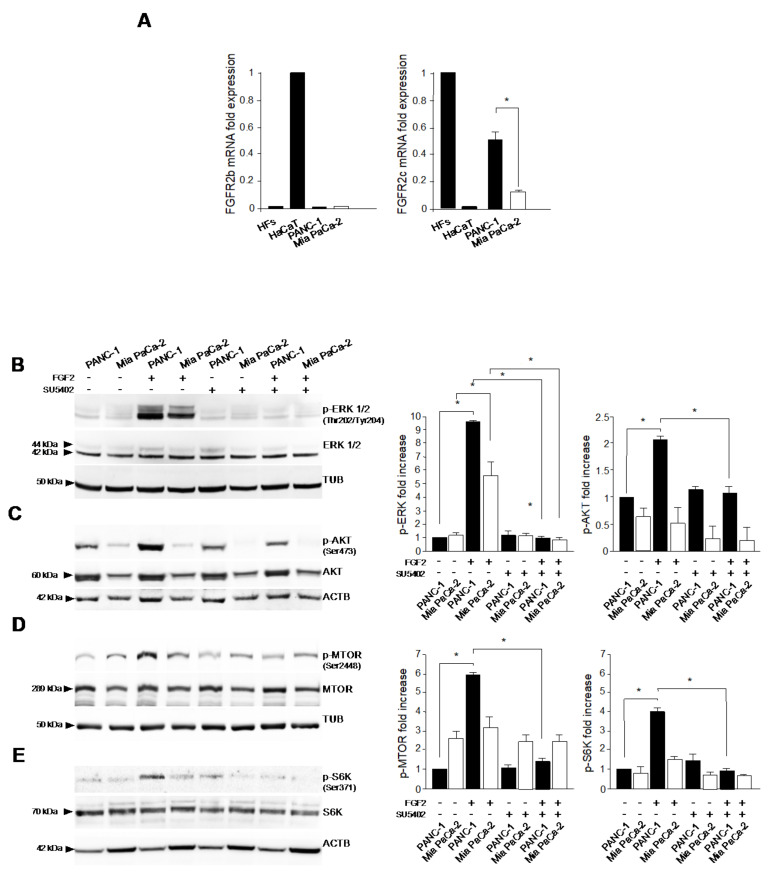
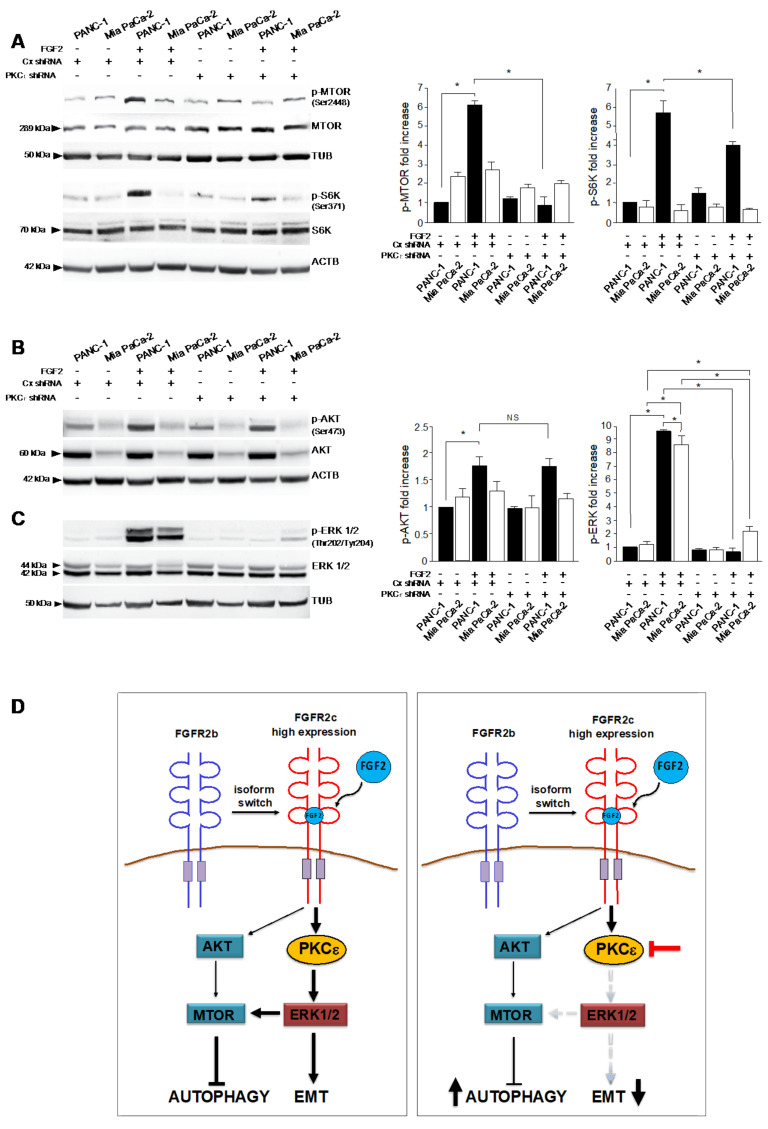
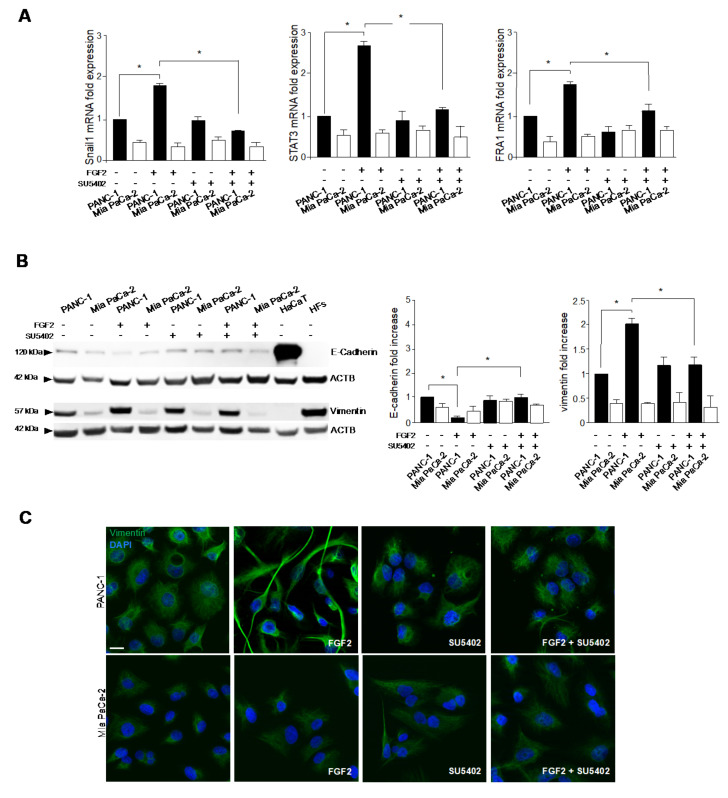
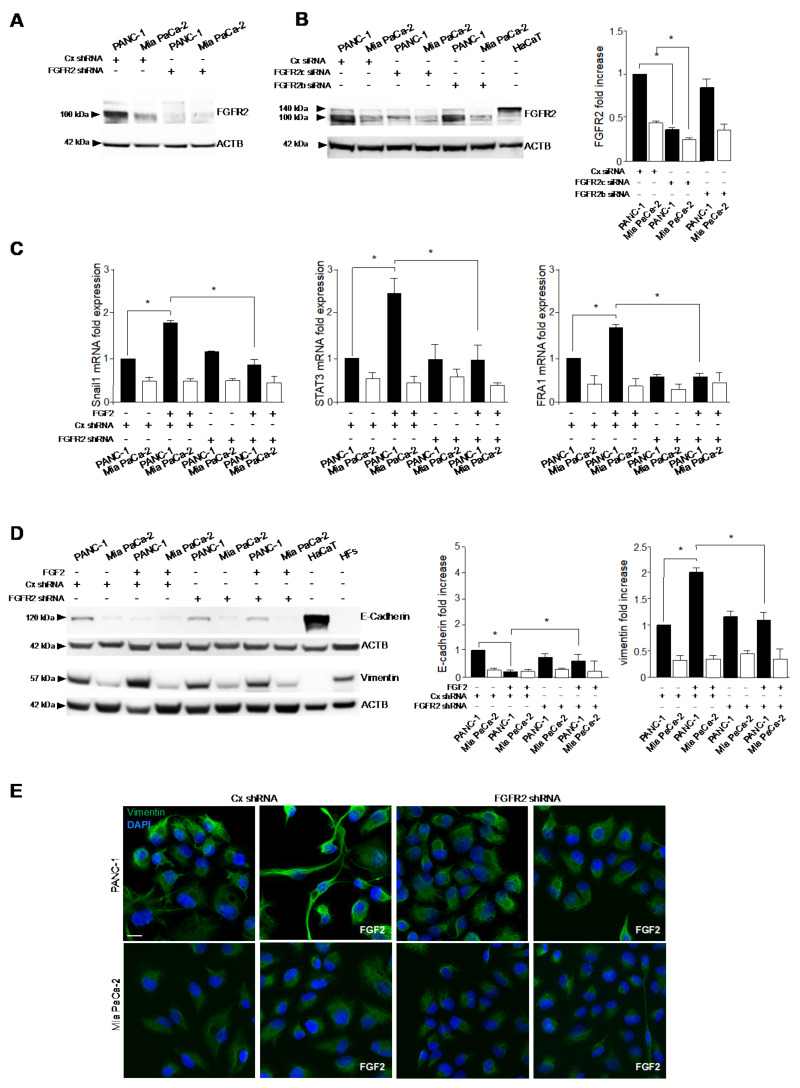
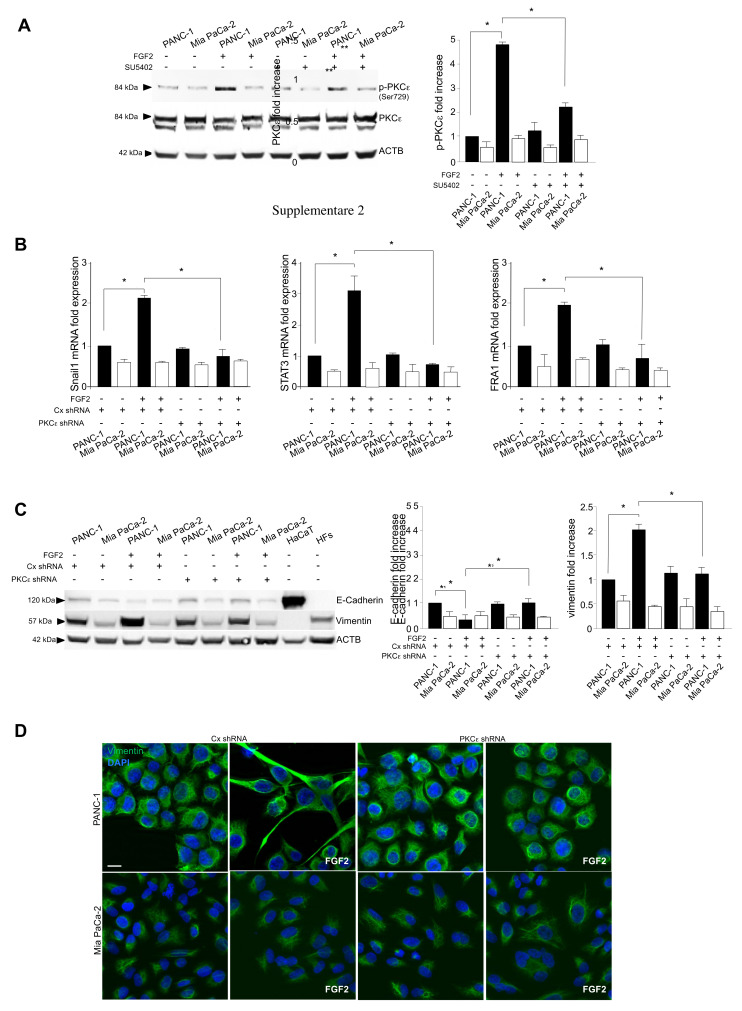
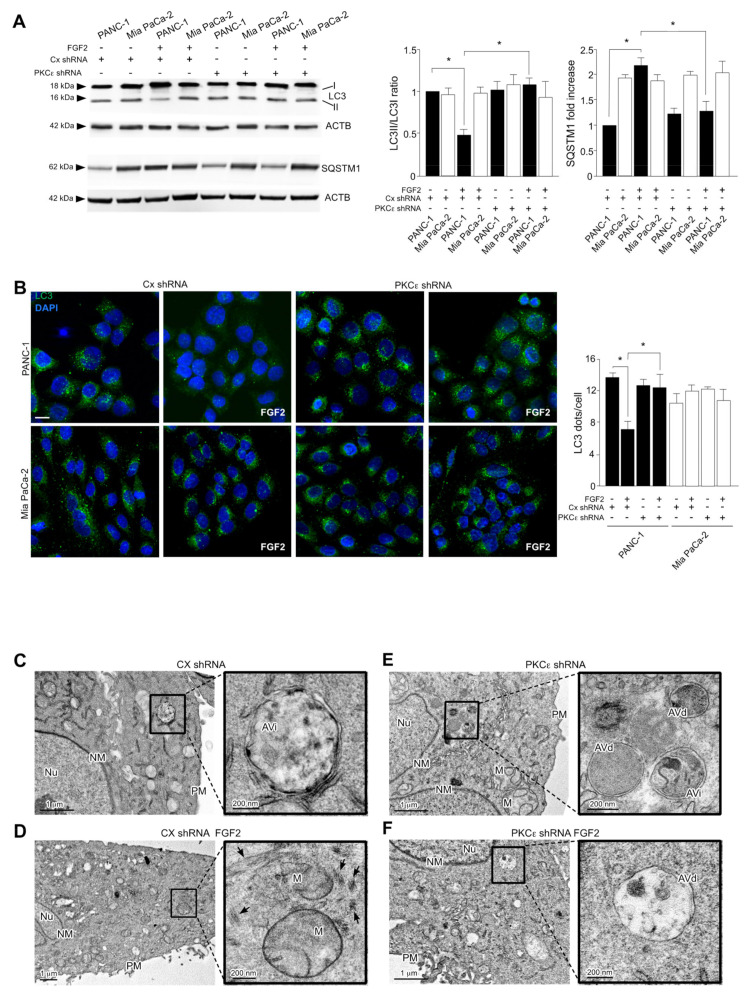
Pancreatic ductal adenocarcinoma (PDAC) is a treatment-resistant malignancy characterized by a high malignant phenotype including acquired EMT signature and deregulated autophagy. Since we have previously described that the aberrant expression of the mesenchymal FGFR2c and the triggering of the downstream PKCε signaling are involved in epidermal carcinogenesis, the aim of this work has been to assess the contribution of these oncogenic events also in the pancreatic context. Biochemical, molecular and immunofluorescence approaches showed that FGFR2c expression impacts on PDAC cell responsiveness to FGF2 in terms of intracellular signaling activation, upregulation of EMT-related transcription factors and modulation of epithelial and mesenchymal markers compatible with the pathological EMT. Moreover, shut-off via specific protein depletion of PKCε signaling, activated by high expression of FGFR2c resulted in a reversion of EMT profile, as well as in a recovery of the autophagic process. The detailed biochemical analysis of the intracellular signaling indicated that PKCε, bypassing AKT and directly converging on ERK1/2, could be a signaling molecule downstream FGFR2c whose inhibition could be considered as possible effective therapeutic approach in counteracting aggressive phenotype in cancer.
胰腺导管腺癌(PDAC)是一种难治性恶性肿瘤,其特征为具有包括获得性上皮-间质转化(EMT)特征和自噬失调在内的高恶性表型。由于我们之前曾描述过间充质型FGFR2c的异常表达以及下游PKCε信号的激活参与了表皮癌的发生,因此本研究的目的是评估这些致癌事件在胰腺癌背景下的作用。生物化学、分子生物学和免疫荧光方法表明,FGFR2c的表达在细胞内信号激活、EMT相关转录因子上调以及与病理性EMT相符的上皮和间质标志物调节方面影响PDAC细胞对FGF2的反应性。此外,通过特异性蛋白质缺失关闭由FGFR2c高表达激活的PKCε信号,导致EMT特征逆转,以及自噬过程恢复。对细胞内信号的详细生化分析表明,PKCε绕过AKT并直接作用于ERK1/2,可能是FGFR2c下游的信号分子,抑制其活性可被视为对抗癌症侵袭性表型的一种可能有效的治疗方法。