School of Medicine, Department of Systems Medicine, University of Rome Tor Vergata, 00133 Rome, Italy.
Department of Systems Medicine, Medical Oncology, University of Rome Tor Vergata, 00133 Rome, Italy.
Int J Mol Sci. 2021 Oct 1;22(19):10672. doi: 10.3390/ijms221910672.
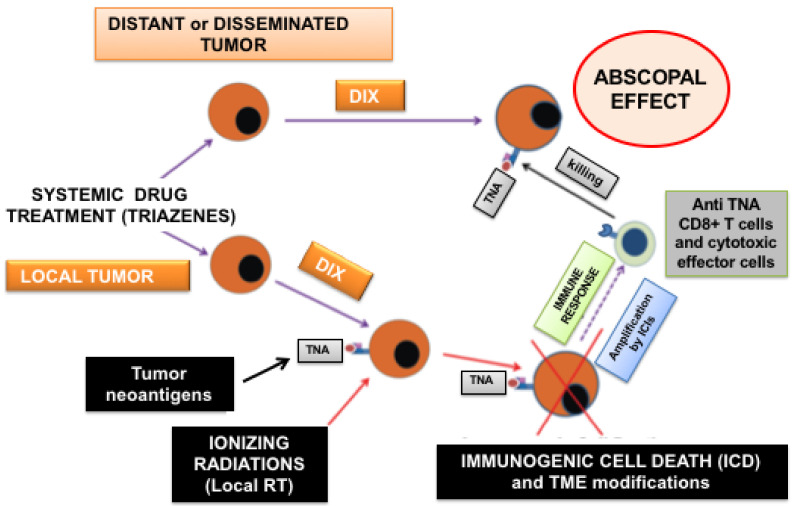
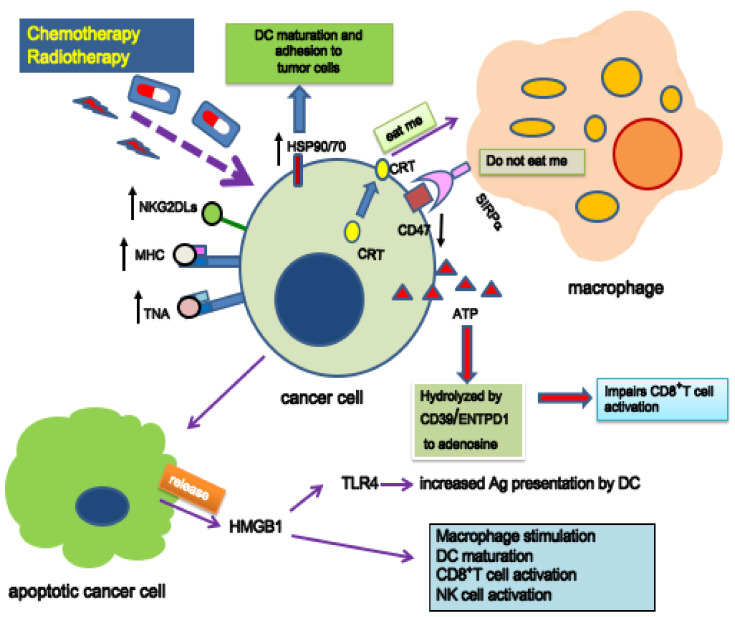
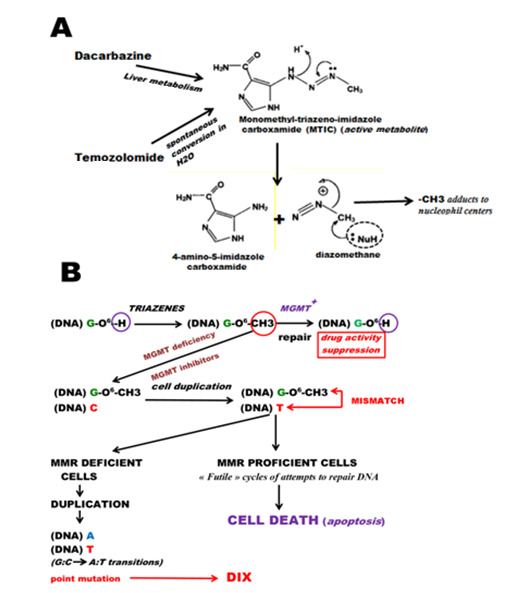
The current state of cancer treatment is still far from being satisfactory considering the strong impairment of patients' quality of life and the high lethality of malignant diseases. Therefore, it is critical for innovative approaches to be tested in the near future. In view of the crucial role that is played by tumor immunity, the present review provides essential information on the immune-mediated effects potentially generated by the interplay between ionizing radiation and cytotoxic antitumor agents when interacting with target malignant cells. Therefore, the radiation-dependent abscopal effect (i.e., a biological effect of ionizing radiation that occurs outside the irradiated field), the influence of cancer chemotherapy on the antigenic pattern of target neoplastic cells, and the immunogenic cell death (ICD) caused by anticancer agents are the main topics of this presentation. It is widely accepted that tumor immunity plays a fundamental role in generating an abscopal effect and that anticancer drugs can profoundly influence not only the host immune responses, but also the immunogenic pattern of malignant cells. Remarkably, several anticancer drugs impact both the abscopal effect and ICD. In addition, certain classes of anticancer agents are able to amplify already expressed tumor-associated antigens (TAA). More importantly, other drugs, especially triazenes, induce the appearance of new tumor neoantigens (TNA), a phenomenon that we termed drug-induced xenogenization (DIX). The adoption of the abscopal effect is proposed as a potential therapeutic modality when properly applied concomitantly with drug-induced increase in tumor cell immunogenicity and ICD. Although little to no preclinical or clinical studies are presently available on this subject, we discuss this issue in terms of potential mechanisms and therapeutic benefits. Upcoming investigations are aimed at evaluating how chemical anticancer drugs, radiation, and immunotherapies are interacting and cooperate in evoking the abscopal effect, tumor xenogenization and ICD, paving the way for new and possibly successful approaches in cancer therapy.
考虑到癌症患者生活质量的严重受损和恶性疾病的高致死率,目前的癌症治疗状况仍远不能令人满意。因此,在不久的将来测试创新方法至关重要。鉴于肿瘤免疫起着至关重要的作用,本综述提供了有关电离辐射与细胞毒性抗肿瘤药物相互作用时可能产生的免疫介导作用的重要信息,这些作用与靶恶性细胞相互作用。因此,辐射依赖性远隔效应(即电离辐射在照射野外发生的生物学效应)、癌症化疗对靶肿瘤细胞抗原模式的影响以及抗癌药物引起的免疫原性细胞死亡(ICD)是本报告的主要主题。人们普遍认为,肿瘤免疫在产生远隔效应中起着根本作用,抗癌药物不仅可以深刻影响宿主免疫反应,还可以影响恶性细胞的免疫原性模式。值得注意的是,几种抗癌药物既影响远隔效应又影响 ICD。此外,某些类别的抗癌药物能够放大已经表达的肿瘤相关抗原(TAA)。更重要的是,其他药物,特别是三嗪类药物,诱导新的肿瘤新生抗原(TNA)的出现,我们将这种现象称为药物诱导的异种化(DIX)。当适当应用于同时增加肿瘤细胞免疫原性和 ICD 时,远隔效应的采用被提议作为一种潜在的治疗方式。尽管目前在这个主题上几乎没有临床前或临床研究,但我们根据潜在的机制和治疗益处讨论了这个问题。即将进行的研究旨在评估化学抗癌药物、辐射和免疫疗法如何相互作用和合作,以引发远隔效应、肿瘤异种化和 ICD,为癌症治疗开辟新的、可能成功的方法。