School of Public Health and Preventive Medicine, Monash University, Melbourne 3004, Australia.
Institute for Mental and Physical Health and Clinical Translation, School of Medicine, Deakin University, Geelong 3220, Australia.
Int J Environ Res Public Health. 2021 Sep 27;18(19):10156. doi: 10.3390/ijerph181910156.
Injury is a leading contributor to the global disease burden in children, affecting their health-related quality of life (HRQoL)-yet valid estimates of burden are absent.
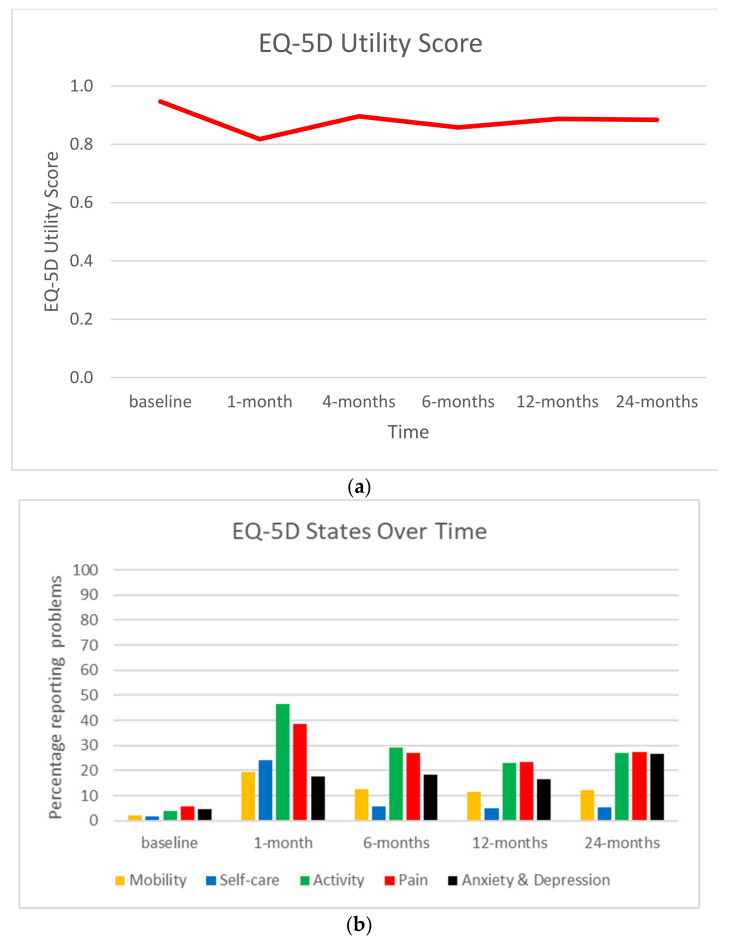
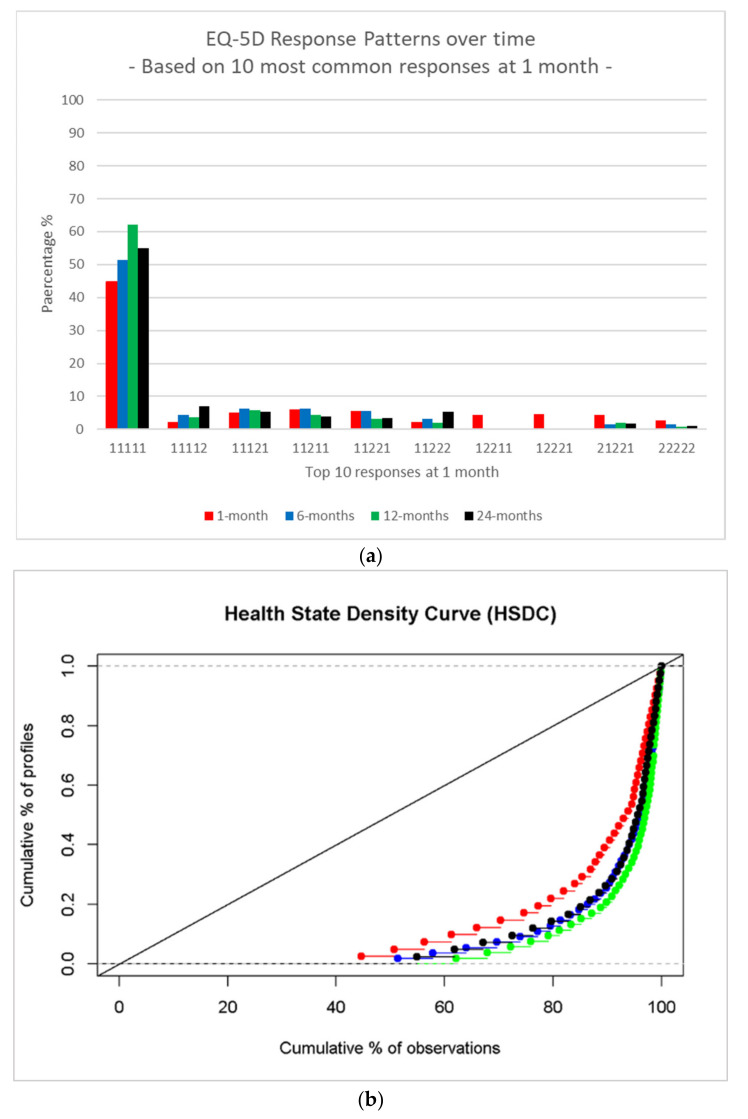
This study pooled longitudinal data from five cohort studies of pediatric injury survivors (5-17 years) at baseline, 1-, 4-, 6-, 12-, and 24- months ( = 2334). HRQoL post-injury was measured using the 3-level EQ-5D utility score (EQ-5D) and five health states (mobility, self-care, activity, pain, anxiety and depression (anxiety)).
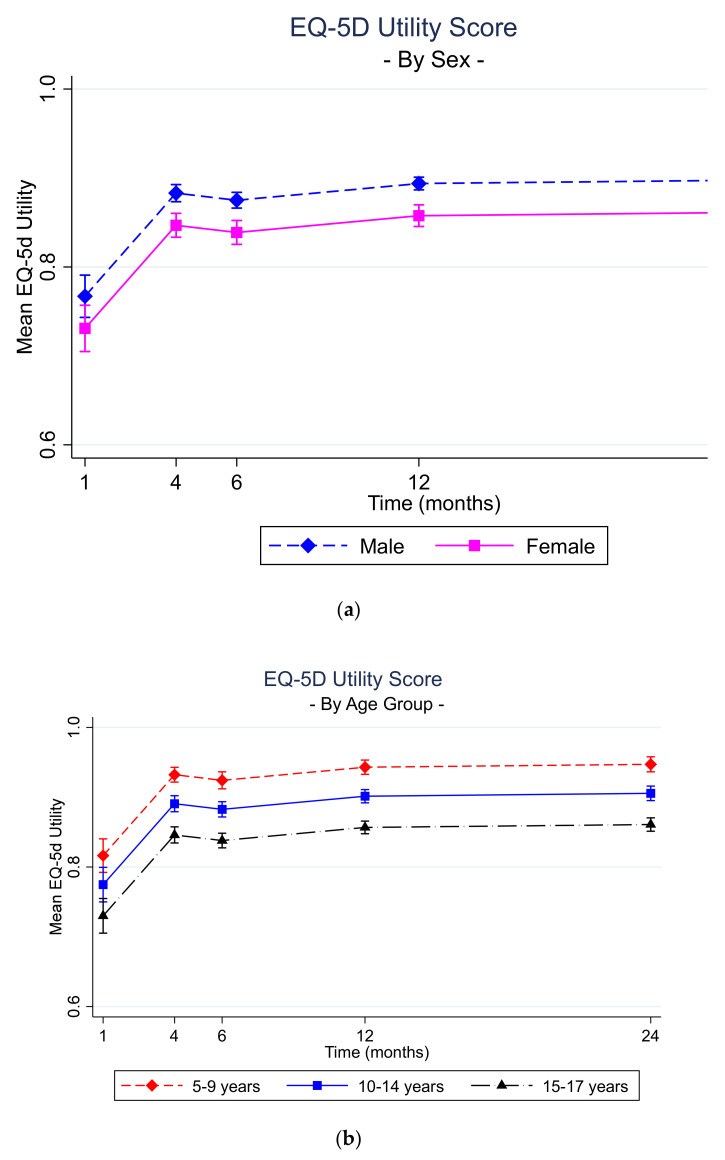
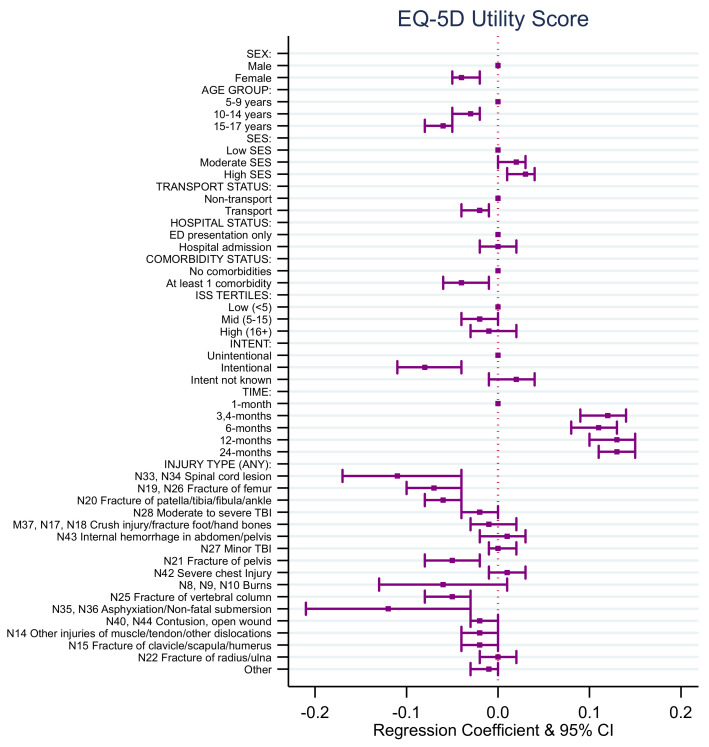
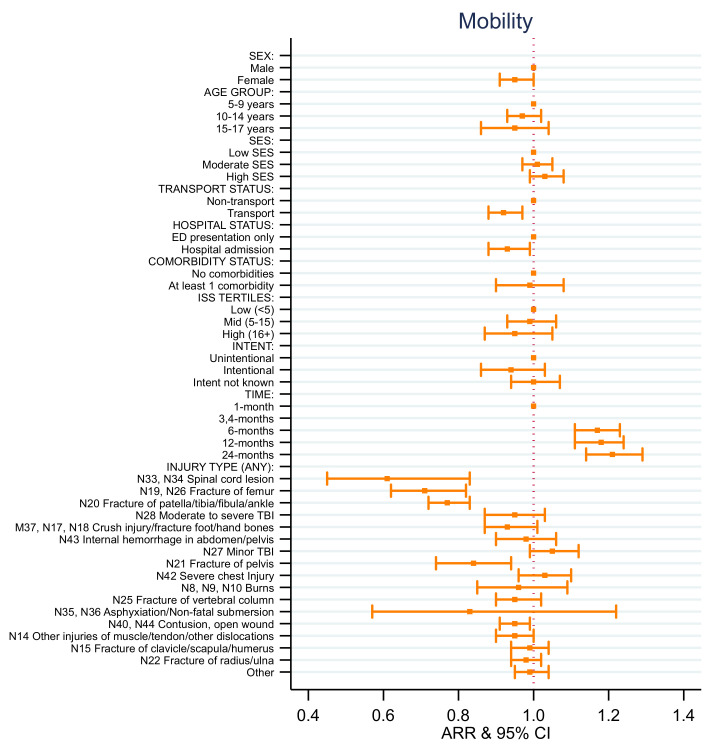
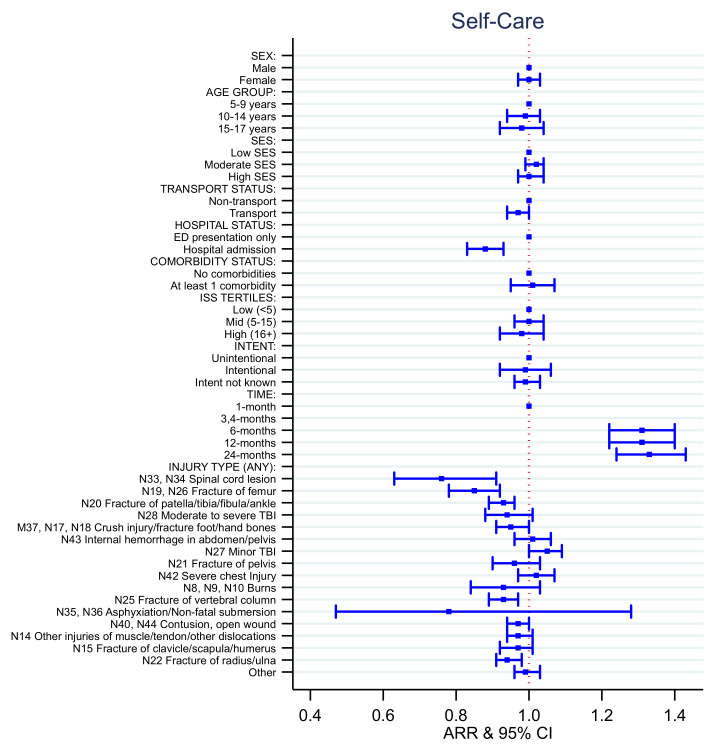
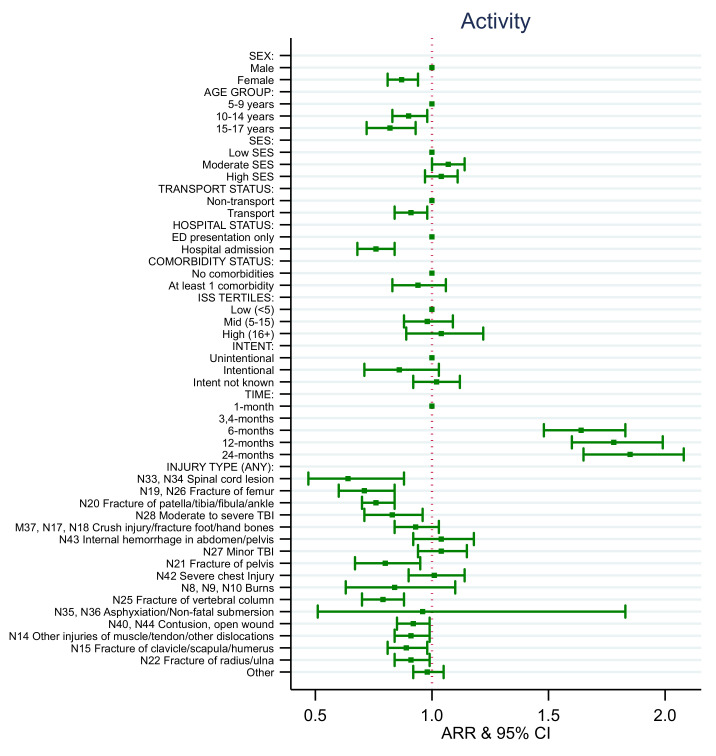
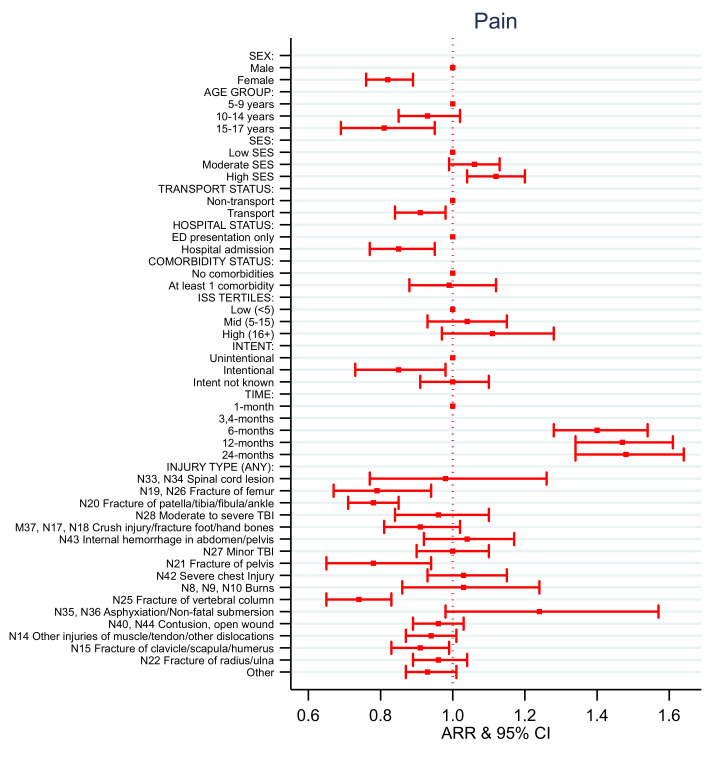
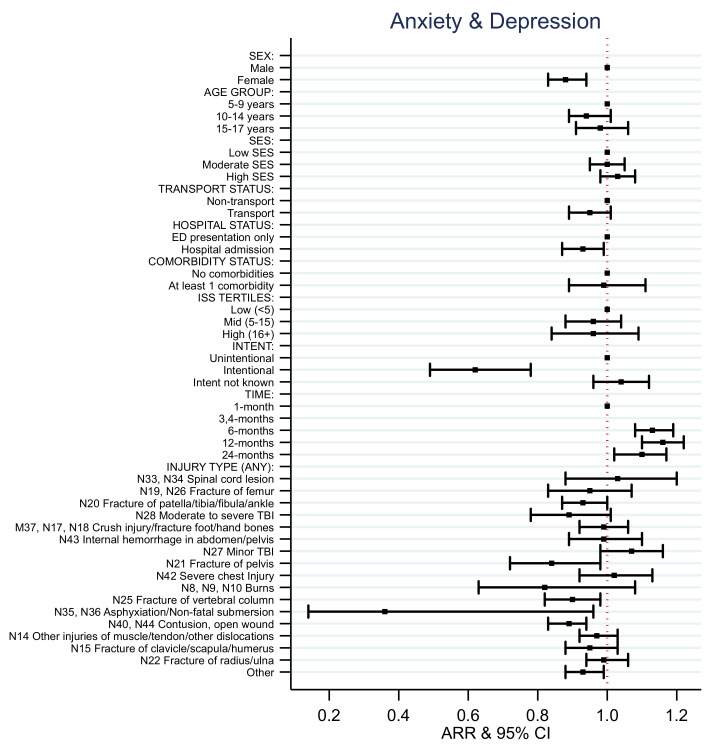
Mean EQ-5D post-injury did not return to baseline level (0.95) by 24 months (0.88) and was lower for females over time (-0.04, 95%CI -0.05, -0.02). A decreased adjusted risk ratio over time (ARR) was observed for intentional injuries (pain: 0.85, 95%CI 0.73,0.98; anxiety: 0.62, 95%CI 0.49,0.78); spinal cord injuries (mobility: 0.61, 95%CI 0.45,0.83), self-care: 0.76, 95%CI 0.63,0.91, activity: 0.64, 95%CI 0.47,0.88); moderate/severe traumatic brain injury (activity: 0.83, 95%CI 0.71,0.96). ARRs were also low for certain fractures, with various health states affected.
HRQoL outcomes over time for children and adolescents post-injury differed across key demographic and injury related attributes. HRQoL did not reach levels consistent with full health by 24 months with recovery plateauing from 6 to 24 months. Tailored interventions are required to respond to the varying post-injury recovery trajectories in this population.
伤害是导致儿童全球疾病负担的主要因素,影响其健康相关生活质量(HRQoL)-但目前缺乏有效的负担估计。
本研究汇集了五项儿科伤害幸存者队列研究的纵向数据(5-17 岁),基线时为 1、4、6、12 和 24 个月(= 2334)。使用三级 EQ-5D 效用评分(EQ-5D)和五种健康状况(移动性、自理能力、活动能力、疼痛、焦虑和抑郁(焦虑))测量受伤后的 HRQoL。
受伤后 24 个月时,平均 EQ-5D 未恢复到基线水平(0.95)(0.88),且女性随时间推移而降低(-0.04,95%CI-0.05,-0.02)。随着时间的推移,观察到与故意伤害(疼痛:0.85,95%CI 0.73,0.98;焦虑:0.62,95%CI 0.49,0.78)、脊髓损伤(移动性:0.61,95%CI 0.45,0.83)、自我保健:0.76,95%CI 0.63,0.91,活动:0.64,95%CI 0.47,0.88)、中度/重度创伤性脑损伤(活动:0.83,95%CI 0.71,0.96)的意外伤害相比,调整后的风险比(ARR)较低。某些骨折也会对各种健康状况产生影响,导致 ARR 降低。
受伤后儿童和青少年的 HRQoL 结果随时间而变化,与关键人口统计学和伤害相关特征不同。在 24 个月时,HRQoL 并未达到完全健康的水平,并且从 6 个月到 24 个月时,恢复趋于平稳。需要采取有针对性的干预措施来应对该人群中不同的受伤后恢复轨迹。