Analytical Chemistry and Food Technology Area, Faculty of Pharmacy, University of Castilla-La Mancha (UCLM), Avda. Doctor Jose María Sanchez Ibañez. S/N c.p., 02008 Albacete, Spain.
Pharmaceutical Technology Area, Faculty of Pharmacy, University of Castilla-La Mancha (UCLM), Avda. Doctor Jose María Sanchez Ibañez. S/N c.p., 02008 Albacete, Spain.
Molecules. 2021 Sep 30;26(19):5928. doi: 10.3390/molecules26195928.
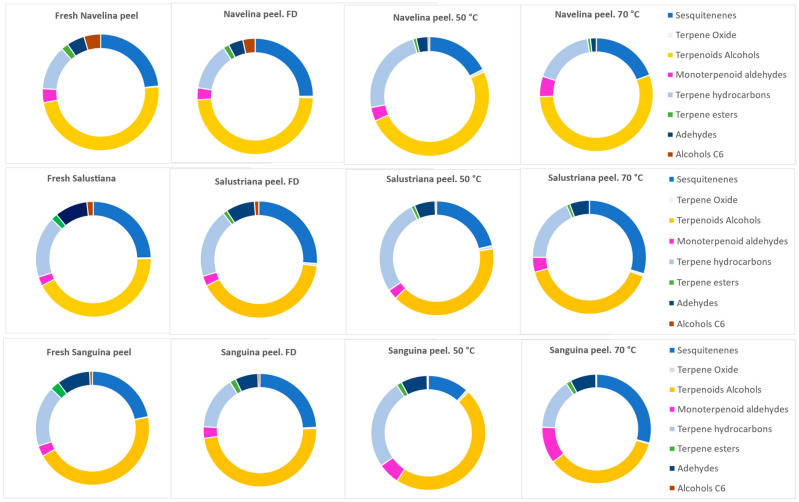
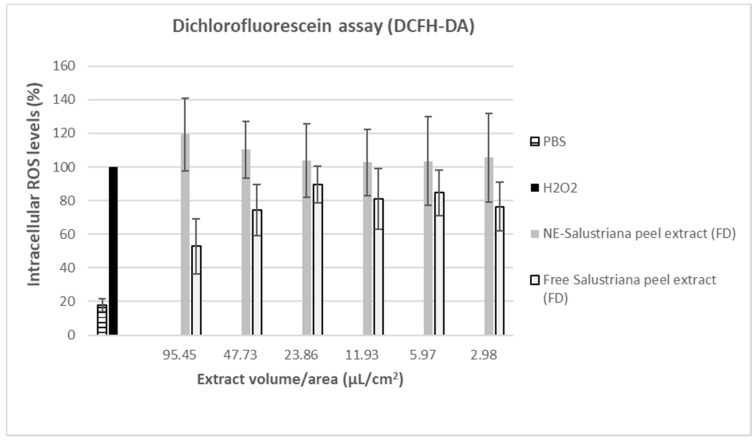
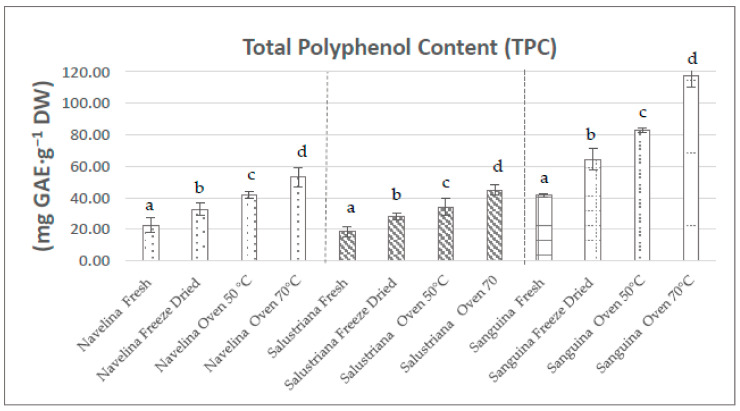
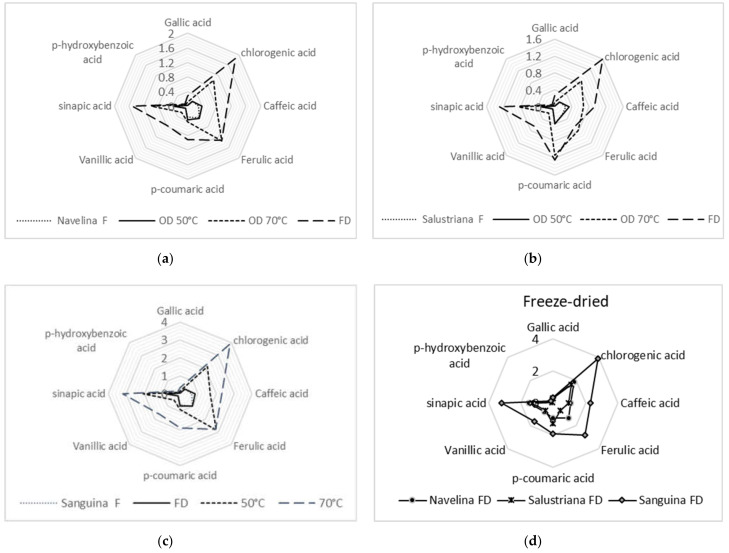
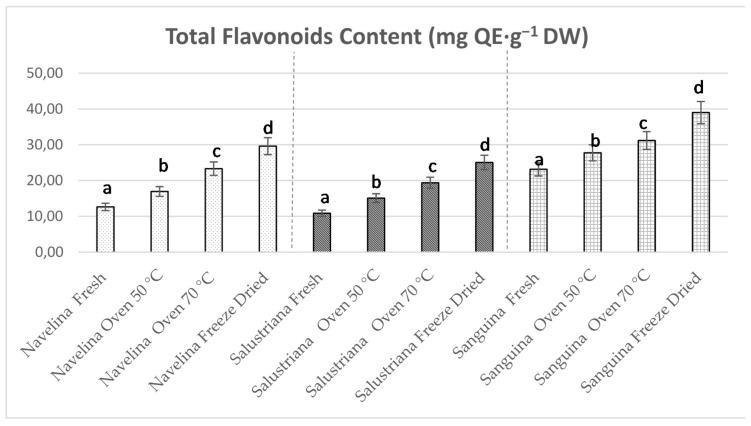
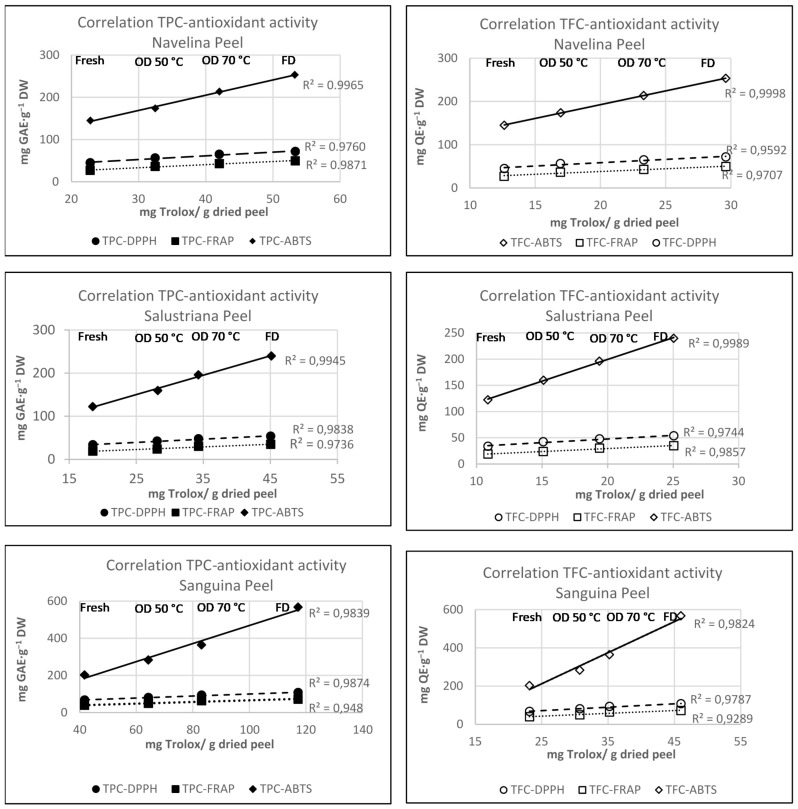
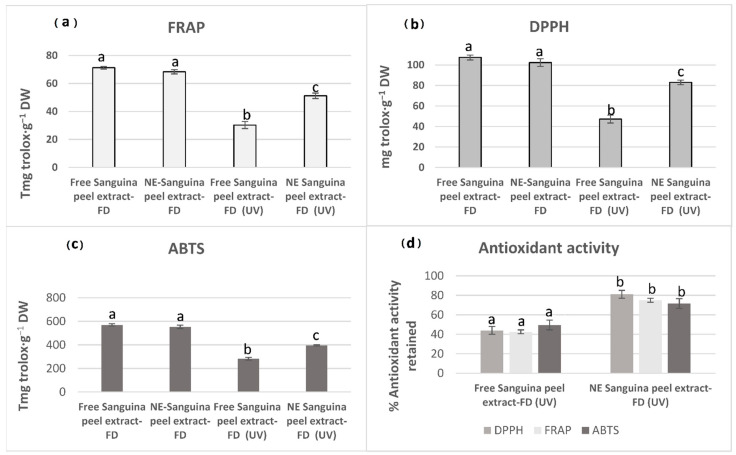
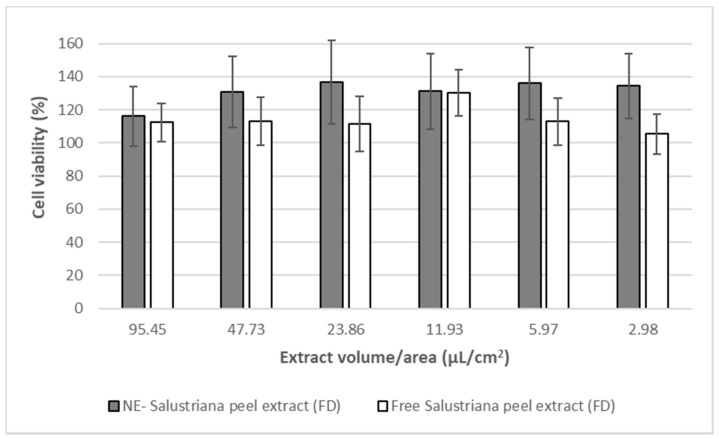
Orange peel by-products generated in the food industry are an important source of value-added compounds that can be potentially reused. In the current research, the effect of oven-drying (50-70 °C) and freeze-drying on the bioactive compounds and antioxidant potential from Navelina, Salustriana, and Sanguina peel waste was investigated using pressurized extraction (ASE). Sixty volatile components were identified by ASE-GC-MS. The levels of terpene derivatives (sesquitenenes, alcohols, aldehydes, hydrocarbons, and esters) remained practically unaffected among fresh and freeze-dried orange peels, whereas drying at 70 °C caused significative decreases in Navelina, Salustriana, and Sanguina peels. Hesperidin and narirutin were the main flavonoids quantified by HPLC-MS. Freeze-dried Sanguina peels showed the highest levels of total-polyphenols (113.3 mg GAE·g), total flavonoids (39.0 mg QE·g), outstanding values of hesperedin (187.6 µg·g), phenol acids (16.54 mg·g DW), and the greatest antioxidant values (DPPH•, FRAP, and ABTS assays) in comparison with oven-dried samples and the other varieties. Nanotechnology approaches allowed the formulation of antioxidant-loaded nanoemulsions, stabilized with lecithin, starting from orange peel extracts. Those provided 70-80% of protection against oxidative UV-radiation, also decreasing the ROS levels into the Caco-2 cells. Overall, pressurized extracts from freeze-drying orange peel can be considered a good source of natural antioxidants that could be exploited in food applications for the development of new products of commercial interest.
在食品工业中产生的橙皮副产物是一种有价值的化合物的重要来源,这些化合物可以被重新利用。在当前的研究中,使用加压提取(ASE)研究了烤箱干燥(50-70°C)和冷冻干燥对纳维利亚纳、萨卢斯特里亚纳和桑吉纳果皮废物中生物活性化合物和抗氧化潜力的影响。ASE-GC-MS 鉴定出 60 种挥发性成分。新鲜和冷冻干燥的橙皮中萜烯衍生物(倍半萜烯、醇、醛、烃和酯)的水平基本保持不变,而在 70°C 下干燥时,纳维利亚纳、萨卢斯特里亚纳和桑吉纳果皮的含量显著下降。HPLC-MS 定量了橙皮中的主要类黄酮为橙皮苷和柚皮苷。冷冻干燥的桑吉纳果皮表现出最高的总多酚(113.3mgGAE·g)、总类黄酮(39.0mgQE·g)、橙皮苷含量(187.6μg·g)、酚酸(16.54mg·gDW)和最大的抗氧化值(DPPH·、FRAP 和 ABTS 测定)与烤箱干燥的样品和其他品种相比。纳米技术方法允许从橙皮提取物中制备用卵磷脂稳定的抗氧化剂负载的纳米乳液。这些纳米乳液提供了 70-80%的抗氧化保护,防止了氧化 UV 辐射,还降低了 Caco-2 细胞中的 ROS 水平。总体而言,冷冻干燥橙皮的加压提取物可以被认为是天然抗氧化剂的良好来源,可以在食品应用中开发具有商业价值的新产品。