Department of Pathology, Medical School, Osaka University, Yamada-oka 2-2 Suita, Osaka, 565-0871, Japan.
Graduate School of Frontier Biosciences, Osaka University, Yamada-oka 2-2 Suita, Osaka, 565-0871, Japan.
Sci Rep. 2021 Oct 14;11(1):20472. doi: 10.1038/s41598-021-98940-7.
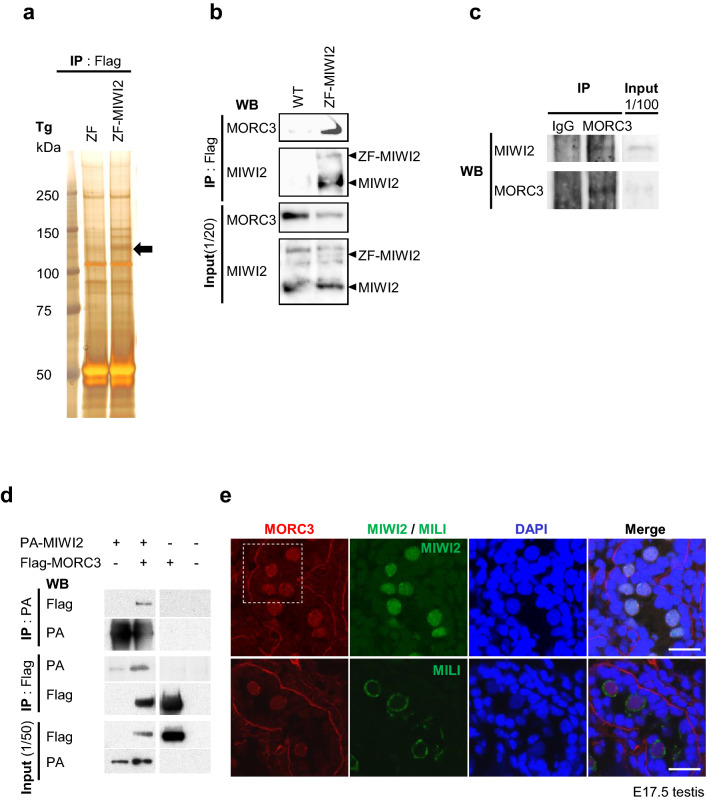
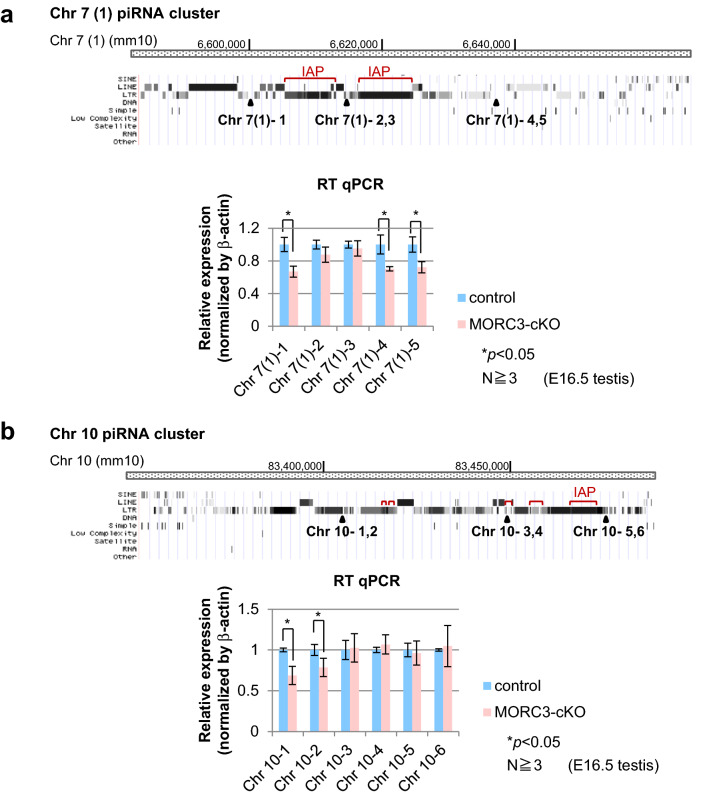
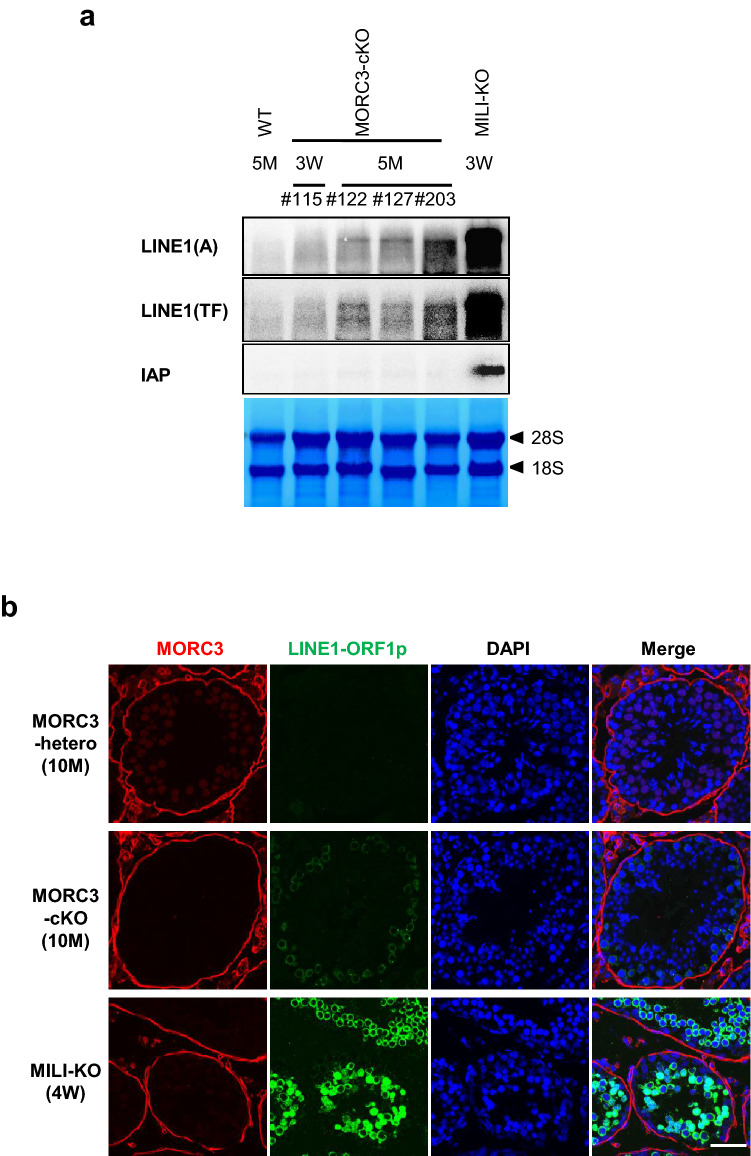
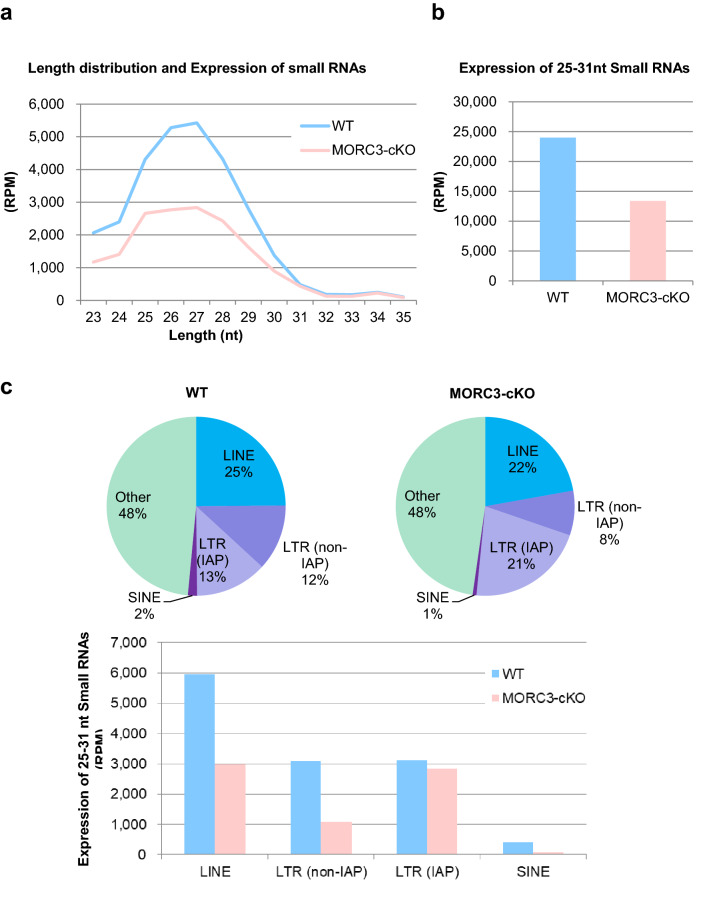
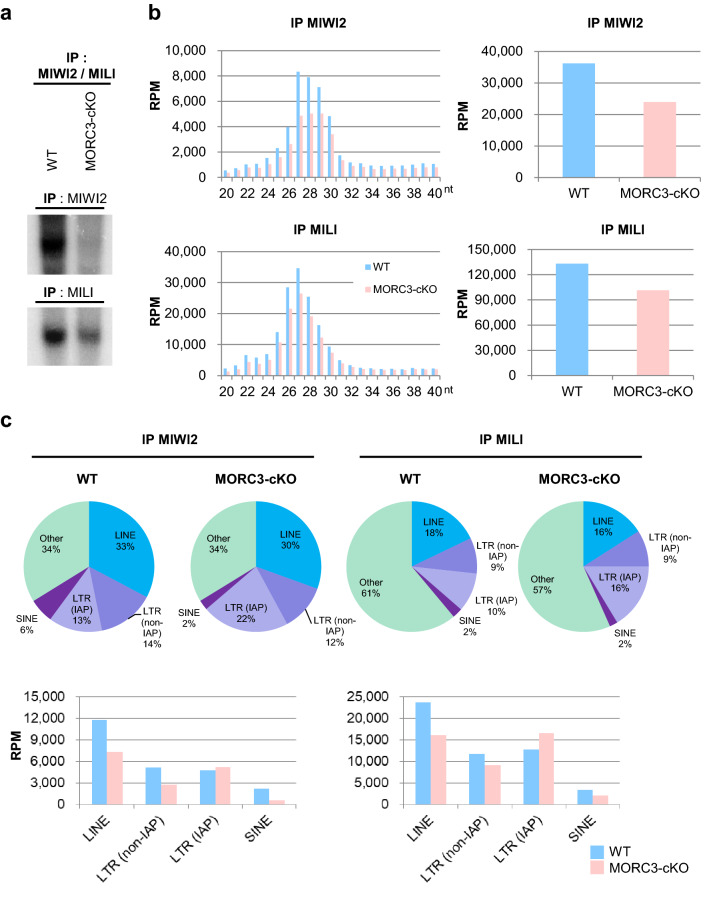
The PIWI (P-element-induced wimpy testis)-interacting-RNA (piRNA) pathway plays a crucial role in the repression of TE (transposable element) expression via de novo DNA methylation in mouse embryonic male germ cells. Various proteins, including MIWI2 are involved in the process. TE silencing is ensured by piRNA-guided MIWI2 that recruits some effector proteins of the DNA methylation machinery to TE regions. However, the molecular mechanism underlying the methylation is complex and has not been fully elucidated. Here, we identified MORC3 as a novel associating partner of MIWI2 and also a nuclear effector of retrotransposon silencing via piRNA-dependent de novo DNA methylation in embryonic testis. Moreover, we show that MORC3 is important for transcription of piRNA precursors and subsequently affects piRNA production. Thus, we provide the first mechanistic insights into the role of this effector protein in the first stage of piRNA biogenesis in embryonic TE silencing mechanism.
PIWI(P 元素诱导的软弱睾丸)-相互作用的 RNA(piRNA)途径在通过从头 DNA 甲基化抑制雄性胚胎生殖细胞中转座元件(TE)表达方面起着至关重要的作用。各种蛋白质,包括 MIWI2,参与了这一过程。TE 的沉默是通过 piRNA 引导的 MIWI2 来保证的,MIWI2 招募 DNA 甲基化机制的一些效应蛋白到 TE 区域。然而,甲基化的分子机制很复杂,尚未完全阐明。在这里,我们鉴定了 MORC3 作为 MIWI2 的一个新的关联伙伴,也是通过 piRNA 依赖性从头 DNA 甲基化在胚胎睾丸中沉默逆转录转座子的核效应因子。此外,我们表明,MORC3 对于 piRNA 前体的转录很重要,进而影响 piRNA 的产生。因此,我们为该效应蛋白在胚胎 TE 沉默机制中 piRNA 生物发生的第一阶段提供了第一个作用机制的见解。