Institute for Glycomics, Griffith Universitygrid.1022.1, Southport, Australia.
School of Chemistry and Molecular Biosciences, The University of Queensland, St Lucia, Australia.
mBio. 2021 Oct 26;12(5):e0265721. doi: 10.1128/mBio.02657-21. Epub 2021 Oct 19.
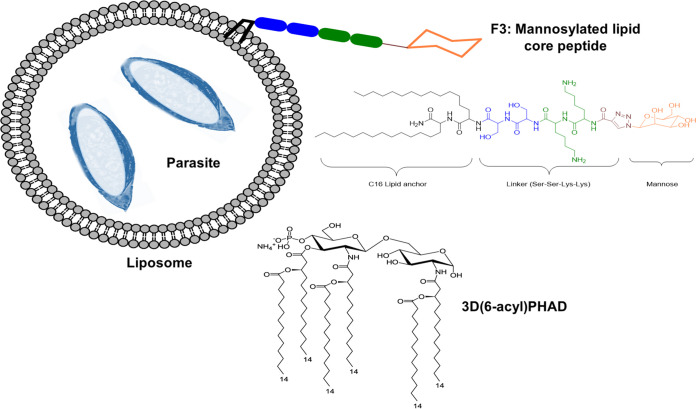
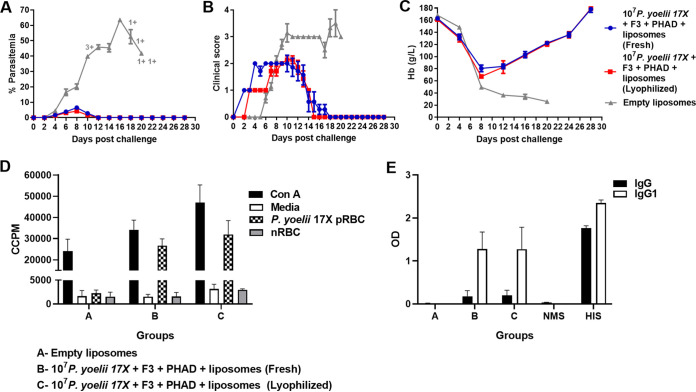
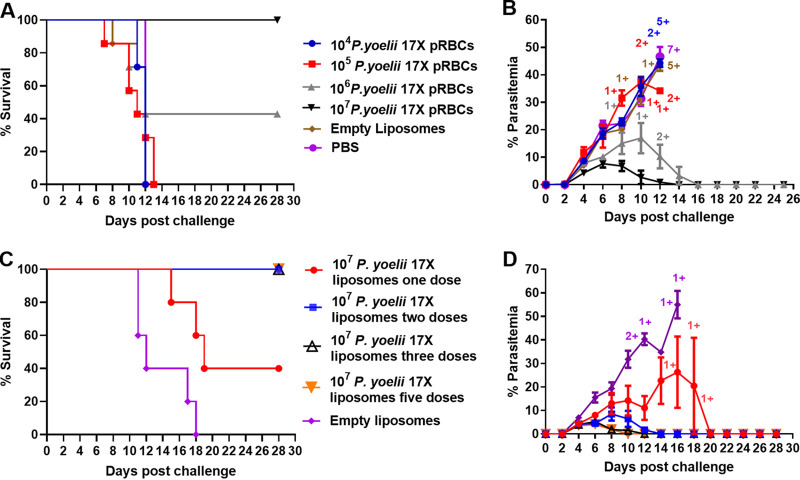
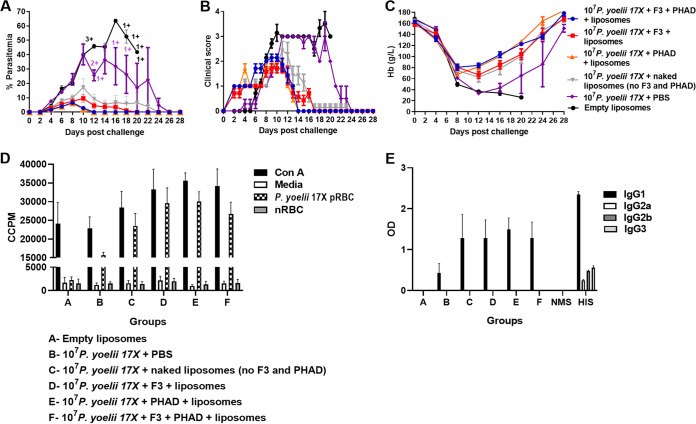
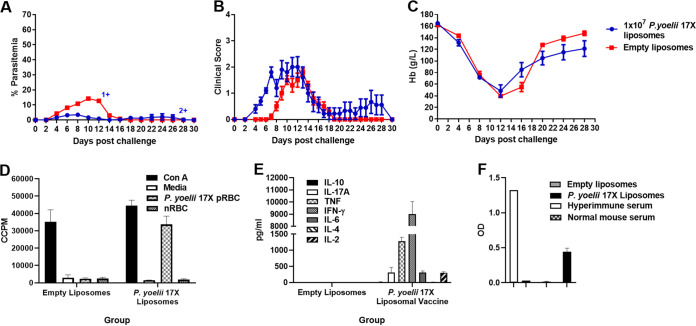
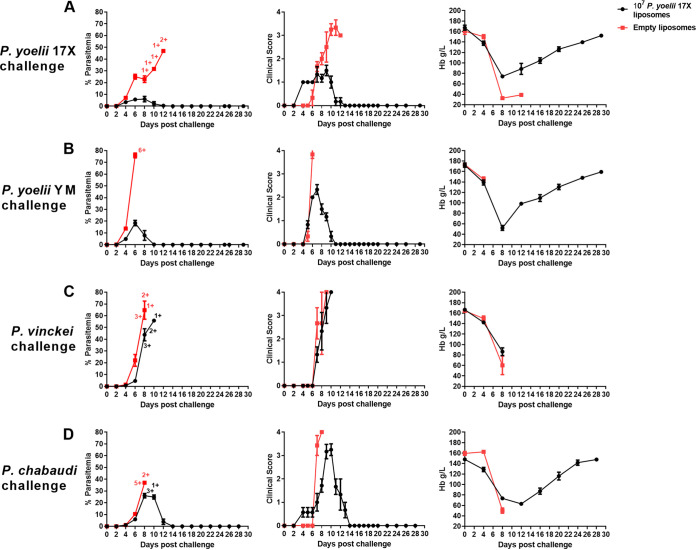
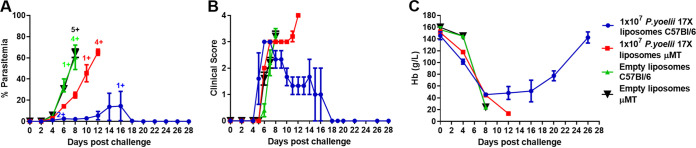
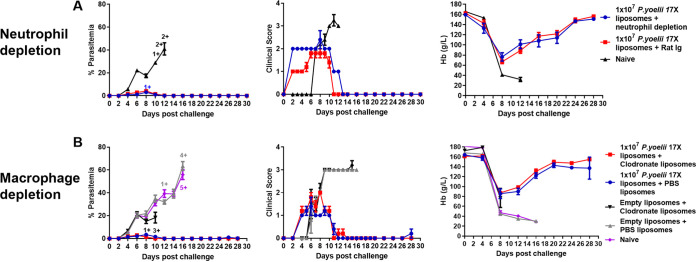
Infection with malaria parasites continues to be a major global public health issue. While current control measures have enabled a significant decrease in morbidity and mortality over the last 20 years, additional tools will be required if we are to progress toward malaria parasite eradication. Malaria vaccine research has focused on the development of subunit vaccines; however, more recently, interest in whole-parasite vaccines has reignited. Whole-parasite vaccines enable the presentation of a broad repertoire of antigens to the immune system, which limits the impact of antigenic polymorphism and genetic restriction of the immune response. We previously reported that whole-parasite vaccines can be prepared using chemically attenuated parasites within intact red blood cells or using killed parasites in liposomes, although liposomes were less immunogenic than attenuated parasites. If they could be frozen or freeze-dried and be made more immunogenic, liposomal vaccines would be ideal for vaccine deployment in areas where malaria is endemic. Here, we develop and evaluate a Plasmodium yoelii liposomal vaccine with enhanced immunogenicity and efficacy due to incorporation of TLR4 agonist, 3D(6-acyl) PHAD, and mannose to target the liposome to antigen-presenting cells. Following vaccination, mice were protected, and strong cellular immune responses were induced, characterized by parasite-specific splenocyte proliferation and a mixed Th1/Th2/Th17 cytokine response. Parasite-specific antibodies were induced, predominantly of the IgG1 subclass. CD4 T cells and gamma interferon were critical components of the protective immune response. This study represents an important development toward evaluation of this whole-parasite blood-stage vaccine in a phase I clinical trial. Malaria is a mosquito-borne infectious disease that is caused by parasites of the genus, . There are seven different spp. that can cause malaria in humans, with P. falciparum causing the majority of the morbidity and mortality. Malaria parasites are endemic in 87 countries and continue to result in >200 million cases of malaria and >400,000 deaths/year, mostly children <5 years of age. Malaria infection initially presents as a flu-like illness but can rapidly progress to severe disease in nonimmune individuals if treatment is not initiated promptly. Existing control strategies for the mosquito vector (insecticides) and parasite (antimalarial drugs) are becoming increasingly less effective due to the development of resistance. While artemisinin combination therapies are frontline treatment for P. falciparum malaria, resistance has been documented in numerous countries. A highly effective malaria vaccine is urgently required to reduce malaria-attributable clinical disease and death and enable progression toward the ultimate goal of eradication.
疟原虫感染仍然是一个主要的全球公共卫生问题。虽然过去 20 年来,通过现有的控制措施,发病率和死亡率已经显著下降,但如果要朝着消除疟原虫的目标前进,还需要额外的工具。疟疾疫苗研究一直集中在亚单位疫苗的开发上;然而,最近,人们对全寄生虫疫苗的兴趣又重新燃起。全寄生虫疫苗能够向免疫系统呈递广泛的抗原谱,从而限制了抗原多态性和免疫反应遗传限制的影响。我们之前曾报道过,全寄生虫疫苗可以使用化学减毒寄生虫在完整的红细胞内或使用脂体内的死寄生虫来制备,尽管脂体的免疫原性不如减毒寄生虫。如果它们可以冷冻或冻干,并变得更具免疫原性,那么脂体疫苗将非常适合在疟疾流行的地区部署疫苗。在这里,我们开发并评估了一种具有增强免疫原性和疗效的恶性疟原虫 liposomal 疫苗,该疫苗由于包含 TLR4 激动剂 3D(6-acyl) PHAD 和甘露糖,能够将脂质体靶向抗原呈递细胞。接种疫苗后,小鼠受到保护,并诱导强烈的细胞免疫反应,特征为寄生虫特异性脾细胞增殖和混合 Th1/Th2/Th17 细胞因子反应。诱导了寄生虫特异性抗体,主要是 IgG1 亚类。CD4 T 细胞和γ干扰素是保护性免疫反应的关键组成部分。这项研究代表了在 I 期临床试验中评估这种全寄生虫血期疫苗的重要进展。疟疾是一种由疟原虫属寄生虫引起的蚊媒传染病。有七种不同的 spp. 可以在人类中引起疟疾,其中 P. falciparum 引起大多数发病率和死亡率。疟原虫在 87 个国家流行,每年仍有超过 2 亿例疟疾和超过 40 万人死亡,其中大多数是 5 岁以下的儿童。疟疾感染最初表现为流感样疾病,但如果不及时开始治疗,在非免疫个体中可能迅速发展为严重疾病。由于耐药性的发展,现有的蚊子媒介(杀虫剂)和寄生虫(抗疟药物)控制策略越来越无效。虽然青蒿素联合疗法是治疗恶性疟原虫疟疾的一线治疗方法,但在许多国家都有耐药性的记录。迫切需要一种高度有效的疟疾疫苗来降低疟疾相关的临床疾病和死亡,并推动最终消除疟疾的目标。