Radiology, Duke University, Durham, USA.
Medical Physics, University of Wisconsin-Madison, Madison, USA.
J Cardiovasc Magn Reson. 2021 Oct 21;23(1):116. doi: 10.1186/s12968-021-00816-2.
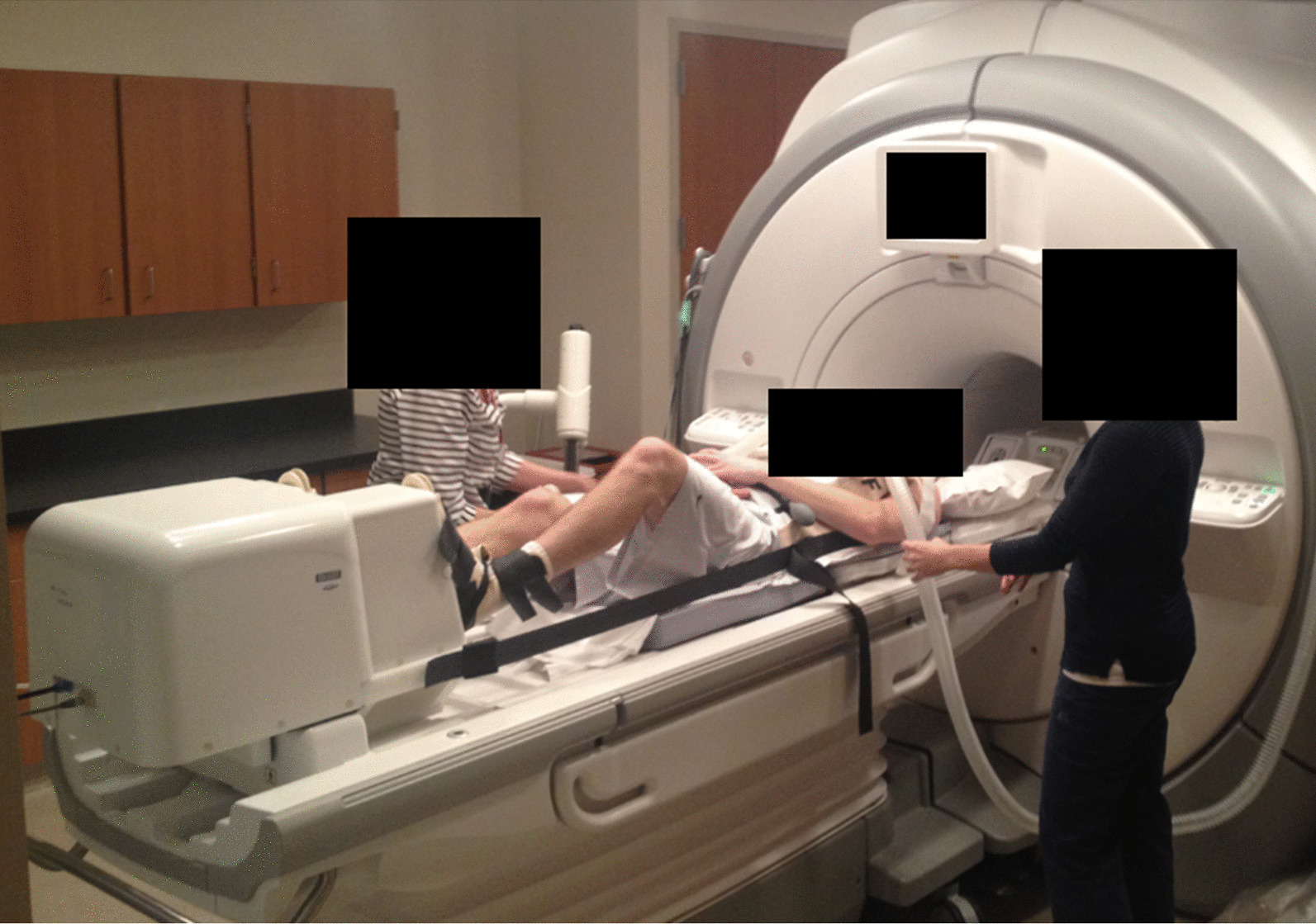
Preterm birth has been linked to an elevated risk of heart failure and cardiopulmonary disease later in life. With improved neonatal care and survival, most infants born preterm are now reaching adulthood. In this study, we used 4D flow cardiovascular magnetic resonance (CMR) coupled with an exercise challenge to assess the impact of preterm birth on right heart flow dynamics in otherwise healthy adolescents and young adults who were born preterm.
Eleven young adults and 17 adolescents born preterm (< 32 weeks of gestation and < 1500 g birth weight) were compared to 11 young adult and 18 adolescent age-matched controls born at term. Stroke volume, cardiac output, and flow in the main pulmonary artery were quantified with 4D flow CMR. Kinetic energy and vorticity were measured in the right ventricle. All parameters were measured at rest and during exercise at a power corresponding to 70% VO for each subject. Multivariate linear regression was used to perform age-adjusted term-preterm comparisons.
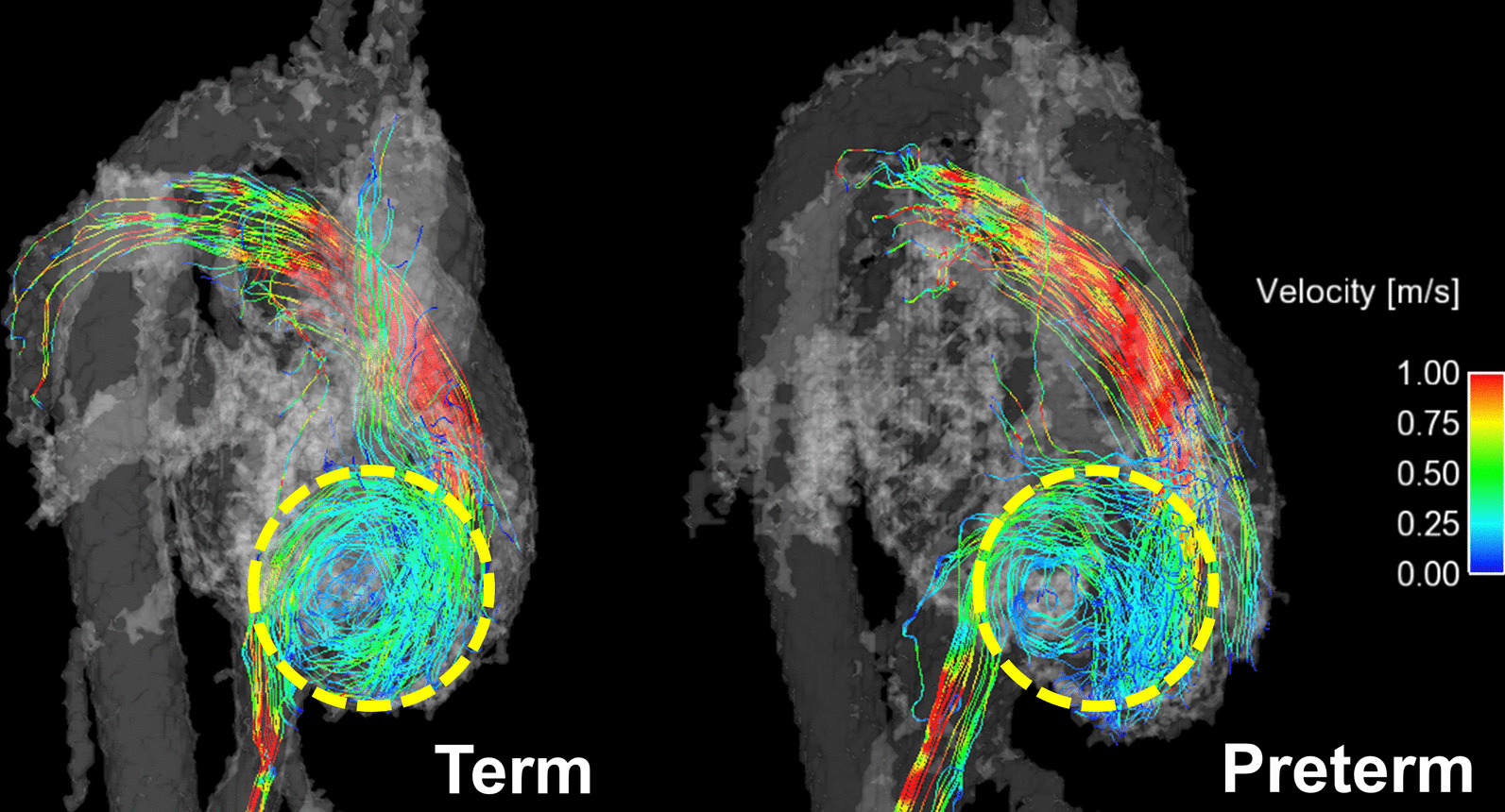
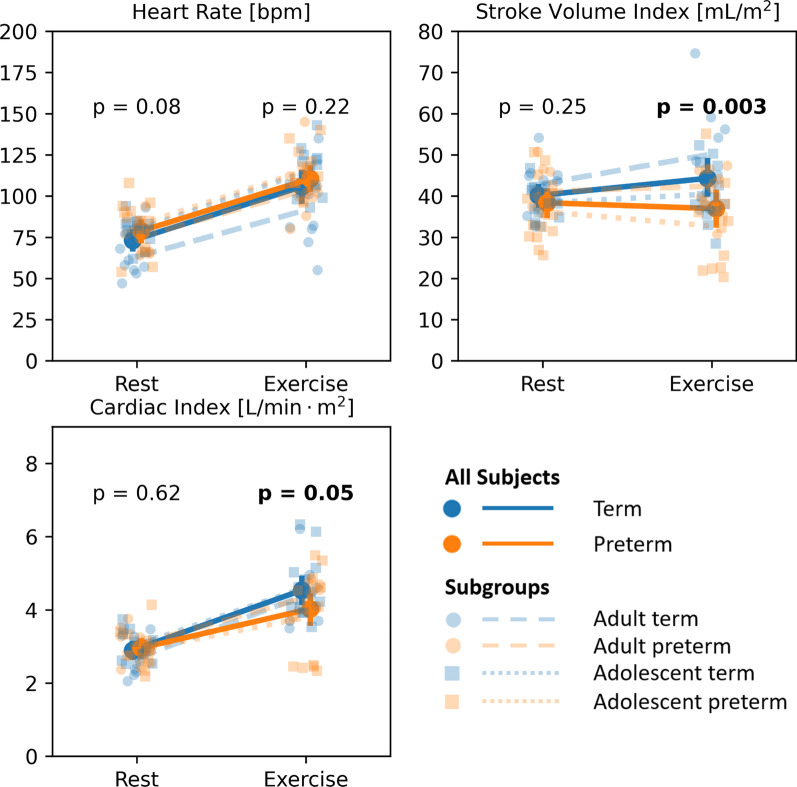
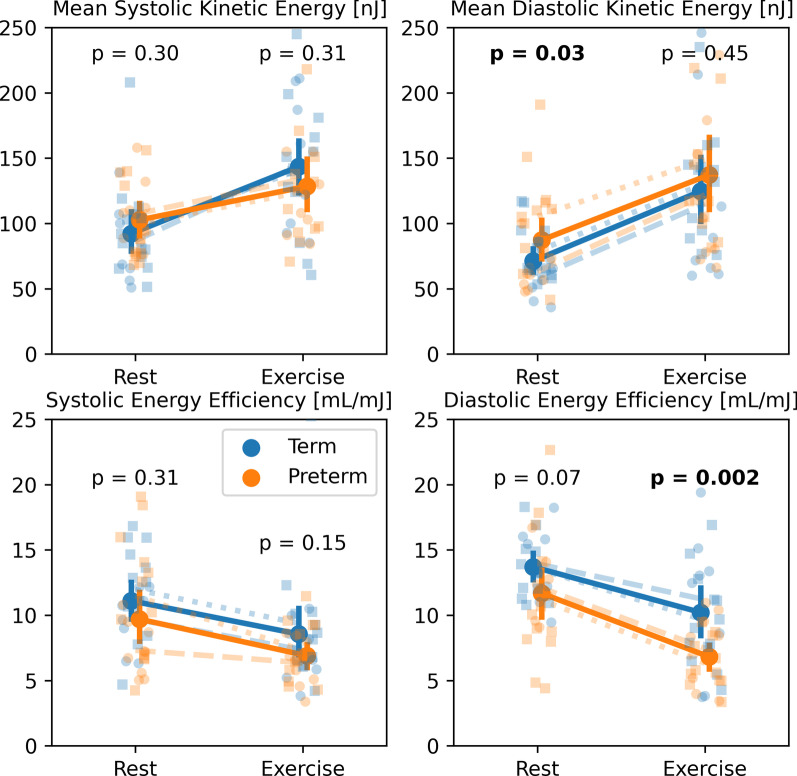
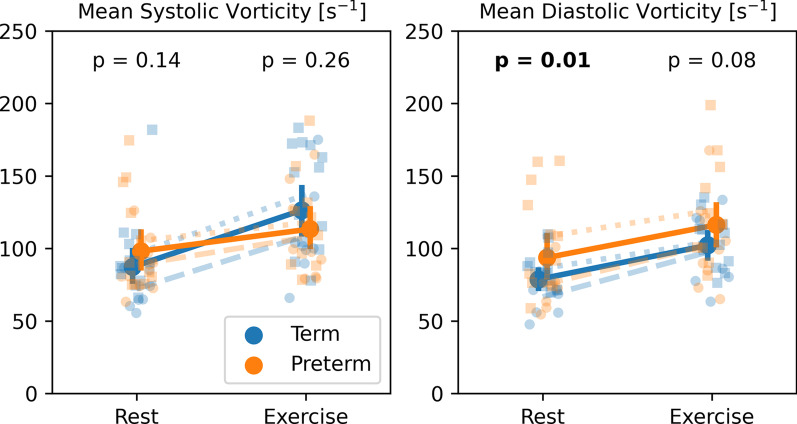
With exercise, stroke volume increased 10 ± 21% in term controls and decreased 4 ± 18% in preterm born subjects (p = 0.007). This resulted in significantly reduced capacity to increase cardiac output in response to exercise stress for the preterm group (58 ± 26% increase in controls, 36 ± 27% increase in preterm, p = 0.004). Elevated kinetic energy (KE = 71 ± 22 nJ, KE = 87 ± 38 nJ, p = 0.03) and vorticity (ω = 79 ± 16 s, ω = 94 ± 32 s, p = 0.01) during diastole in the right ventricle (RV) suggested altered RV flow dynamics in the preterm subjects. Streamline visualizations showed altered structure to the diastolic filling vortices in those born preterm.
For the participants examined here, preterm birth appeared to result in altered right-heart flow dynamics as early as adolescence, especially during diastole. Future studies should evaluate whether the altered dynamics identified here evolves into cardiopulmonary disease later in life. Trial registration None.
早产与成年后患心力衰竭和心肺疾病的风险增加有关。随着新生儿护理和存活率的提高,大多数早产儿现在都已成年。在这项研究中,我们使用四维(4D)血流心血管磁共振(CMR)结合运动挑战来评估早产对出生时为早产儿的健康青少年和年轻人右心血流动力学的影响。
将 11 名成年早产儿(出生时胎龄<32 周,出生体重<1500g)和 17 名青少年早产儿与 11 名成年足月产对照者和 18 名青少年足月产对照者进行比较。使用 4D 血流 CMR 量化了每搏量、心输出量和主肺动脉血流量。在右心室中测量了动能和涡度。所有参数均在休息时和在与每位受试者 70% VO 相对应的功率下进行运动时进行测量。使用多元线性回归进行年龄调整后的足月产与早产比较。
运动时,足月产对照组的每搏量增加了 10±21%,而早产儿组的每搏量减少了 4±18%(p=0.007)。这导致早产儿组在运动应激下增加心输出量的能力显著降低(对照组增加 58±26%,早产儿增加 36±27%,p=0.004)。右心室(RV)舒张期动能(KE)升高(KE=71±22 nJ,KE=87±38 nJ,p=0.03)和涡度(ω)升高(ω=79±16 s,ω=94±32 s,p=0.01)提示早产儿的 RV 血流动力学发生改变。流线可视化显示,出生时为早产儿的患者舒张期充盈涡流结构发生改变。
对于此处检查的参与者,早产似乎早在青少年时期就导致右心血流动力学发生改变,尤其是在舒张期。未来的研究应该评估这里确定的动态变化是否会在以后的生活中发展为心肺疾病。
试验注册 无。