Department of Microbiology, National Veterinary Institute, Uppsala, Sweden.
Department of Pathology and Wildlife Diseases, National Veterinary Institute, Uppsala, Sweden.
Vet Res. 2021 Oct 21;52(1):134. doi: 10.1186/s13567-021-01001-0.
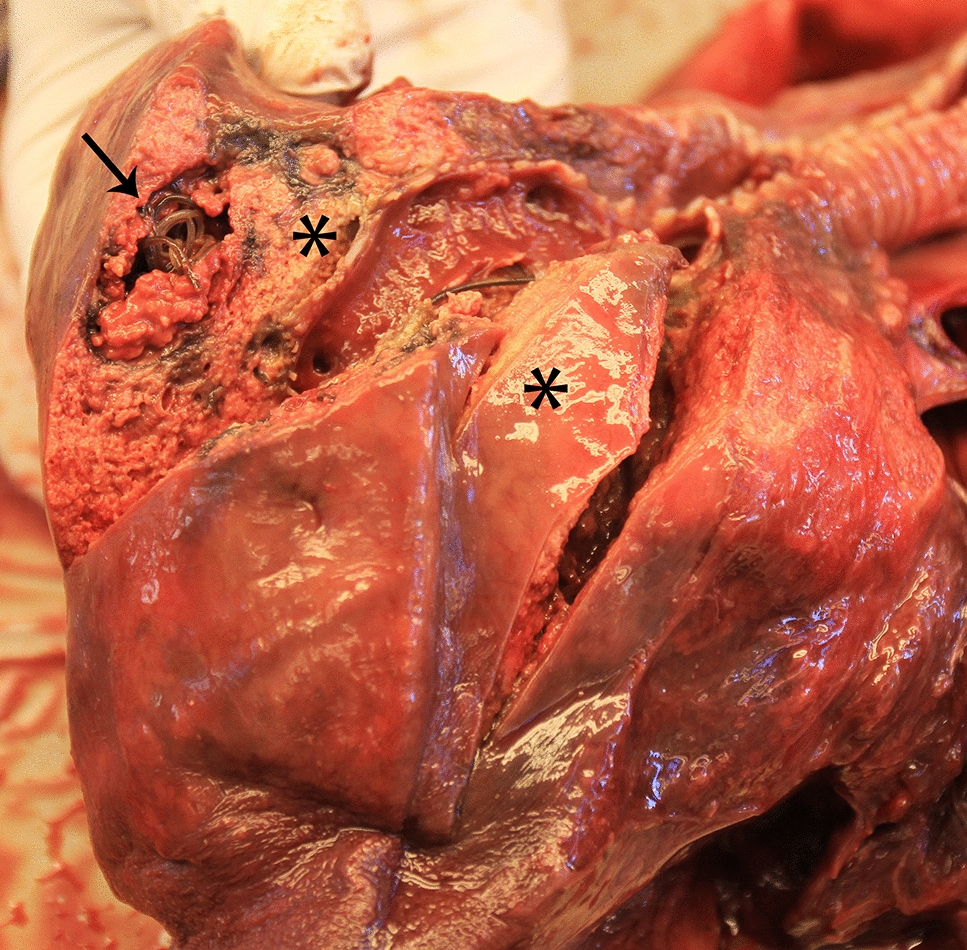
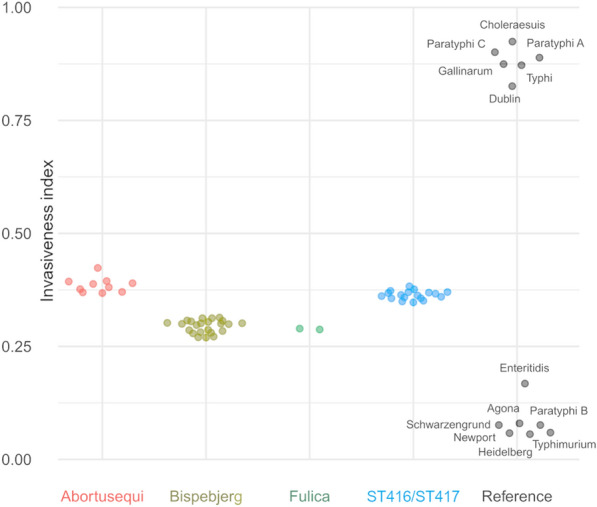
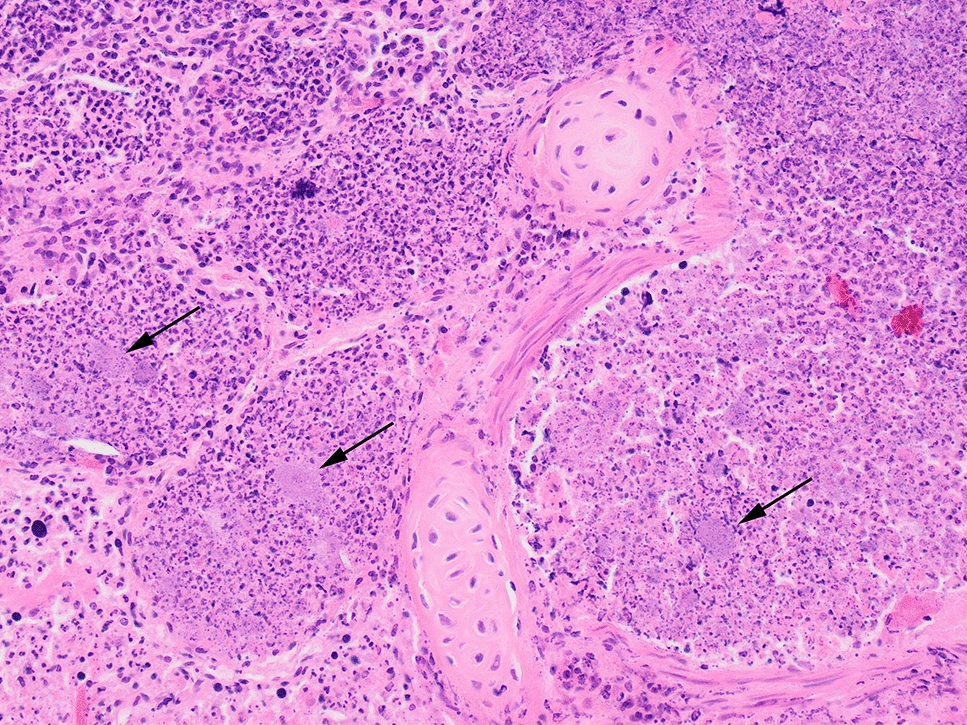
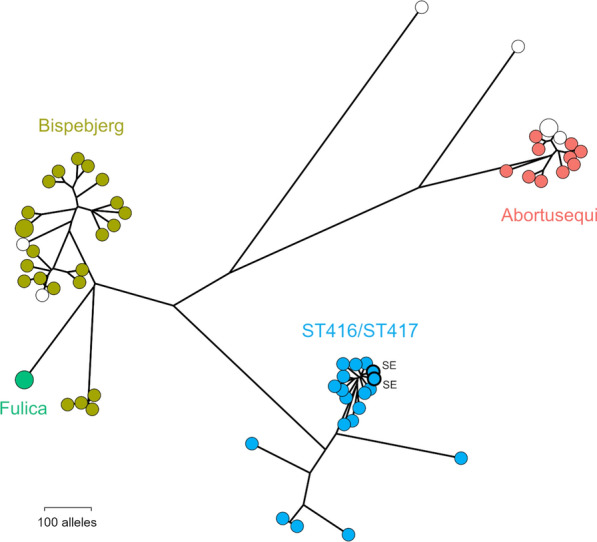
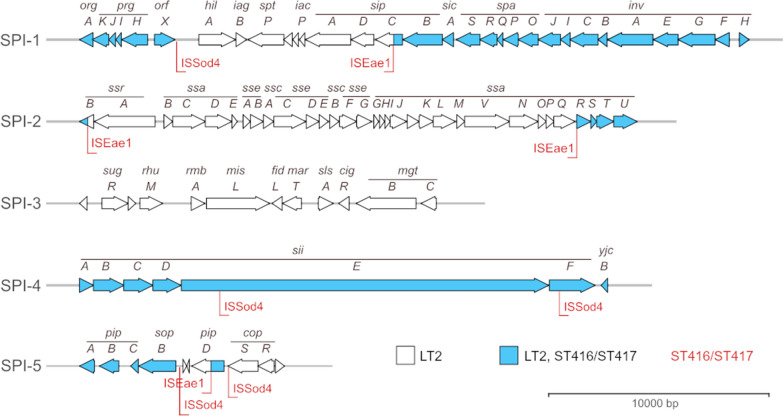
A type of monophasic group B Salmonella enterica with the antigenic formula 4,12:a:- ("Fulica-like") has been described as associated with harbour porpoises (Phocoena phocoena), most frequently recovered from lung samples. In the present study, lung tissue samples from 47 porpoises found along the Swedish coast or as bycatch in fishing nets were analysed, two of which were positive for S. enterica. Pneumonia due to the infection was considered the likely cause of death for one of the two animals. The recovered isolates were whole genome sequenced and found to belong to sequence type (ST) 416 and to be closely related to ST416/ST417 porpoise isolates from UK waters as determined by core-genome MLST. Serovars Bispebjerg, Fulica and Abortusequi were identified as distantly related to the porpoise isolates, but no close relatives from other host species were found. All ST416/417 isolates had extensive loss of function mutations in key Salmonella pathogenicity islands, but carried accessory genetic elements associated with extraintestinal infection such as iron uptake systems. Gene ontology and pathway analysis revealed reduced secondary metabolic capabilities and loss of function in terms of signalling and response to environmental cues, consistent with adaptation for the extraintestinal niche. A classification system based on machine learning identified ST416/417 as more invasive than classical gastrointestinal serovars. Genome analysis results are thus consistent with ST416/417 as a host-adapted and extraintestinal clonal population of S. enterica, which while found in porpoises without associated pathology can also cause severe opportunistic infections.
一种具有抗原公式 4,12:a:-(“Fulica-like”)的单相 B 群沙门氏菌已被描述为与港湾海豚(Phocoena phocoena)有关,最常从肺部样本中回收。在本研究中,对在瑞典沿海发现或在渔网中被捕获的 47 头海豚的肺部组织样本进行了分析,其中有 2 头对沙门氏菌呈阳性。由于感染引起的肺炎被认为是这两个动物之一死亡的可能原因。回收的分离物进行了全基因组测序,发现它们属于序列型(ST)416,与英国水域的 ST416/ST417 海豚分离物密切相关,这是通过核心基因组 MLST 确定的。血清型 Bispebjerg、Fulica 和 Abortusequi 被确定为与海豚分离物有较远的关系,但在其他宿主物种中没有发现密切相关的分离物。所有 ST416/417 分离物在关键沙门氏菌致病性岛中都有广泛的功能丧失突变,但携带与肠外感染相关的附加遗传元件,如铁摄取系统。基因本体论和途径分析显示,次级代谢能力降低,信号转导和对环境线索的反应功能丧失,与适应肠外生态位一致。基于机器学习的分类系统将 ST416/417 鉴定为比经典胃肠道血清型更具侵袭性。基因组分析结果因此与 ST416/417 作为沙门氏菌的宿主适应和肠外克隆群体一致,尽管在没有相关病理学的海豚中发现,但也可引起严重的机会性感染。