An Yang, Xu Xiangbo, Ren Tianshu, Tong Zhenhua, Romeiro Fernando Gomes, Mancuso Andrea, Guo Xiaozhong, Qi Xingshun
Liver Cirrhosis Study Group, Department of Gastroenterology, General Hospital of Northern Theater Command, Shenyang, 110840, People's Republic of China.
Postgraduate College, Shenyang Pharmaceutical University, Shenyang, 110016, People's Republic of China.
Int J Gen Med. 2021 Oct 13;14:6713-6724. doi: 10.2147/IJGM.S326192. eCollection 2021.
Long-term use of non-selective beta blockers (NSBBs) is essential for the prevention of esophageal variceal bleeding in liver cirrhosis but may impair the patient's adherence. The present study aimed to investigate the adherence to NSBBs to prevent variceal bleeding in cirrhotic patients.
All patients who had an indication of NSBBs for the prophylaxis of variceal bleeding between February 2018 and June 2019 were screened. Clinical pharmacists gave pre-medication education and recorded the adherence to NSBBs during the patients' hospitalizations. Factors associated with poor adherence were evaluated by univariate logistic regression analysis. Odds ratios (OR) with 95% confidence intervals (CI) were calculated. The relationship between poor adherence during follow-up and variceal bleeding after discharge was also evaluated.
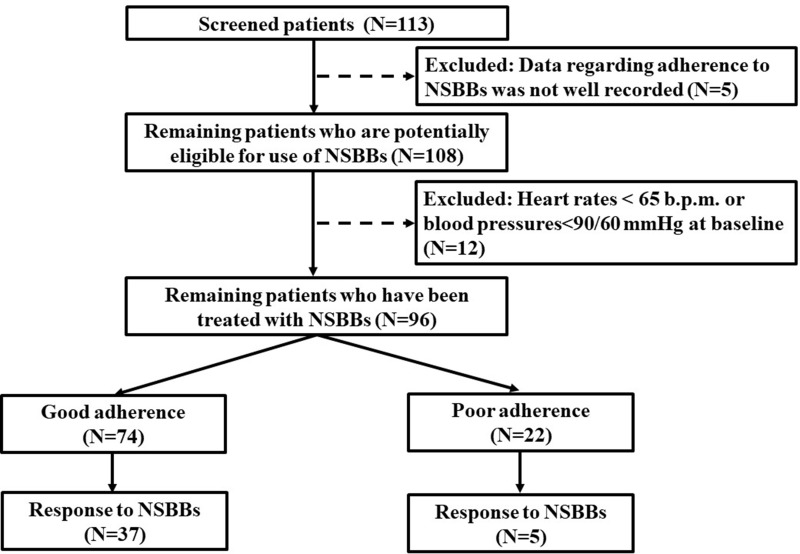
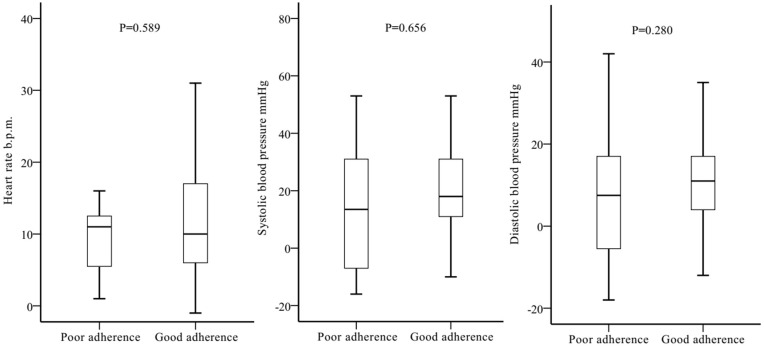
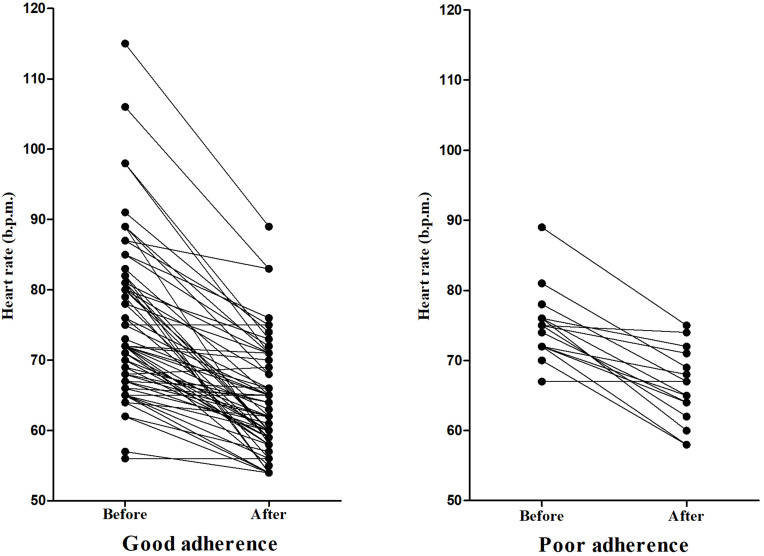
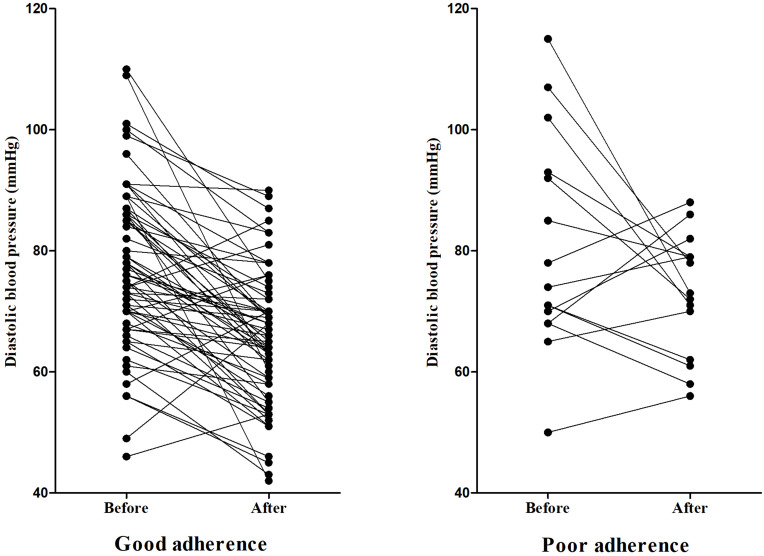
Overall, 108 patients were screened, of whom 12 were intolerant to NSBBs. Among the 96 remaining patients who could take NSBBs, the average change of heart rate after NSBBs was -10.49 b.p.m. Twenty-two (22.9%) patients had poor adherence to NSBBs due to their refusal to take NSBBs (n = 2), complete forgetfulness to take NSBBs (n = 10), and refusal or forgetfulness to monitor heart rate (n = 10). Univariate logistic regression analysis demonstrated that only older age was significantly associated with poor adherence (OR: 1.065, 95% CI: 1.019-1.114, P = 0.005). Patients with poor adherence during follow-up were more likely to develop variceal bleeding after discharge.
A significant proportion of cirrhotic patients had poor adherence to NSBBs during their hospitalizations. Further studies should explore how to improve the patient's adherence to NSBBs.
长期使用非选择性β受体阻滞剂(NSBBs)对于预防肝硬化患者食管静脉曲张出血至关重要,但可能会影响患者的依从性。本研究旨在调查肝硬化患者预防静脉曲张出血时使用NSBBs的依从性。
筛选2018年2月至2019年6月期间有NSBBs预防静脉曲张出血适应证的所有患者。临床药师进行用药前教育,并记录患者住院期间对NSBBs的依从性。通过单因素逻辑回归分析评估与依从性差相关的因素。计算比值比(OR)及95%置信区间(CI)。还评估了随访期间依从性差与出院后静脉曲张出血之间的关系。
总体上,共筛选出108例患者,其中12例对NSBBs不耐受。在其余96例能够服用NSBBs的患者中,服用NSBBs后心率平均变化为-10.49次/分钟。22例(22.9%)患者对NSBBs依从性差,原因包括拒绝服用NSBBs(n = 2)、完全忘记服用NSBBs(n = 10)以及拒绝或忘记监测心率(n = 10)。单因素逻辑回归分析表明,仅年龄较大与依从性差显著相关(OR:1.065,95%CI:1.019 - 1.114,P = 0.005)。随访期间依从性差的患者出院后更易发生静脉曲张出血。
相当一部分肝硬化患者在住院期间对NSBBs依从性差。进一步研究应探索如何提高患者对NSBBs的依从性。