Department of Neurosurgery, Nanjing Medical University Affiliated Hangzhou Hospital, Hangzhou First People's Hospital, 261 Huansha Road, Hangzhou, 310000, China.
Genes Genomics. 2021 Dec;43(12):1423-1432. doi: 10.1007/s13258-021-01176-y. Epub 2021 Oct 22.
Subarachnoid hemorrhage (SAH) is a severe neurological emergency, resulting in cognitive impairments and threatening human's health. Currently, SAH has no effective treatment. It is urgent to search for an effective therapy for SAH.
To explore the expression of Omi protein after subarachnoid hemorrhage in rats.
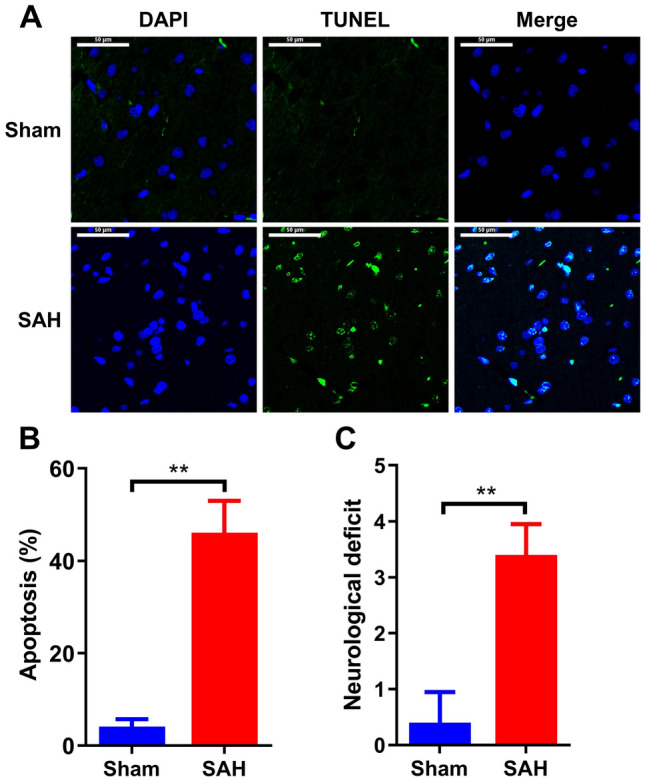
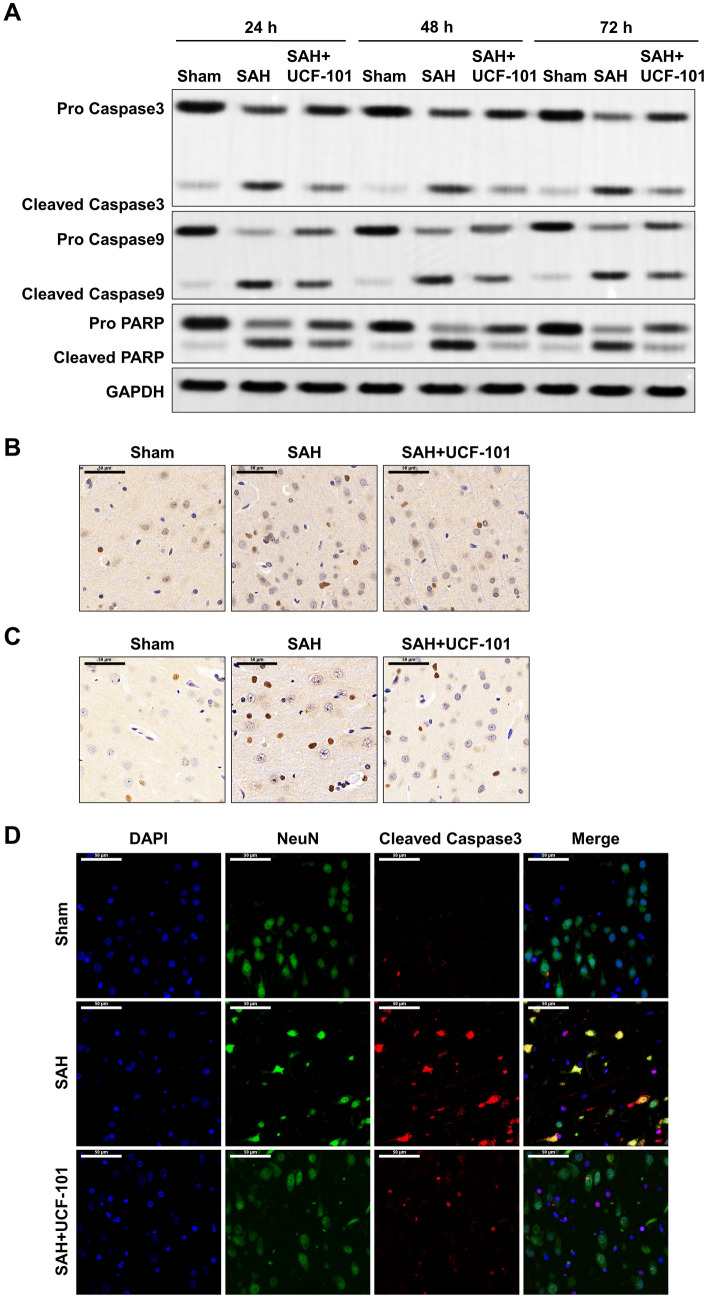
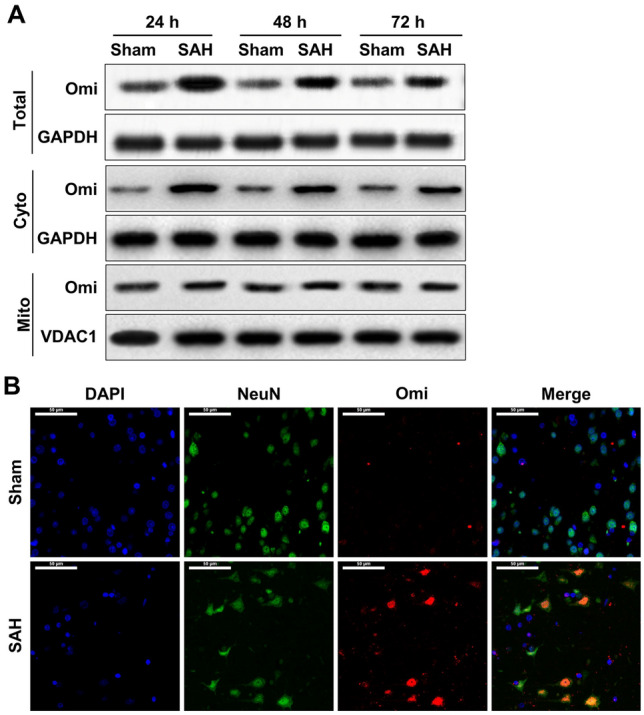
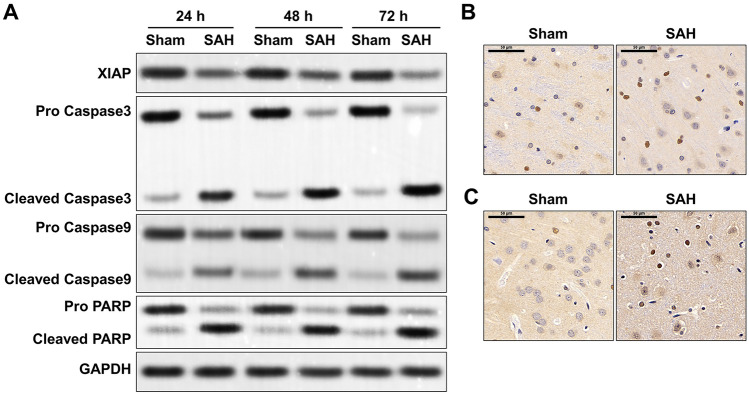
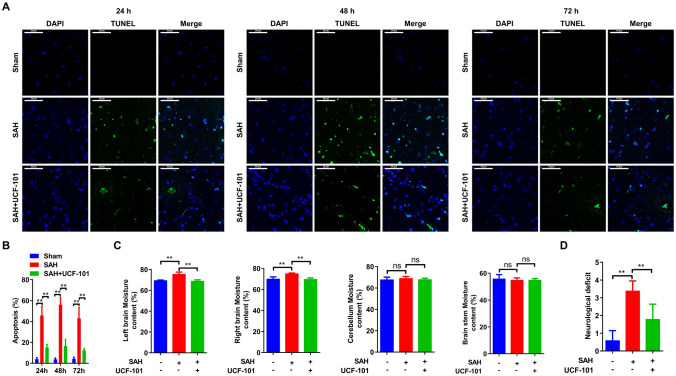
SAH rat model was established by injecting blood into the prechiasmatic cistern. Neurological deficit was assessed by detecting neurological deficit scores and brain tissue water contents. Apoptotic cells were evaluated by TUNEL staining and IHC staining. Omi and Cleaved caspase 3 expressions in nerve cells were determined by double staining using IF. Apoptosis-related proteins were measured by Western blotting assay.
SAH rat model was successfully established, showing more apoptotic cells and high neurological deficit scores in SAH rat. In SAH rat model, Omi expression in nerve cells was elevated and the upregulation of Omi mainly occurred in cytoplasm, accompanied by the degradation of XIAP and the increased cleaved caspase 3/9 and cleaved PARP. Once treated with UCF-101, a specific inhibitor of Omi, the increased cell apoptosis, left/right brain moisture contents and neurological deficits were notably reversed in SAH rat brain. Of note, SAH-induced the increases of apoptosis-related protein in nerve cells were also rescued by the administration of UCF-101.
UCF-101-mediated Omi inhibition decreased the degradation of XIAP and subsequently inhibited the activation of apoptosis-related proteins, decreased nerve cell apoptosis, leading to the improvement on early brain injury in SAH rat. UCF-101-based Omi inhibition may be used to treat SAH with great potential application.
蛛网膜下腔出血(SAH)是一种严重的神经急症,可导致认知障碍,威胁人类健康。目前,SAH 尚无有效治疗方法,迫切需要寻找有效的 SAH 治疗方法。
探讨蛛网膜下腔出血后大鼠 Omi 蛋白的表达。
通过向视交叉前池内注射血液建立 SAH 大鼠模型。通过检测神经功能缺损评分和脑组织含水量来评估神经功能缺损。通过 TUNEL 染色和 IHC 染色评估凋亡细胞。通过 IF 双重染色测定神经细胞中 Omi 和裂解的 caspase 3 的表达。通过 Western blot 测定测定凋亡相关蛋白。
成功建立了 SAH 大鼠模型,SAH 大鼠表现出更多的凋亡细胞和更高的神经功能缺损评分。在 SAH 大鼠模型中,神经细胞中 Omi 的表达增加,Omi 的上调主要发生在细胞质中,伴随着 XIAP 的降解以及裂解的 caspase 3/9 和裂解的 PARP 的增加。一旦用 UCF-101(Omi 的特异性抑制剂)处理,SAH 大鼠脑内细胞凋亡增加、左右脑含水量和神经功能缺损明显逆转。值得注意的是,UCF-101 还可挽救 SAH 诱导的神经细胞中凋亡相关蛋白的增加。
UCF-101 介导的 Omi 抑制减少了 XIAP 的降解,进而抑制了凋亡相关蛋白的激活,减少了神经细胞凋亡,从而改善了 SAH 大鼠的早期脑损伤。基于 UCF-101 的 Omi 抑制可能具有治疗 SAH 的巨大应用潜力。