Laboratory of Addiction Genetics, Department of Pharmacology and Experimental Therapeutics and Psychiatry, Boston, Massachusetts, USA.
NIGMS T32 Ph.D. Training Program in Biomolecular Pharmacology, Boston University School of Medicine, Boston, Massachusetts, USA.
Genes Brain Behav. 2021 Nov;20(8):e12774. doi: 10.1111/gbb.12774. Epub 2021 Oct 22.
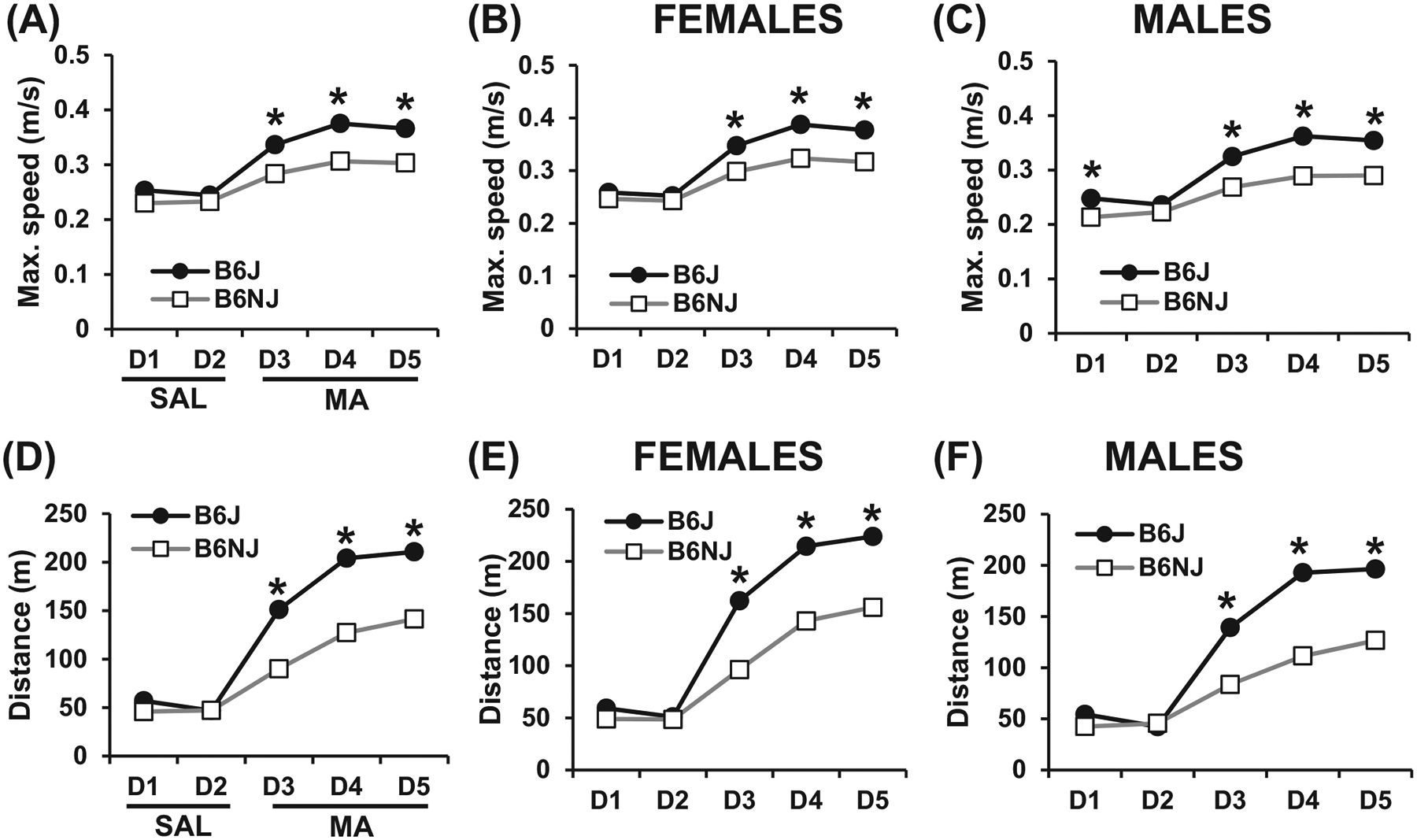
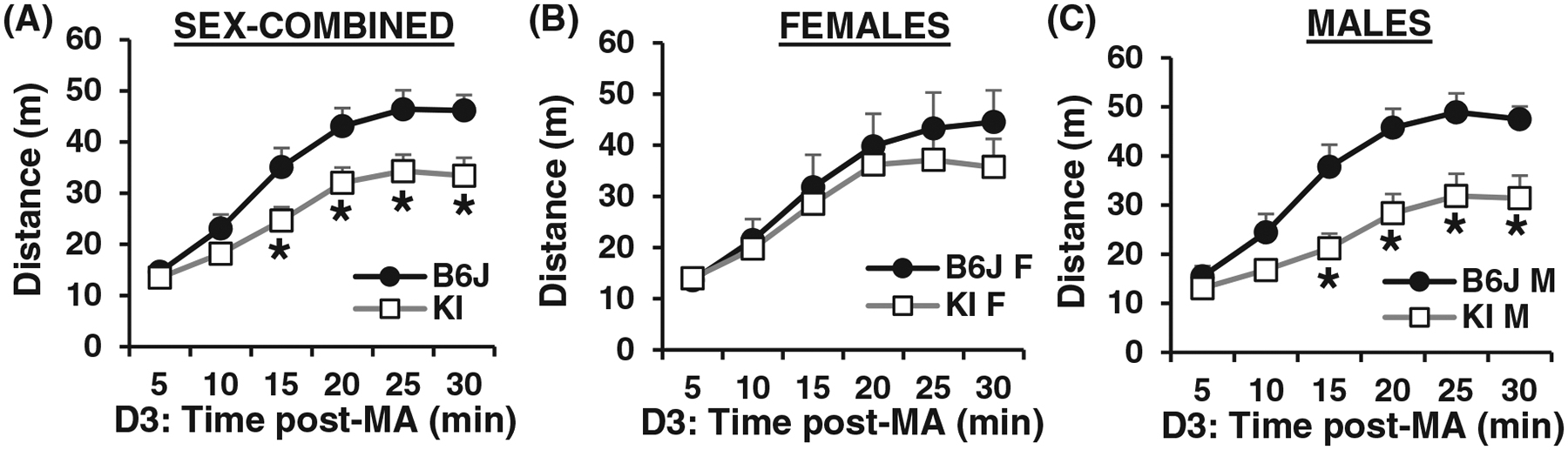
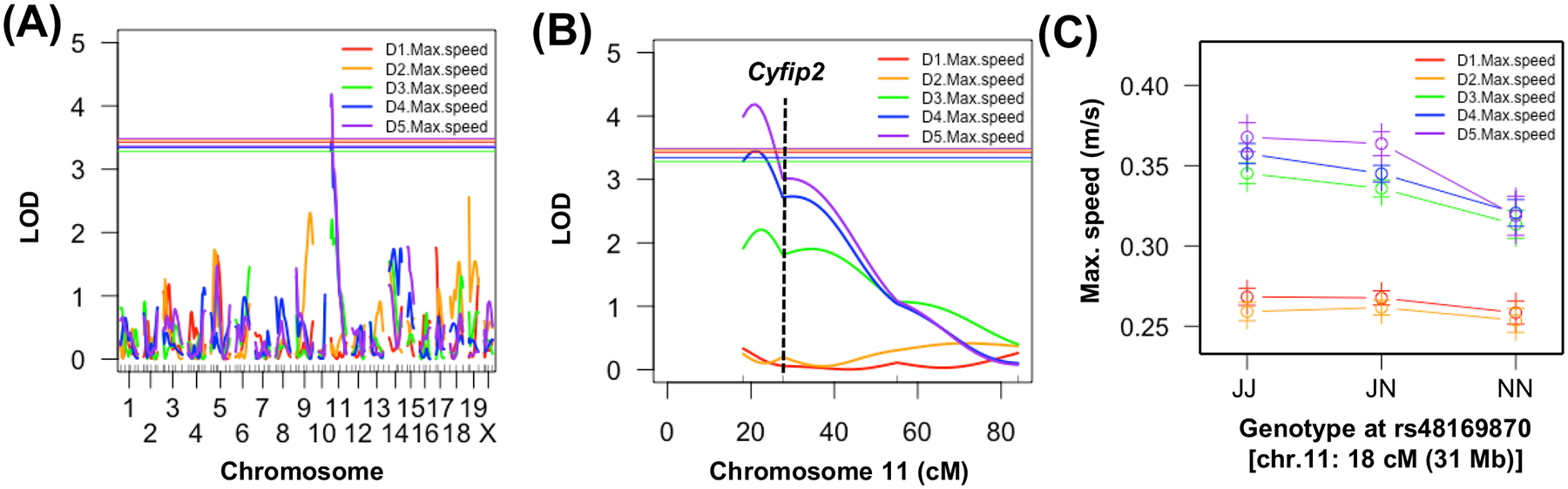
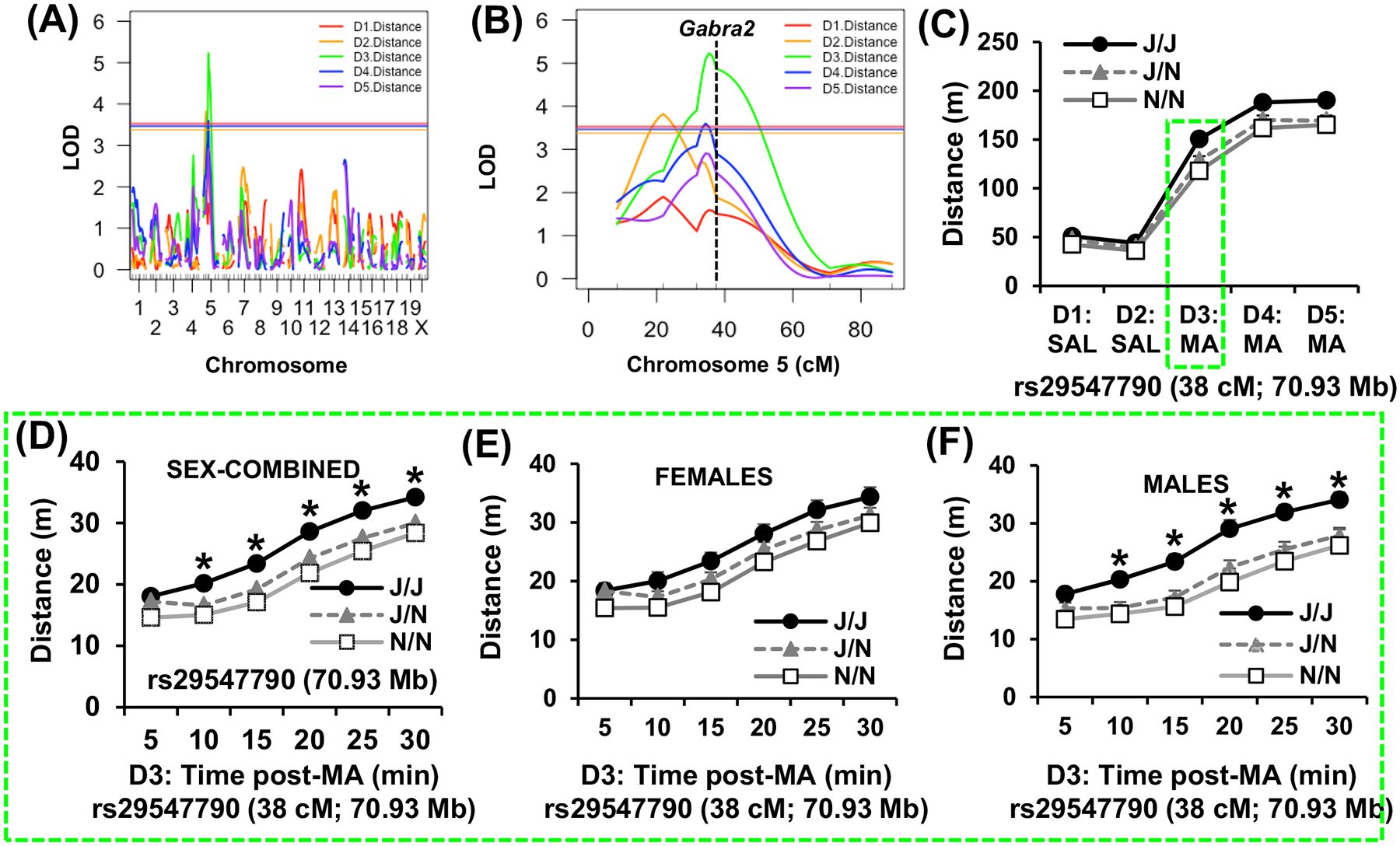
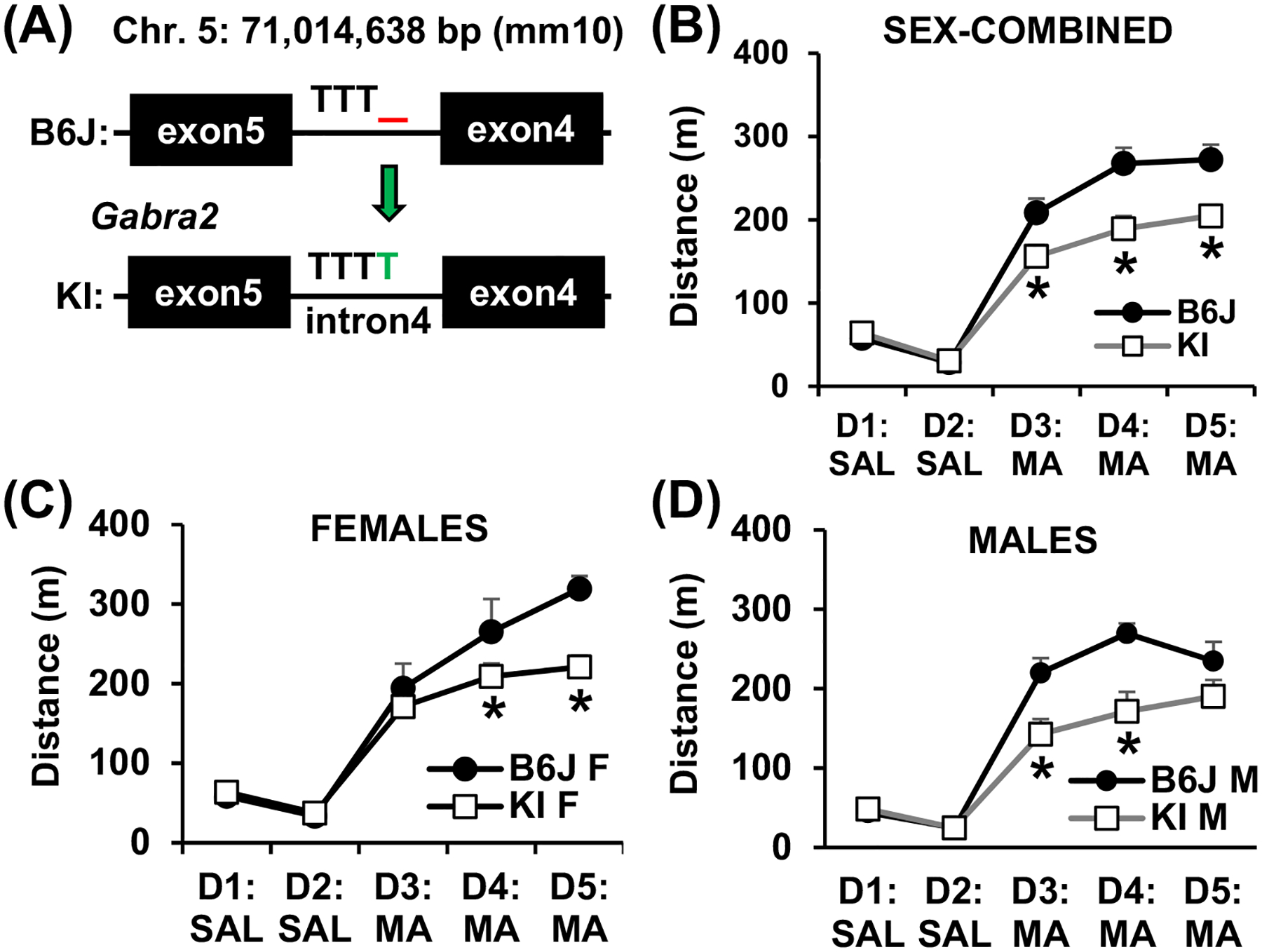
Psychostimulant (methamphetamine, cocaine) use disorders have a genetic component that remains mostly unknown. We conducted genome-wide quantitative trait locus (QTL) analysis of methamphetamine stimulant sensitivity. To facilitate gene identification, we employed a Reduced Complexity Cross between closely related C57BL/6 mouse substrains and examined maximum speed and distance traveled over 30 min following methamphetamine (2 mg/kg, i.p.). For maximum methamphetamine-induced speed following the second and third administration, we identified a single genome-wide significant QTL on chromosome 11 that peaked near the Cyfip2 locus (LOD = 3.5, 4.2; peak = 21 cM [36 Mb]). For methamphetamine-induced distance traveled following the first and second administration, we identified a genome-wide significant QTL on chromosome 5 that peaked near a functional intronic indel in Gabra2 coding for the alpha-2 subunit of the GABA-A receptor (LOD = 3.6-5.2; peak = 34-35 cM [66-67 Mb]). Striatal cis-expression QTL mapping corroborated Gabra2 as a functional candidate gene underlying methamphetamine-induced distance traveled. CRISPR/Cas9-mediated correction of the mutant intronic deletion on the C57BL/6J background to the wild-type C57BL/6NJ allele was sufficient to reduce methamphetamine-induced locomotor activity toward the wild-type C57BL/6NJ-like level, thus validating the quantitative trait variant (QTV). These studies show the power and efficiency of Reduced Complexity Crosses in identifying causal variants underlying complex traits. Functionally restoring Gabra2 expression decreased methamphetamine stimulant sensitivity and supports preclinical and human genetic studies implicating the GABA-A receptor in psychostimulant addiction-relevant traits. Importantly, our findings have major implications for studying psychostimulants in the C57BL/6J strain-the gold standard strain in biomedical research.
精神兴奋剂(甲基苯丙胺、可卡因)使用障碍具有遗传成分,但大部分仍不清楚。我们对甲基苯丙胺刺激敏感性进行了全基因组数量性状基因座(QTL)分析。为了便于基因鉴定,我们采用了近亲 C57BL/6 亚系之间的简化复杂性杂交,并检查了甲基苯丙胺(2mg/kg,ip)给药后 30 分钟内的最大速度和行驶距离。对于第二次和第三次给药后甲基苯丙胺诱导的最大速度,我们在 11 号染色体上确定了一个单一的全基因组显著 QTL,该 QTL在 Cyfip2 基因座附近达到峰值(LOD=3.5、4.2;峰值=21cM [36Mb])。对于第一次和第二次给药后甲基苯丙胺诱导的行驶距离,我们在 5 号染色体上确定了一个全基因组显著的 QTL,该 QTL在 Gabra2 编码 GABA-A 受体 alpha-2 亚基的功能性内含子插入缺失附近达到峰值(LOD=3.6-5.2;峰值=34-35cM [66-67Mb])。纹状体顺式表达 QTL 图谱证实 Gabra2 是甲基苯丙胺诱导行驶距离的功能候选基因。CRISPR/Cas9 介导的将 C57BL/6J 背景下的突变内含子缺失校正为野生型 C57BL/6NJ 等位基因足以将甲基苯丙胺诱导的运动活性降低到野生型 C57BL/6NJ 样水平,从而验证了数量性状变异体(QTV)。这些研究表明简化复杂性杂交在确定复杂性状的因果变异方面的强大和效率。功能恢复 Gabra2 表达降低了甲基苯丙胺刺激敏感性,并支持了涉及 GABA-A 受体的精神兴奋剂成瘾相关特征的临床前和人类遗传研究。重要的是,我们的发现对研究 C57BL/6J 品系(生物医学研究的金标准品系)中的精神兴奋剂具有重大意义。