Molecular Pharmacology, Department of Chemistry and Applied Biosciences, ETH Zurich, Winterthurerstrasse 190, CH-8057 Zürich, Switzerland.
Department of Medicine, Institute of Pharmacology and Toxicology, University of Zurich, Winterthurerstrasse 190, CH-8057 Zürich, Switzerland.
Cells. 2021 Oct 1;10(10):2609. doi: 10.3390/cells10102609.
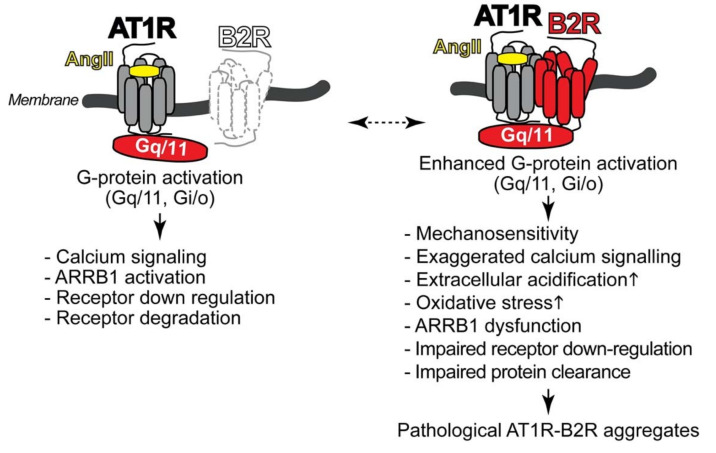
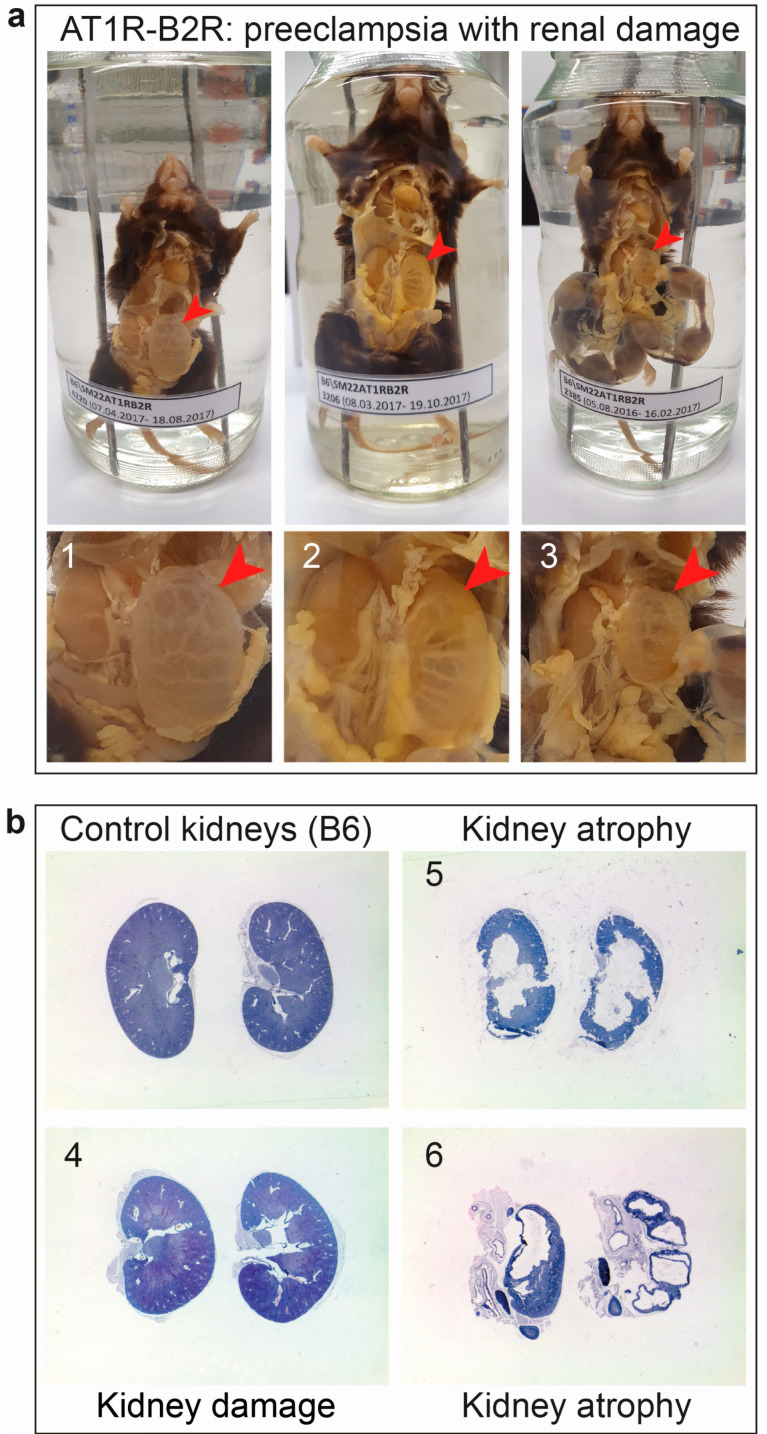
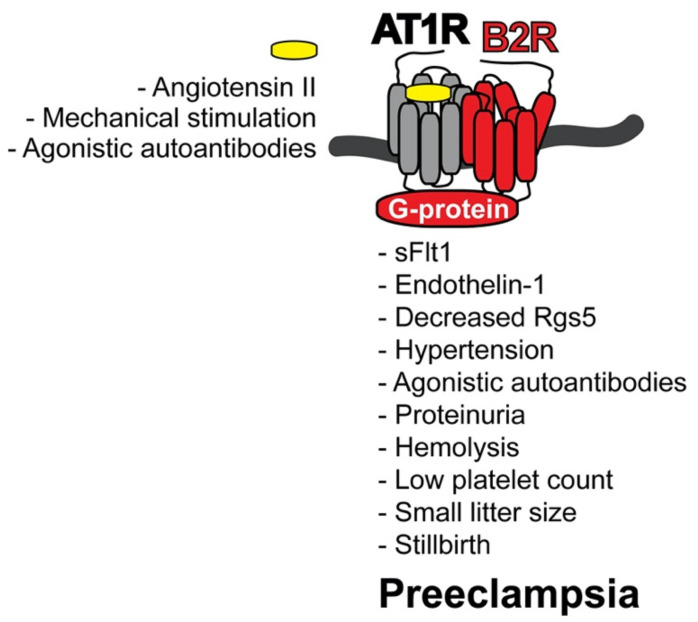
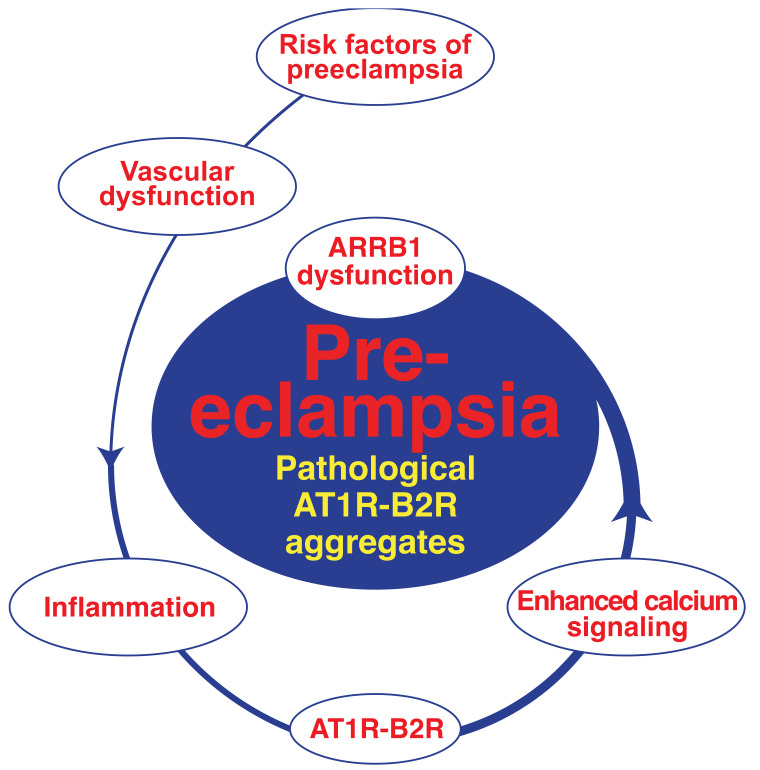
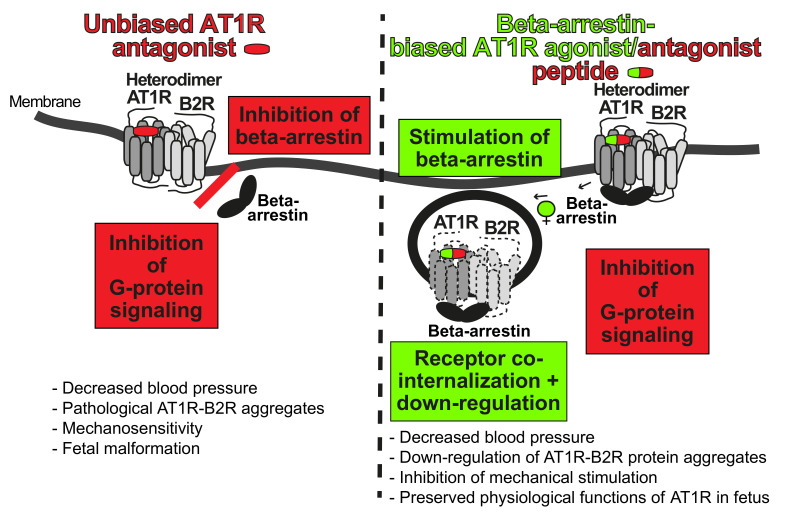
Preeclampsia is one of the most frequent and severe complications of pregnancy. Symptoms of preeclampsia usually occur after 20 weeks of pregnancy and include hypertension and kidney dysfunction with proteinuria. Up to now, delivery of the infant has been the most effective and life-saving treatment to alleviate symptoms of preeclampsia because a causative treatment does not exist, which could prolong a pregnancy complicated with preeclampsia. Preeclampsia is a complex medical condition, which is attributed to a variety of different risk factors and causes. Risk factors account for insufficient placentation and impaired vasculogenesis and finally culminate in this life-threatening condition of pregnancy. Despite progress, many pathomechanisms and causes of preeclampsia are still incompletely understood. In recent years, it was found that excessive protein complex formation between G-protein-coupled receptors is a common sign of preeclampsia. Specifically, the aberrant heteromerization of two vasoactive G-protein-coupled receptors (GPCRs), the angiotensin II AT1 receptor and the bradykinin B2 receptor, is a causative factor of preeclampsia symptoms. Based on this knowledge, inhibition of abnormal GPCR protein complex formation is an experimental treatment approach of preeclampsia. This review summarizes the impact of pathological GPCR protein aggregation on symptoms of preeclampsia and delineates potential new therapeutic targets.
子痫前期是妊娠中最常见且最严重的并发症之一。子痫前期的症状通常在妊娠 20 周后出现,包括高血压和肾功能障碍伴蛋白尿。到目前为止,分娩是缓解子痫前期症状最有效和最能救命的治疗方法,因为目前还没有针对病因的治疗方法,这可能会延长患有子痫前期的妊娠时间。子痫前期是一种复杂的医学病症,归因于多种不同的风险因素和病因。风险因素导致胎盘形成不足和血管生成受损,最终导致这种危及生命的妊娠状况。尽管取得了进展,但子痫前期的许多发病机制和病因仍不完全清楚。近年来,人们发现 G 蛋白偶联受体之间过度的蛋白质复合物形成是子痫前期的一个共同特征。具体来说,两种血管活性 G 蛋白偶联受体(GPCR),血管紧张素 II AT1 受体和缓激肽 B2 受体的异常异源二聚化,是子痫前期症状的一个致病因素。基于这一知识,抑制异常 GPCR 蛋白复合物的形成是子痫前期的一种实验治疗方法。本文综述了病理性 GPCR 蛋白聚集对子痫前期症状的影响,并描绘了潜在的新治疗靶点。