Department of Immunology and Inflammation, Imperial College London, London, UK.
Department of Biomedical Engineering, Cleveland Clinic Lerner Research Institute, Cleveland, Ohio, USA.
J Biol Chem. 2021 Nov;297(5):101323. doi: 10.1016/j.jbc.2021.101323. Epub 2021 Oct 21.
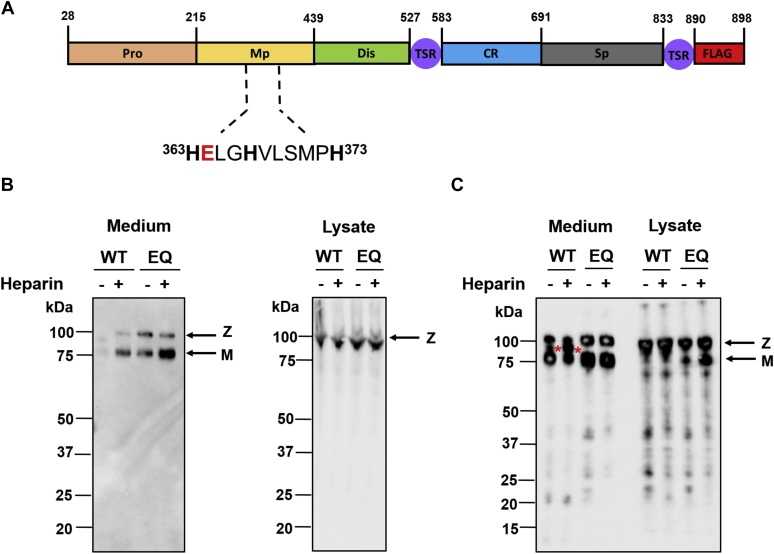
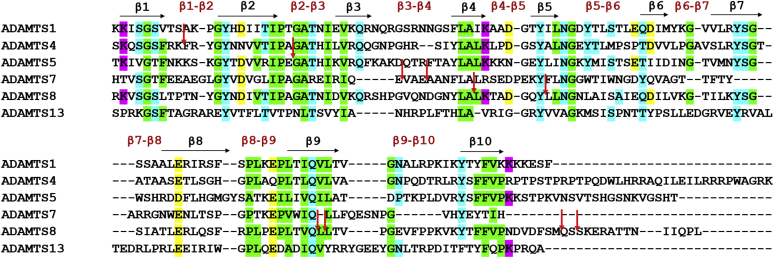
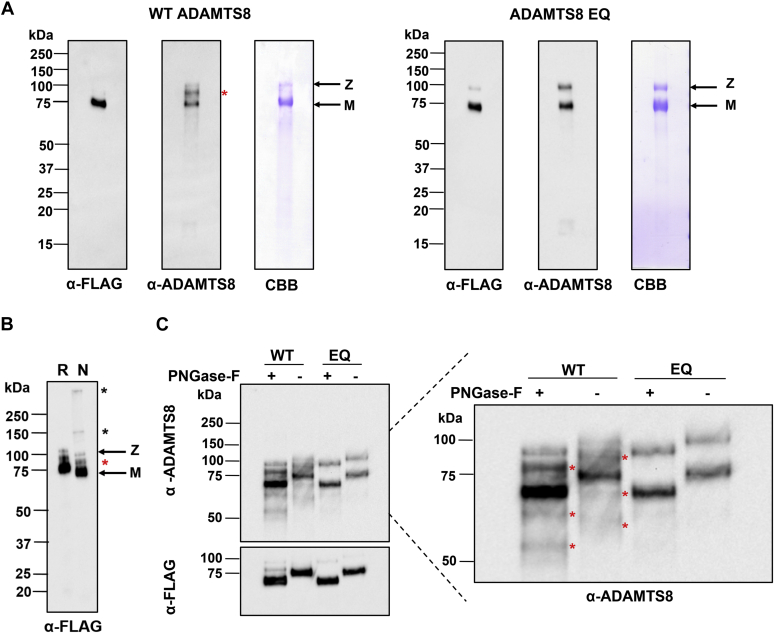
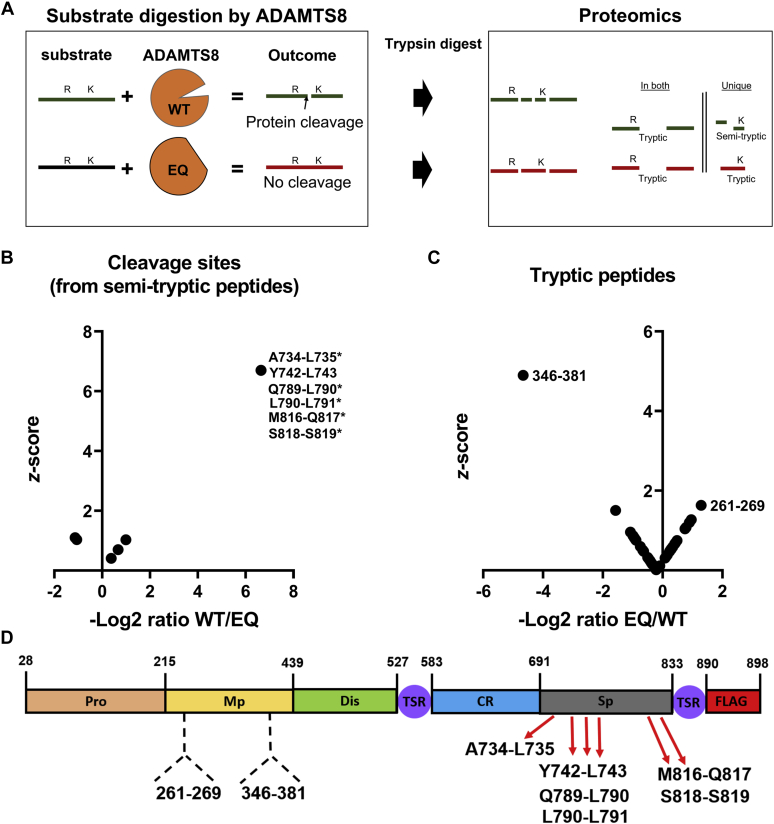
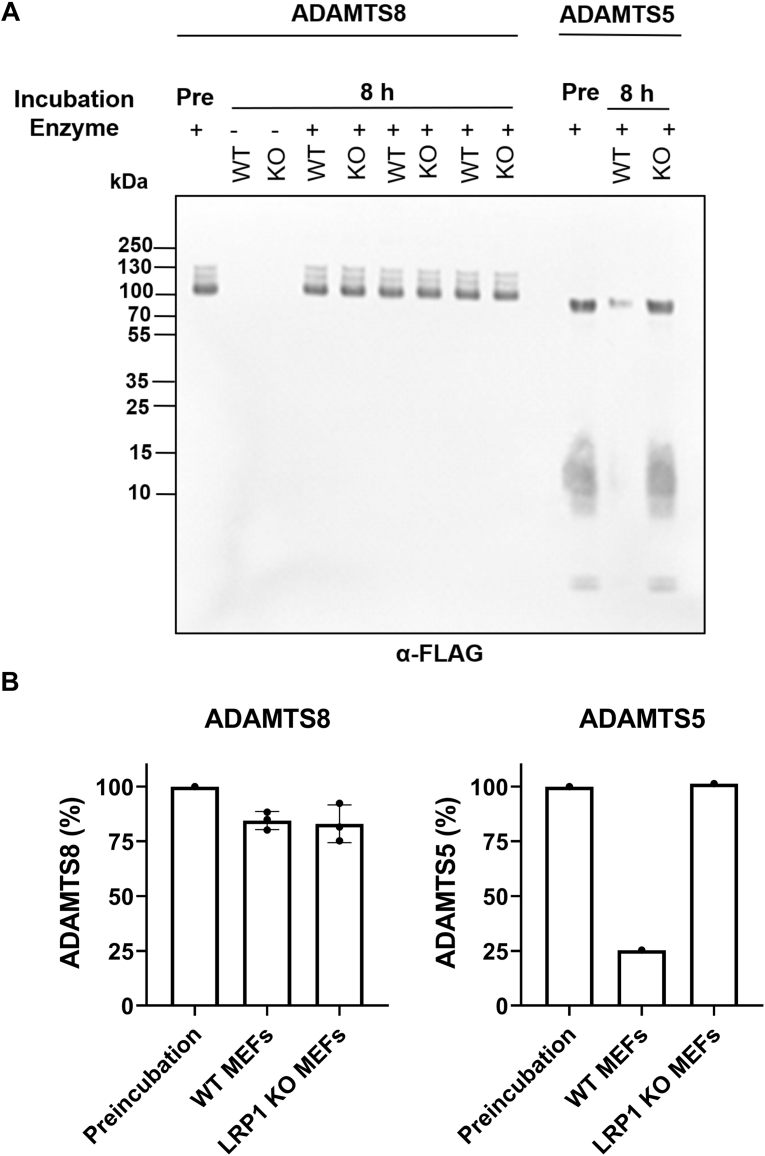
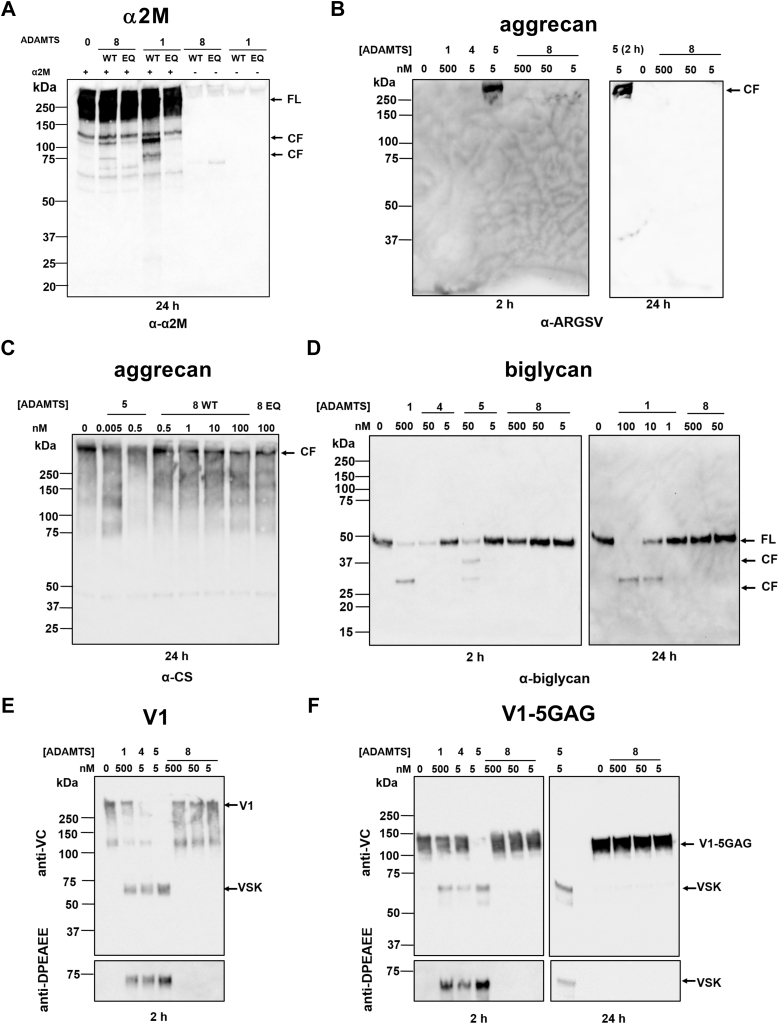
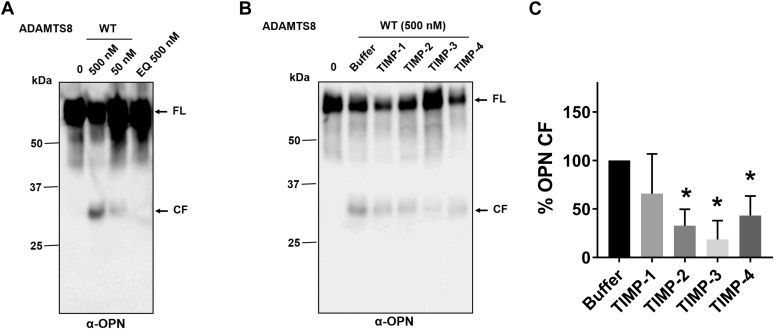
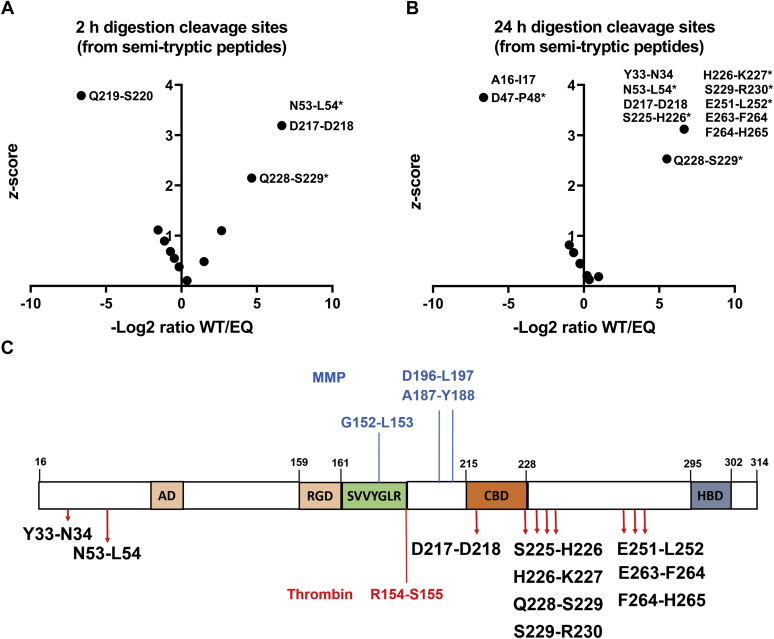
A disintegrin-like and metalloprotease domain with thrombospondin type 1 motifs (ADAMTS)8 is a secreted protease, which was recently implicated in pathogenesis of pulmonary arterial hypertension (PAH). However, the substrate repertoire of ADAMTS8 and regulation of its activity are incompletely understood. Although considered a proteoglycanase because of high sequence similarity and close phylogenetic relationship to the proteoglycan-degrading proteases ADAMTS1, 4, 5, and 15, as well as tight genetic linkage with ADAMTS15 on human chromosome 11, its aggrecanase activity was reportedly weak. Several post-translational factors are known to regulate ADAMTS proteases such as autolysis, inhibition by endogenous inhibitors, and receptor-mediated endocytosis, but their impacts on ADAMTS8 are unknown. Here, we show that ADAMTS8 undergoes autolysis at six different sites within its spacer domain. We also found that in contrast to ADAMTS4 and 5, ADAMTS8 levels were not regulated through low-density lipoprotein receptor-related protein 1 (LRP1)-mediated endocytosis. Additionally, ADAMTS8 lacked significant activity against the proteoglycans aggrecan, versican, and biglycan. Instead, we found that ADAMTS8 cleaved osteopontin, a phosphoprotein whose expression is upregulated in PAH. Multiple ADAMTS8 cleavage sites were identified using liquid chromatography-tandem mass spectrometry. Osteopontin cleavage by ADAMTS8 was efficiently inhibited by TIMP-3, an endogenous inhibitor of ADAMTS1, 4, and 5, as well as by TIMP-2, which has no previously reported inhibitory activity against other ADAMTS proteases. These differences in post-translational regulation and substrate repertoire differentiate ADAMTS8 from other family members and may help to elucidate its role in PAH.
一种解整合素样金属蛋白酶与血小板反应蛋白 1 型基序(ADAMTS)8 是一种分泌型蛋白酶,最近被认为与肺动脉高压(PAH)的发病机制有关。然而,ADAMTS8 的底物谱及其活性的调节尚不完全清楚。尽管由于与蛋白聚糖降解蛋白酶 ADAMTS1、4、5 和 15 的高序列相似性和密切的系统发育关系,以及与人类 11 号染色体上的 ADAMTS15 的紧密遗传连锁关系,被认为是一种蛋白聚糖酶,但它的聚集酶活性较弱。有几种已知的翻译后因子可以调节 ADAMTS 蛋白酶,如自溶、内源性抑制剂的抑制和受体介导的内吞作用,但它们对 ADAMTS8 的影响尚不清楚。在这里,我们显示 ADAMTS8 在其间隔区的六个不同部位发生自溶。我们还发现,与 ADAMTS4 和 5 相反,ADAMTS8 的水平不受低密度脂蛋白受体相关蛋白 1(LRP1)介导的内吞作用调节。此外,ADAMTS8 对蛋白聚糖聚集素、 versican 和 biglycan 没有显著的活性。相反,我们发现 ADAMTS8 能切割骨桥蛋白,一种在 PAH 中表达上调的磷酸蛋白。使用液相色谱-串联质谱法鉴定了多个 ADAMTS8 切割位点。ADAMTS8 对骨桥蛋白的切割被 TIMP-3 有效抑制,TIMP-3 是 ADAMTS1、4 和 5 的内源性抑制剂,也被 TIMP-2 抑制,TIMP-2 以前没有报道对其他 ADAMTS 蛋白酶有抑制活性。这些翻译后调节和底物谱的差异使 ADAMTS8 与其他家族成员区分开来,这可能有助于阐明其在 PAH 中的作用。