Cologne Excellence Cluster for Cellular Stress Responses in Aging-Associated Diseases (CECAD), University of Cologne, Joseph Stelzmann Strasse 26, 50931, Cologne, Germany.
Center for Molecular Medicine Cologne (CMMC), University of Cologne, Cologne, Germany.
J Neural Transm (Vienna). 2022 Feb;129(2):141-172. doi: 10.1007/s00702-021-02431-y. Epub 2021 Oct 23.
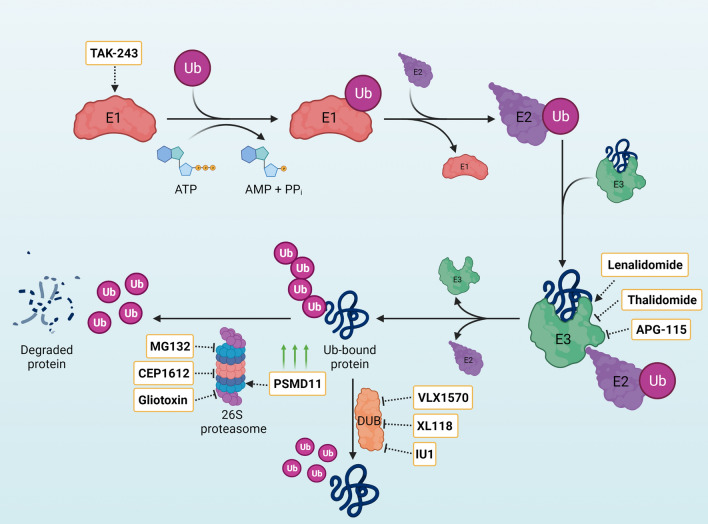
Protein homeostasis, or proteostasis, is essential for cell function and viability. Unwanted, damaged, misfolded and aggregated proteins are degraded by the ubiquitin-proteasome system (UPS) and the autophagy-lysosome pathway. Growing evidence indicates that alterations in these major proteolytic mechanisms lead to a demise in proteostasis, contributing to the onset and development of distinct diseases. Indeed, dysregulation of the UPS or autophagy is linked to several neurodegenerative, infectious and inflammatory disorders as well as cancer. Thus, modulation of protein clearance pathways is a promising approach for therapeutics. In this review, we discuss recent findings and open questions on how targeting proteolytic mechanisms could be applied for disease intervention.
蛋白质动态平衡,或蛋白质稳态,对细胞功能和活力至关重要。细胞通过泛素-蛋白酶体系统(UPS)和自噬-溶酶体途径降解不需要的、受损的、错误折叠和聚集的蛋白质。越来越多的证据表明,这些主要的蛋白水解机制的改变导致蛋白质动态平衡的丧失,导致不同疾病的发生和发展。事实上,UPS 或自噬的失调与几种神经退行性、感染性和炎症性疾病以及癌症有关。因此,调节蛋白清除途径是一种有前途的治疗方法。在这篇综述中,我们讨论了靶向蛋白水解机制在疾病干预中的应用的最新发现和未解决的问题。