Zhang Chong, Huang Rui, Ma Xirui, Chen Jiehui, Han Xinlu, Li Li, Luo Lingfei, Ruan Hua, Huang Honghui
Key Laboratory of Freshwater Fish Reproduction and Development, Ministry of Education, State Key Laboratory Breeding Base of Eco-Environments and Bio-Resources of the Three Gorges Reservoir Region, School of Life Sciences, Southwest University, Chongqing, China.
Front Cell Dev Biol. 2021 Oct 7;9:704730. doi: 10.3389/fcell.2021.704730. eCollection 2021.
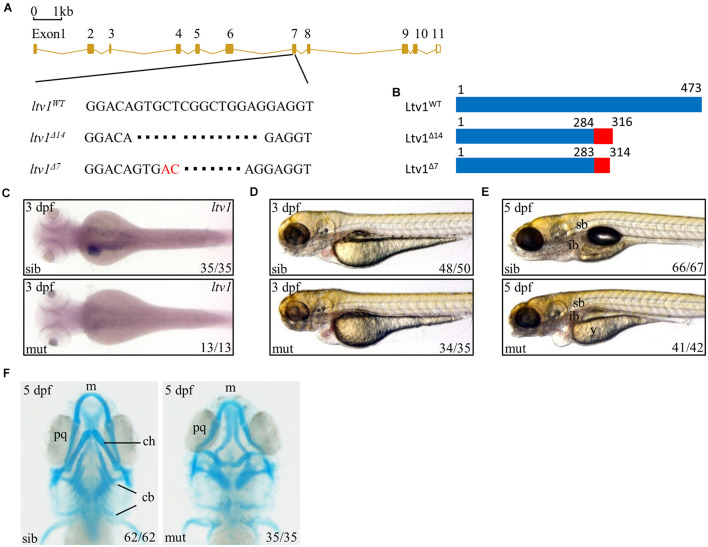
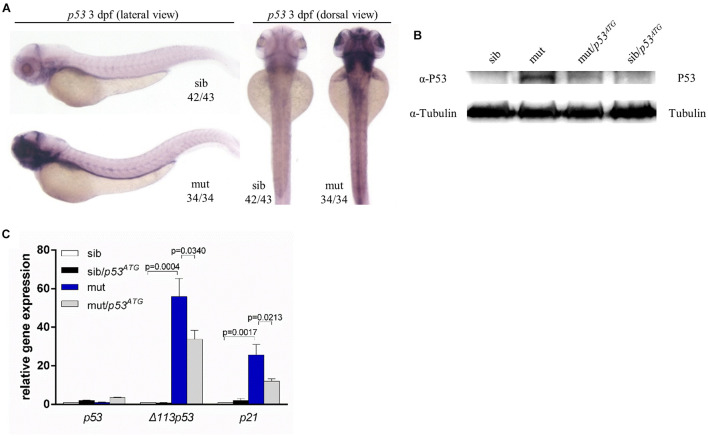
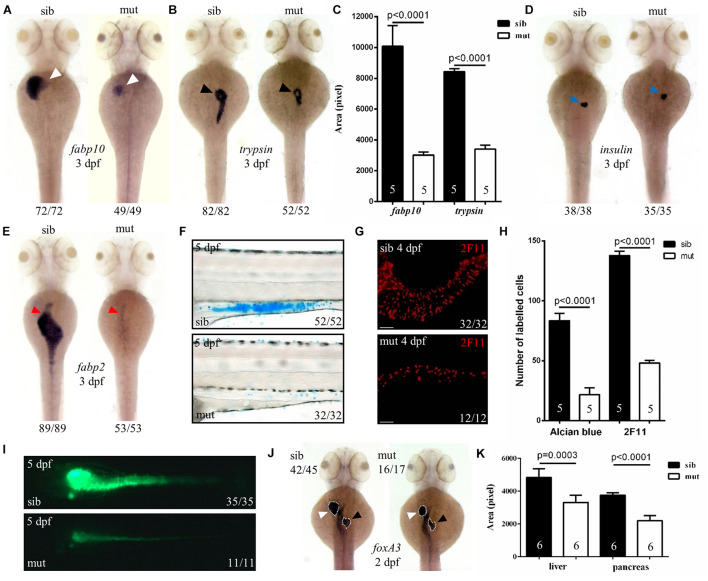
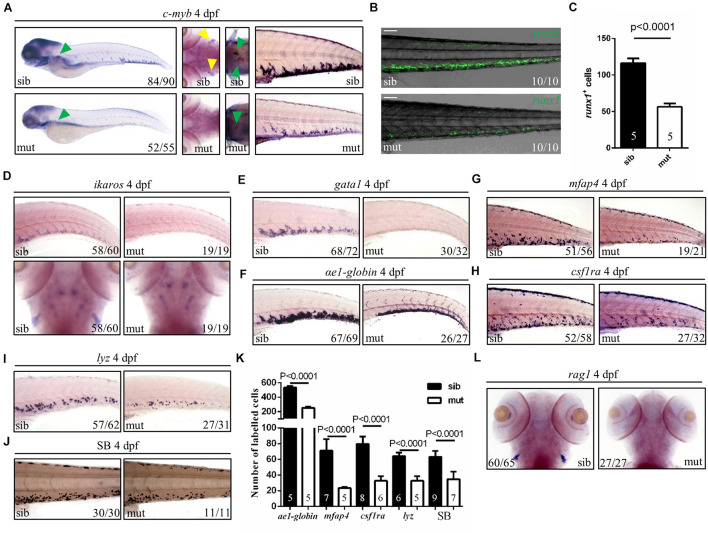
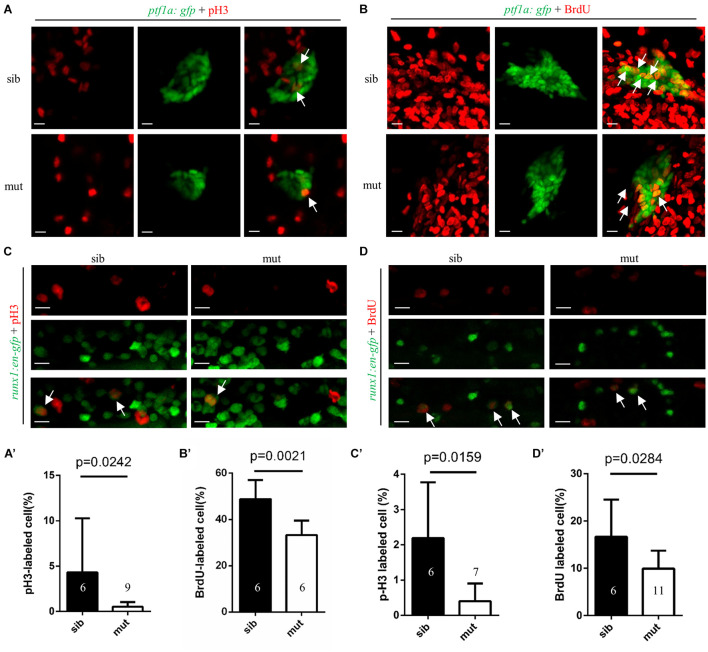
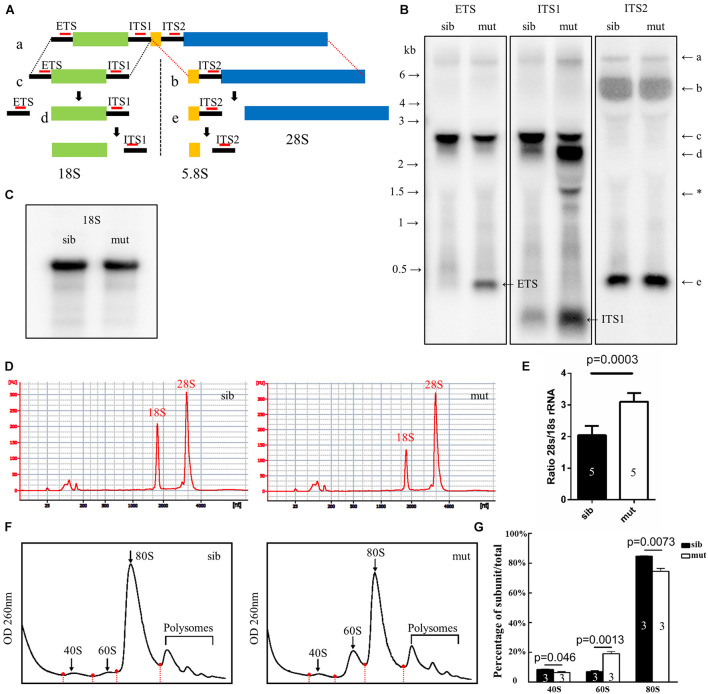
Ribosome biogenesis is a fundamental activity in cells. Ribosomal dysfunction underlies a category of diseases called ribosomopathies in humans. The symptomatic characteristics of ribosomopathies often include abnormalities in craniofacial skeletons, digestive organs, and hematopoiesis. Consistently, disruptions of ribosome biogenesis in animals are deleterious to embryonic development with hypoplasia of digestive organs and/or impaired hematopoiesis. In this study, , a gene involved in the small ribosomal subunit assembly, was knocked out in zebrafish by clustered regularly interspaced short palindromic repeats (CRISPRs)/CRISPR associated protein 9 (Cas9) technology. The recessive lethal mutation resulted in disrupted ribosome biogenesis, and embryos displayed hypoplastic craniofacial cartilage, digestive organs, and hematopoiesis. In addition, we showed that the impaired cell proliferation, instead of apoptosis, led to the defects in exocrine pancreas and hematopoietic stem and progenitor cells (HSPCs) in embryos. It was reported that loss of function of genes associated with ribosome biogenesis often caused phenotypes in a P53-dependent manner. In embryos, both P53 protein level and the expression of target genes, Δ and , were upregulated. However, knockdown of failed to rescue the phenotypes in larvae. Taken together, our data demonstrate that LTV1 ribosome biogenesis factor (Ltv1) plays an essential role in digestive organs and hematopoiesis development in zebrafish in a P53-independent manner.
核糖体生物合成是细胞中的一项基本活动。核糖体功能障碍是人类一类称为核糖体病的疾病的基础。核糖体病的症状特征通常包括颅面骨骼、消化器官和造血功能异常。同样,动物体内核糖体生物合成的破坏对胚胎发育有害,会导致消化器官发育不全和/或造血功能受损。在本研究中,通过成簇规律间隔短回文重复序列(CRISPRs)/CRISPR相关蛋白9(Cas9)技术在斑马鱼中敲除了一个参与小核糖体亚基组装的基因。隐性致死突变导致核糖体生物合成中断,该基因敲除的胚胎表现出颅面软骨、消化器官发育不全以及造血功能异常。此外,我们发现细胞增殖受损而非细胞凋亡导致了该基因敲除胚胎的外分泌胰腺和造血干细胞及祖细胞(HSPCs)缺陷。据报道,与核糖体生物合成相关的基因功能丧失通常以P53依赖的方式导致表型。在该基因敲除的胚胎中,P53蛋白水平以及其靶基因Δ和的表达均上调。然而,敲低该基因未能挽救该基因敲除幼虫的表型。综上所述,我们的数据表明LTV1核糖体生物合成因子(Ltv1)在斑马鱼的消化器官和造血发育中以不依赖P53的方式发挥着重要作用。