Pharmetheus AB, Uppsala, Sweden.
Sanofi, Diegem, Belgium.
J Clin Pharmacol. 2022 Mar;62(3):409-421. doi: 10.1002/jcph.1991. Epub 2021 Nov 29.
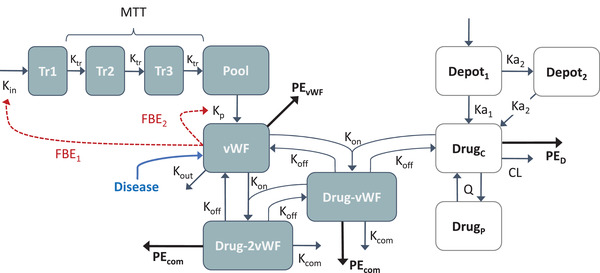
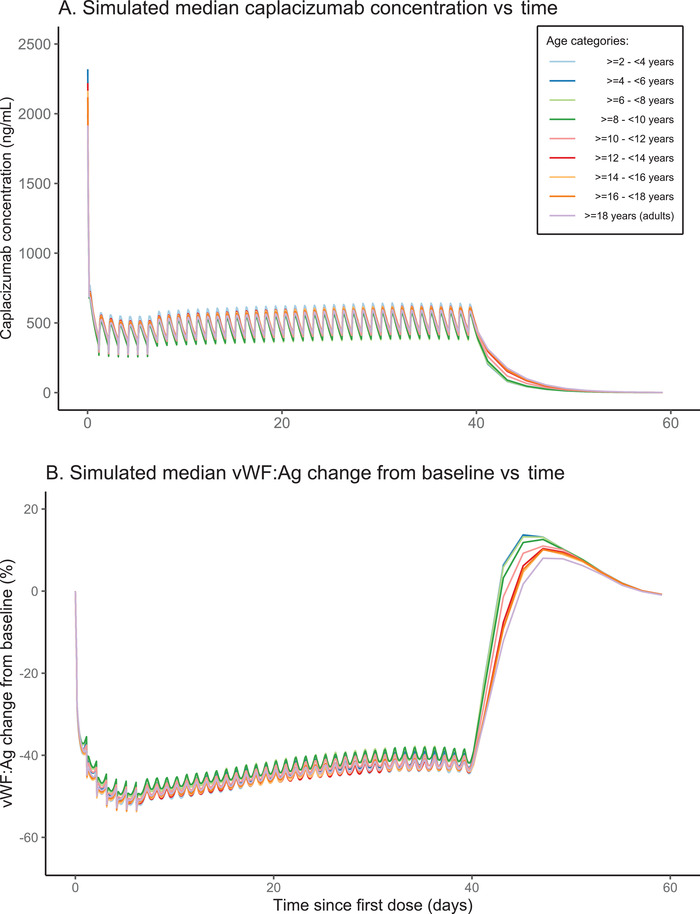
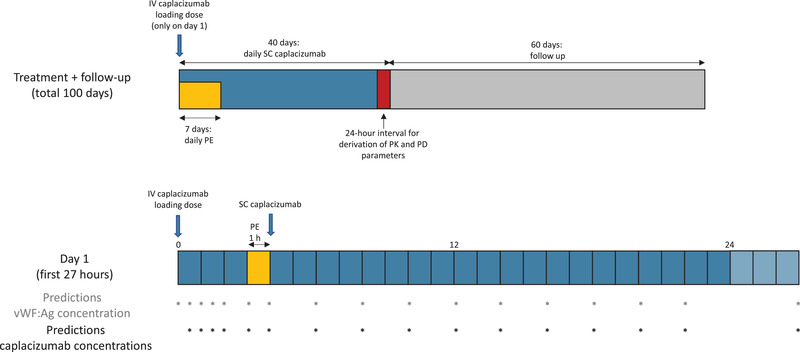
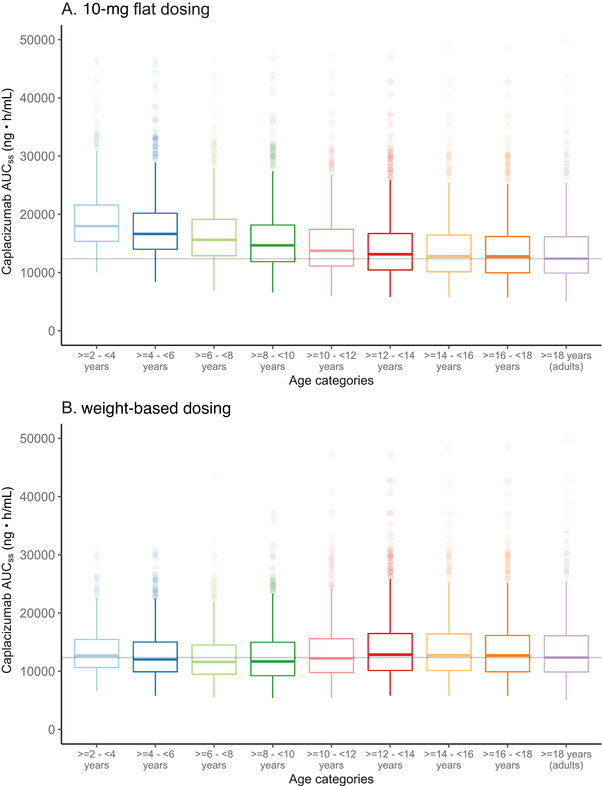
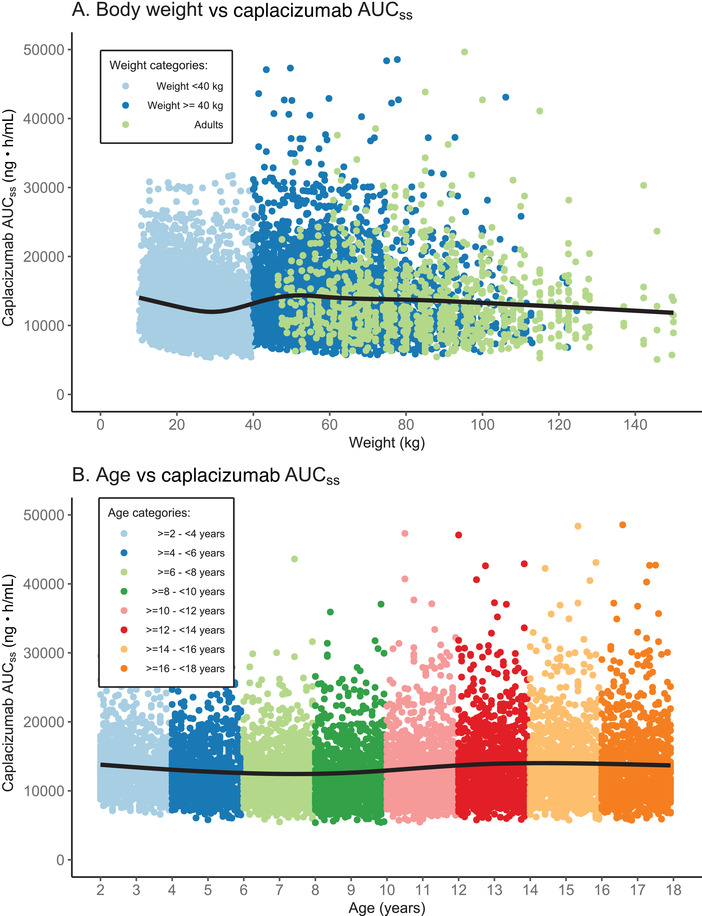
Acquired thrombotic thrombocytopenic purpura (aTTP) is a rare and life-threatening autoimmune thrombotic microangiopathy. Caplacizumab, evaluated in phase II and III studies in adults, shortens the time to platelet count response and reduces aTTP exacerbations, has a favorable safety profile, and can potentially reduce refractoriness and mortality associated with aTTP. Since no children with aTTP were enrolled in these clinical trials, caplacizumab has been initially approved for use only in adult patients with aTTP (10 mg). Pediatric dosing recommendations were developed using model-based simulations. A semimechanistic pharmacokinetic/pharmacodynamic population model has been developed describing the interaction between caplacizumab and von Willebrand factor antigen (vWF:Ag) following intravenous and subcutaneous administration of caplacizumab in different adult populations, at various dose levels, using nonlinear mixed-effects modeling. Based on the allometrically scaled pharmacokinetic/pharmacodynamic model, different dosing regimens were simulated in 8000 children (aged 2-18 years). Simulated caplacizumab exposures and vWF:Ag levels across different age categories were compared to an adult reference group. A simulated daily dose of 5 mg in children weighing <40 kg and of 10 mg in children weighing ≥40 kg resulted in similar exposures and vWF:Ag suppression across age and weight groups. Despite the lack of pediatric clinical data, the results of this modeling and simulation analysis constituted the basis for the European extension of indication for caplacizumab (10 mg) to adolescents aged >12 years and with a body weight ≥40 kg. This represents a rare case in which regulatory authorities have deemed a modeling and simulation study robust enough to approve a variation of indication.
获得性血栓性血小板减少性紫癜(aTTP)是一种罕见且危及生命的自身免疫性血栓性微血管病。卡普莱西珠单抗在成人的 II 期和 III 期研究中进行了评估,可缩短血小板计数反应时间,减少 aTTP 恶化,具有良好的安全性特征,并可能降低与 aTTP 相关的难治性和死亡率。由于在这些临床试验中没有招募到患有 aTTP 的儿童,卡普莱西珠单抗最初仅被批准用于成人 aTTP 患者(10mg)。儿科剂量建议是使用基于模型的模拟开发的。已经开发了一个半机械药代动力学/药效学群体模型,用于描述在不同成人人群中,以不同剂量水平,通过静脉内和皮下给予卡普莱西珠单抗后,卡普莱西珠单抗与血管性血友病因子抗原(vWF:Ag)之间的相互作用,使用非线性混合效应建模。基于比例药代动力学/药效学模型,在 8000 名儿童(年龄 2-18 岁)中模拟了不同的给药方案。比较了不同年龄组的模拟卡普莱西珠单抗暴露量和 vWF:Ag 水平与成人参考组。对于体重<40kg 的儿童,每天给予 5mg,对于体重≥40kg 的儿童,每天给予 10mg 的模拟剂量,在所有年龄和体重组中均能产生相似的暴露量和 vWF:Ag 抑制作用。尽管缺乏儿科临床数据,但该建模和模拟分析的结果构成了卡普莱西珠单抗(10mg)在欧洲扩大适应证的基础,适应证扩大到年龄>12 岁且体重≥40kg 的青少年。这是监管机构认为建模和模拟研究足够稳健,可以批准适应证变更的罕见案例。