• 文献检索
  • 文档翻译
  • 深度研究
  • 学术资讯
  • Suppr Zotero 插件Zotero 插件
  • 邀请有礼
  • 套餐&价格
  • 历史记录
应用&插件
Suppr Zotero 插件Zotero 插件浏览器插件Mac 客户端Windows 客户端微信小程序
定价
高级版会员购买积分包购买API积分包
服务
文献检索文档翻译深度研究API 文档MCP 服务
关于我们
关于 Suppr公司介绍联系我们用户协议隐私条款
关注我们

Suppr 超能文献

核心技术专利:CN118964589B侵权必究
粤ICP备2023148730 号-1Suppr @ 2026

文献检索

告别复杂PubMed语法,用中文像聊天一样搜索,搜遍4000万医学文献。AI智能推荐,让科研检索更轻松。

立即免费搜索

文件翻译

保留排版,准确专业,支持PDF/Word/PPT等文件格式,支持 12+语言互译。

免费翻译文档

深度研究

AI帮你快速写综述,25分钟生成高质量综述,智能提取关键信息,辅助科研写作。

立即免费体验

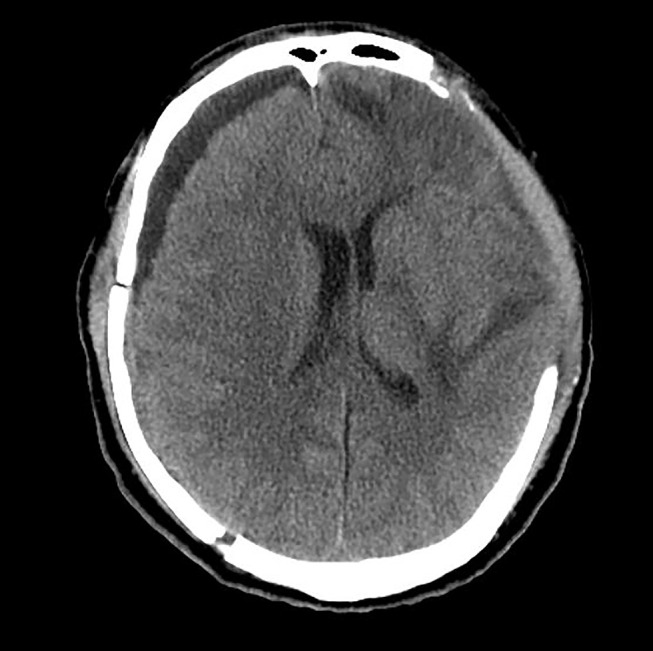
减压性颅骨切除术后压力敷料减少硬膜下积液的有效性和安全性。

Effectiveness and Safety of Pressure Dressings on Reducing Subdural Effusion After Decompressive Craniectomy.

作者信息

Huang Wanyong, Zhou Bo, Li Yingwei, Shao Yuansheng, Peng Bo, Jiang Xianchun, Xiang Tao

机构信息

Department of Neurosurgery, People's Hospital of Guanghan City, Guanghan City, Sichuan Province, People's Republic of China.

出版信息

Neuropsychiatr Dis Treat. 2021 Oct 14;17:3119-3125. doi: 10.2147/NDT.S332653. eCollection 2021.

DOI:10.2147/NDT.S332653
PMID:34703231
原文链接:https://pmc.ncbi.nlm.nih.gov/articles/PMC8524178/
Abstract

OBJECTIVE

Decompressive craniectomy as a treatment is often used in the rescue treatment of critically ill patients in neurosurgery; however, there are many complications after this operation. Subdural effusion is a common complication after decompressive craniectomy. Once it occurs, it can cause further problems for the patient. Therefore, the purpose of this study was to explore the safety and effectiveness of pressure dressings for subdural effusion after decompressive craniectomy.

METHODS

Patients who underwent decompressive craniectomy in our hospital from January 2016 to January 2021 were included in this study, and all patients were followed up for 6 months or more. After the operation, the patients were divided into two groups according to whether they received a pressure dressing or a traditional dressing. Subdural effusion, cerebrospinal fluid leakage, hydrocephalus and other complications were compared between the two groups, and the differences in hospital duration, cost and prognosis between the two groups were analyzed.

RESULTS

A total of 123 patients were included in this study. Among them, 62 patients chose pressure dressings, and 61 patients chose traditional dressings. The incidence of subdural effusion in the pressure dressing group was significantly lower than that in the traditional dressing group (P<0.05). There was no difference between the two groups in cerebrospinal fluid leakage and hydrocephalus (P > 0.05). In addition, the length of hospital stay and the total cost in the pressure dressing group were significantly lower (P<0.05).

CONCLUSION

Pressure dressing can effectively reduce the occurrence of subdural effusion after decompressive craniectomy, and it does not increase the occurrence of other cerebrospinal fluid-related complications.

摘要

目的

去骨瓣减压术作为一种治疗方法常用于神经外科危重症患者的抢救治疗;然而,该手术后存在诸多并发症。硬膜下积液是去骨瓣减压术后常见的并发症。一旦发生,会给患者带来进一步的问题。因此,本研究旨在探讨加压包扎治疗去骨瓣减压术后硬膜下积液的安全性和有效性。

方法

纳入2016年1月至2021年1月在我院行去骨瓣减压术的患者,所有患者均随访6个月以上。术后根据是否接受加压包扎或传统包扎将患者分为两组。比较两组硬膜下积液、脑脊液漏、脑积水等并发症,并分析两组住院时间、费用及预后的差异。

结果

本研究共纳入123例患者。其中,62例患者选择加压包扎,61例患者选择传统包扎。加压包扎组硬膜下积液发生率显著低于传统包扎组(P<0.05)。两组脑脊液漏和脑积水发生率无差异(P>0.05)。此外,加压包扎组住院时间和总费用显著更低(P<0.05)。

结论

加压包扎可有效降低去骨瓣减压术后硬膜下积液的发生,且不增加其他脑脊液相关并发症的发生。

https://cdn.ncbi.nlm.nih.gov/pmc/blobs/09ca/8524178/872523c0004a/NDT-17-3119-g0002.jpg
https://cdn.ncbi.nlm.nih.gov/pmc/blobs/09ca/8524178/4331187f30d8/NDT-17-3119-g0001.jpg
https://cdn.ncbi.nlm.nih.gov/pmc/blobs/09ca/8524178/872523c0004a/NDT-17-3119-g0002.jpg
https://cdn.ncbi.nlm.nih.gov/pmc/blobs/09ca/8524178/4331187f30d8/NDT-17-3119-g0001.jpg
https://cdn.ncbi.nlm.nih.gov/pmc/blobs/09ca/8524178/872523c0004a/NDT-17-3119-g0002.jpg

相似文献

1
Effectiveness and Safety of Pressure Dressings on Reducing Subdural Effusion After Decompressive Craniectomy.减压性颅骨切除术后压力敷料减少硬膜下积液的有效性和安全性。
Neuropsychiatr Dis Treat. 2021 Oct 14;17:3119-3125. doi: 10.2147/NDT.S332653. eCollection 2021.
2
Early pressure dressing for the prevention of subdural effusion secondary to decompressive craniectomy in patients with severe traumatic brain injury.早期加压包扎预防重型颅脑损伤患者减压性颅骨切除术后硬膜下积液
J Craniofac Surg. 2014 Sep;25(5):1836-9. doi: 10.1097/SCS.0b013e3182a21056.
3
Effective treatment via early cranioplasty for intractable contralateral subdural effusion after standard decompressive craniectomy in patients with severe traumatic brain injury.早期颅骨修补术对重型颅脑损伤患者标准大骨瓣减压术后顽固性对侧硬膜下积液的有效治疗
Clin Neurol Neurosurg. 2016 Oct;149:87-93. doi: 10.1016/j.clineuro.2016.08.004. Epub 2016 Aug 2.
4
Decompressive craniectomy for severe traumatic brain injury: the relationship between surgical complications and the prediction of an unfavourable outcome.严重创伤性脑损伤的减压性颅骨切除术:手术并发症与不良预后预测之间的关系
Injury. 2014 Sep;45(9):1332-9. doi: 10.1016/j.injury.2014.03.007. Epub 2014 Mar 20.
5
Analysis of complications following decompressive craniectomy for traumatic brain injury.创伤性脑损伤减压性颅骨切除术后并发症分析
J Korean Neurosurg Soc. 2010 Sep;48(3):244-50. doi: 10.3340/jkns.2010.48.3.244. Epub 2010 Sep 30.
6
Subdural hygroma following decompressive craniectomy or non-decompressive craniectomy in patients with traumatic brain injury: Clinical features and risk factors.创伤性脑损伤患者行减压性颅骨切除术或非减压性颅骨切除术后的硬脑膜下积液:临床特征及危险因素
Brain Inj. 2015;29(7-8):971-80. doi: 10.3109/02699052.2015.1004760. Epub 2015 Apr 27.
7
Incidence and risk factors for post-traumatic hydrocephalus following decompressive craniectomy for intractable intracranial hypertension and evacuation of mass lesions.创伤性脑积水在难治性颅内高压减压颅骨切除术和脑内占位病变清除术后的发生率及危险因素。
J Neurotrauma. 2012 Jul 1;29(10):1872-8. doi: 10.1089/neu.2012.2356.
8
Surgical complications of decompressive craniectomy in patients with head injury.颅脑损伤患者减压性颅骨切除术的手术并发症
Rozhl Chir. 2020 Summer;99(7):316-322. doi: 10.33699/PIS.2020.99.7.316-322.
9
Contralateral subdural effusion secondary to decompressive craniectomy performed in patients with severe traumatic brain injury: incidence, clinical presentations, treatment and outcome.严重创伤性脑损伤患者行去骨瓣减压术后对侧硬膜下积液:发生率、临床表现、治疗及预后
Med Princ Pract. 2009;18(1):16-20. doi: 10.1159/000163040. Epub 2008 Dec 4.
10
Contralateral subdural effusion after decompressive craniectomy: What is the optimal treatment?去骨瓣减压术后对侧硬脑膜下积液:最佳治疗方法是什么?
Clin Neurol Neurosurg. 2021 Nov;210:106950. doi: 10.1016/j.clineuro.2021.106950. Epub 2021 Sep 17.

引用本文的文献

1
Safety and efficacy of a 3D-printed external cranial protection device in preventing complications after unilateral supratentorial decompressive craniectomy: A retrospective cohort study.3D打印的颅骨外部保护装置预防单侧幕上减压性颅骨切除术后并发症的安全性和有效性:一项回顾性队列研究。
Medicine (Baltimore). 2024 Dec 6;103(49):e40501. doi: 10.1097/MD.0000000000040501.

本文引用的文献

1
Endoscopic-assisted surgery for skull defects with subdural effusion.内镜辅助治疗伴有硬膜下积液的颅骨缺损手术
Wideochir Inne Tech Maloinwazyjne. 2021 Mar;16(1):219-226. doi: 10.5114/wiitm.2020.99350. Epub 2020 Sep 25.
2
Scenario for the use of effusion-peritoneal shunt necessary against subdural effusion secondary to decompressive craniectomy.因减压性颅骨切除术引起的硬膜下积液需使用引流-腹腔分流术的情况。
Clin Neurol Neurosurg. 2021 Apr;203:106598. doi: 10.1016/j.clineuro.2021.106598. Epub 2021 Mar 11.
3
Guidelines for the Management of Severe Traumatic Brain Injury: 2020 Update of the Decompressive Craniectomy Recommendations.
严重创伤性脑损伤管理指南:去骨瓣减压术推荐的 2020 年更新。
Neurosurgery. 2020 Sep 1;87(3):427-434. doi: 10.1093/neuros/nyaa278.
4
Decompressive Craniectomy Is Associated With Good Quality of Life Up to 10 Years After Rehabilitation From Traumatic Brain Injury.去骨瓣减压术与创伤性脑损伤康复后长达 10 年的高质量生活相关。
Crit Care Med. 2020 Aug;48(8):1157-1164. doi: 10.1097/CCM.0000000000004387.
5
Factors involved in the development of subdural hygroma after decompressive craniectomy for traumatic brain injury. A systematic review and meta-analysis.颅脑创伤减压性颅骨切除术后脑脊液皮下肿形成的相关因素:系统评价和荟萃分析。
J Clin Neurosci. 2020 Aug;78:273-276. doi: 10.1016/j.jocn.2020.05.033. Epub 2020 May 10.
6
Role of the patient comorbidity in the recurrence of chronic subdural hematomas.患者合并症在慢性硬脑膜下血肿复发中的作用。
Neurosurg Rev. 2021 Apr;44(2):971-976. doi: 10.1007/s10143-020-01274-7. Epub 2020 Mar 7.
7
Decompressive craniectomy for the treatment of high intracranial pressure in closed traumatic brain injury.去骨瓣减压术治疗闭合性颅脑损伤中的颅内高压
Cochrane Database Syst Rev. 2019 Dec 31;12(12):CD003983. doi: 10.1002/14651858.CD003983.pub3.
8
A Clinical Experience with Decompressive Craniectomy.去骨瓣减压术的临床经验
Turk Neurosurg. 2020;30(5):637-642. doi: 10.5137/1019-5149.JTN.24871-18.2.
9
Decompressive craniectomy and CSF disorders in children.儿童减压性颅骨切除术与脑脊液疾病
Childs Nerv Syst. 2017 Oct;33(10):1751-1757. doi: 10.1007/s00381-017-3542-7. Epub 2017 Sep 6.
10
Refractory Intracranial Hypertension: The Role of Decompressive Craniectomy.难治性颅内高压:减压性颅骨切除术的作用
Anesth Analg. 2017 Dec;125(6):1999-2008. doi: 10.1213/ANE.0000000000002399.