Centre for Behavioural Science and Applied Psychology, Department of Psychology, Sociology & Politics, Sheffield Hallam University, UK.
Centre for Behavioural Science and Applied Psychology, Department of Psychology, Sociology & Politics, Sheffield Hallam University, UK.
J Affect Disord. 2021 Dec 1;295:1012-1023. doi: 10.1016/j.jad.2021.08.031. Epub 2021 Sep 1.
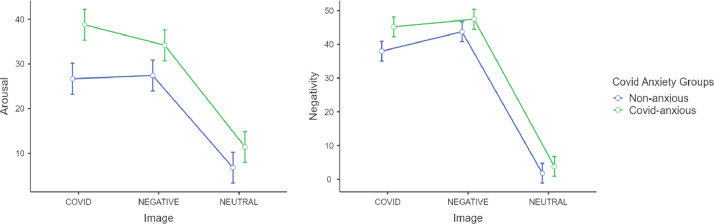
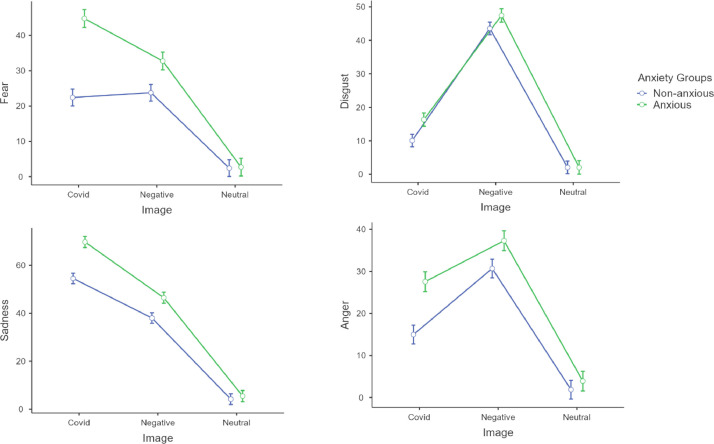
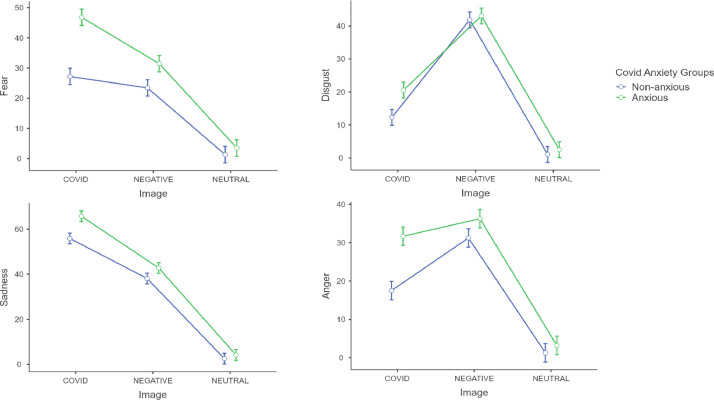
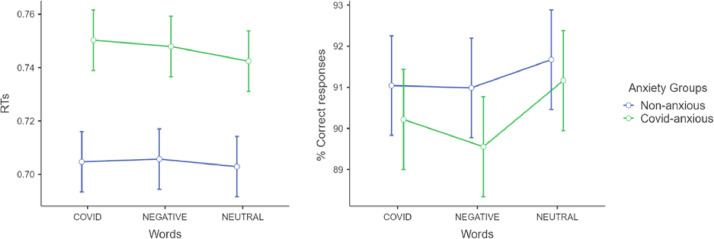
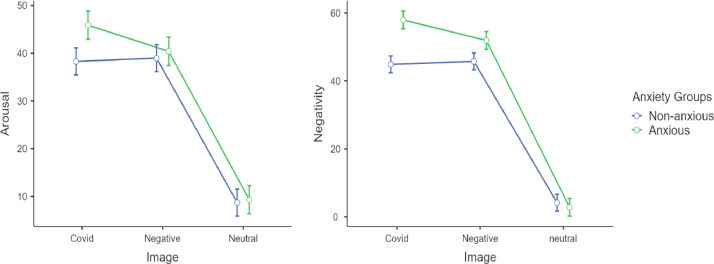
During the COVID-19 pandemic, exposure to COVID-related stimuli, has been enormous. Exposure to threat-related stimuli, can have a significant impact on people's wellbeing particularly in relation to COVID-related anxiety. The present research comprises two empirical studies. In Study 1, a newly developed Emotional Stroop Task (EST) and an Image Rating Task (IRT) were used to assess, automatic and non-automatic affective responses to COVID-related words and images during the first wave of the pandemic in the UK general population. In Study 2, the same tasks were used to evaluate the affective responses of University students during the second wave of the pandemic. Additionally, loneliness and pro-social behaviours were explored in relation COVID-related anxiety in the same population. Overall, the results showed that automatic affective responses as measured by interference effects on the EST, remained unaffected during the pandemic. However, non-automatic affective responses to COVID-related images measured by the IRT, indicated that participants rated these images as more fearful sadder and higher in anger, compared to non-COVID negative images matched for arousal and negativity and this was more evident in people with high COVID-anxiety. Trait anxiety was related to higher levels of loneliness, more prosocial behaviour and higher intentions to help others, while COVID-related anxiety mediated these effects, suggesting that for high levels of trait anxiety, participants were more likely to have helped someone in need during the pandemic when their COVID-anxiety levels were low.
在 COVID-19 大流行期间,人们接触到了大量与 COVID 相关的刺激。接触到与威胁相关的刺激会对人们的幸福感产生重大影响,尤其是与 COVID 相关的焦虑。本研究包括两项实证研究。在研究 1 中,我们使用新开发的情绪斯特鲁普任务(EST)和图像评分任务(IRT)来评估在英国普通人群中 COVID 大流行第一波期间对与 COVID 相关的单词和图像的自动和非自动情感反应。在研究 2 中,我们使用相同的任务来评估大学生在 COVID 大流行第二波期间的情感反应。此外,还探索了与 COVID 相关焦虑相关的孤独感和亲社会行为。总体而言,研究结果表明,通过 EST 上的干扰效应测量的自动情感反应在大流行期间并未受到影响。然而,通过 IRT 测量的与 COVID 相关图像的非自动情感反应表明,与非 COVID 阴性图像相比,参与者将这些图像评定为更可怕、更悲伤和更愤怒,而这些图像的唤醒度和消极度是匹配的,而且这种情况在 COVID 焦虑程度较高的人群中更为明显。特质焦虑与更高水平的孤独感、更多的亲社会行为和更高的帮助他人的意愿有关,而 COVID 相关焦虑则介导了这些影响,这表明对于高特质焦虑水平的参与者来说,当 COVID 焦虑水平较低时,他们更有可能在大流行期间帮助有需要的人。