Palacio Carlos H, Cruz Bianca, Vanier Cheryl, Cano Jose, Scott Bradford G
South Texas Health System - McAllen Department of Trauma, 301 West Expressway 83, McAllen, TX, USA.
Touro University Nevada, Henderson, Nevada, USA.
Inj Epidemiol. 2021 Oct 28;8(1):58. doi: 10.1186/s40621-021-00341-x.
Apprehensions of undocumented immigrants in the Rio Grande Valley sector of the U.S.-Mexico border have grown to account for nearly half of all apprehensions at the border. The purpose of this study is to report the prevalence, mechanism, and pattern of traumatic injuries sustained by undocumented immigrants who crossed the U.S.-Mexico border at the Rio Grande Valley sector over a span of 5 years and were treated at a local American College of Surgeons verified Level II trauma center.
A retrospective chart review was conducted from January 2014 to December 2019. Demographics, comorbidities, injury severity score (ISS), mechanism of injury, anatomical part of the body affected, hospital and ICU length of stay (LOS), and treatment costs were analyzed. Descriptive statistics for demographics, injury location and cause, and temporal trends are reported. The impact of ISS or surgical intervention on hospital LOS was analyzed using an analysis of covariance (ANCOVA).
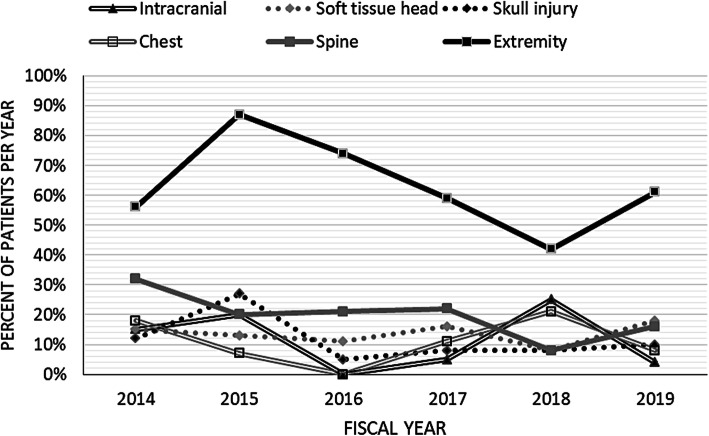
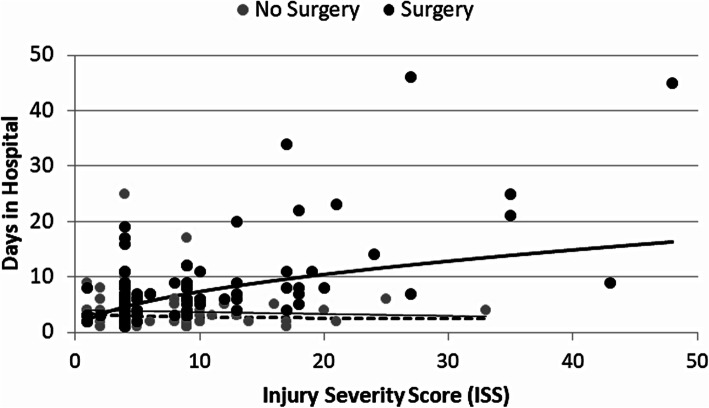
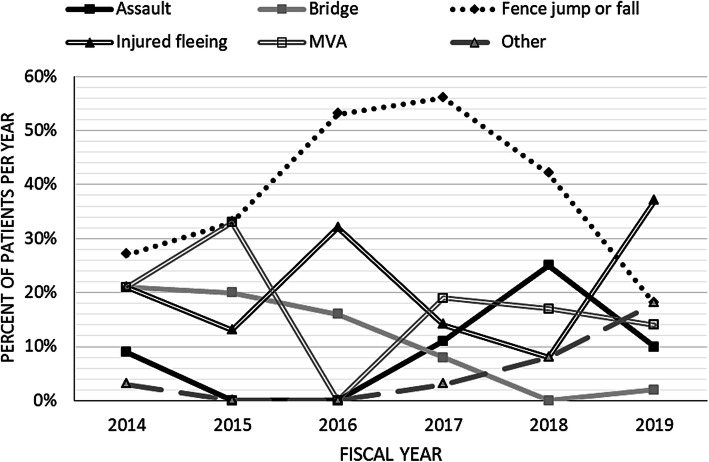
Of 178 patients, 65.2% were male with an average age of 31 (range 0-67) years old and few comorbidities (88.8%) or social risk factors (86%). Patients most commonly sustained injuries secondary to a border fence-related incident (33.7%), fleeing (22.5%), or motor vehicle accident (16.9%). There were no clear temporal trends in the total number of patients injured, or in causes of injury, between 2014 and 2019. The majority of patients (60.7%) sustained extremity injuries, followed by spine injuries (20.2%). Border fence-related incidents and fleeing increased risk of extremity injuries (Odds ratio (OR) > 3; p < 0.005), whereas motor vehicle accidents increased risk of head and chest injuries (OR > 4; p < 0.004). Extremity injuries increased the odds (OR: 9.4, p < 0.001) that surgery would be required. Surgical intervention was common (64%), and the median LOS of patients who underwent surgery was 3 days more than those who did not (p < 0.001).
In addition to border fence related injuries, undocumented immigrants also sustained injuries while fleeing and in motor vehicle accidents, among others. Extremity injuries, which were more likely with border fence-related incidents, were the most common type. This type of injury often requires surgical intervention and, therefore, a longer hospital stay for severe injuries.
在美国 - 墨西哥边境的里奥格兰德河谷地区,无证移民被拦截的数量已增长至占边境拦截总数的近一半。本研究的目的是报告在5年时间里,穿越美国 - 墨西哥边境里奥格兰德河谷地区并在当地一家经美国外科医师学会认证的二级创伤中心接受治疗的无证移民遭受创伤性损伤的患病率、机制和模式。
对2014年1月至2019年12月期间的病历进行回顾性分析。分析了人口统计学数据、合并症、损伤严重程度评分(ISS)、损伤机制、身体受影响的解剖部位、住院和重症监护病房的住院时间(LOS)以及治疗费用。报告了人口统计学、损伤部位和原因以及时间趋势的描述性统计数据。使用协方差分析(ANCOVA)分析ISS或手术干预对住院LOS的影响。
178例患者中,65.2%为男性,平均年龄31岁(范围0 - 67岁),合并症(88.8%)或社会风险因素(86%)较少。患者最常见的受伤原因是与边境围栏相关的事件(33.7%)、逃跑(22.5%)或机动车事故(16.9%)。2014年至2019年期间,受伤患者总数或受伤原因没有明显的时间趋势。大多数患者(60.7%)遭受四肢损伤,其次是脊柱损伤(20.2%)。与边境围栏相关的事件和逃跑增加了四肢受伤的风险(优势比(OR)> 3;p < 0.005),而机动车事故增加了头部和胸部受伤的风险(OR > 4;p < 0.004)。四肢损伤增加了需要手术的几率(OR:9.4,p < 0.001)。手术干预很常见(64%),接受手术的患者的中位住院时间比未接受手术的患者多3天(p < 0.001)。
除了与边境围栏相关的损伤外,无证移民在逃跑和机动车事故等情况下也会受伤。四肢损伤是最常见的类型,在与边境围栏相关的事件中更易发生。这类损伤通常需要手术干预,因此重伤患者住院时间更长。