Vroman Robin, Malfait Anne-Marie, Miller Rachel E, Malfait Fransiska, Syx Delfien
Center for Medical Genetics, Department of Biomolecular Medicine, Ghent University, Ghent, Belgium.
Division of Rheumatology, Rush University Medical Center, Chicago, IL, United States.
Front Genet. 2021 Oct 12;12:726474. doi: 10.3389/fgene.2021.726474. eCollection 2021.
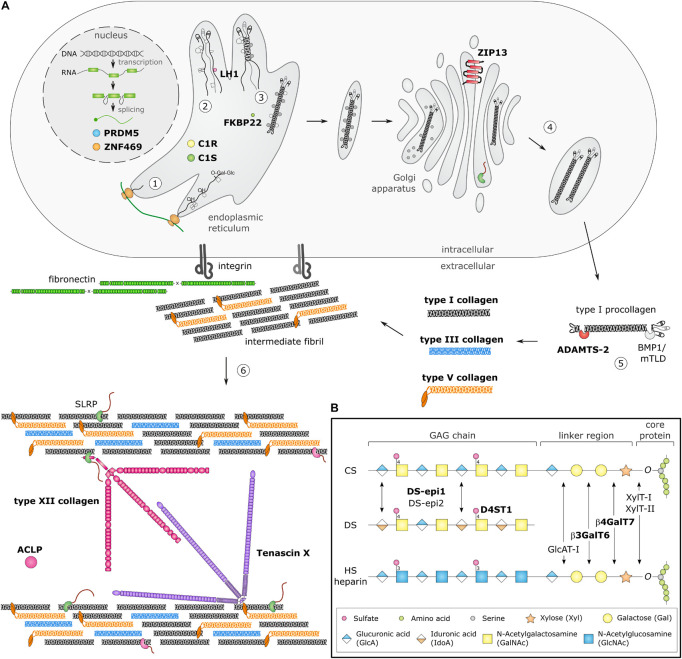
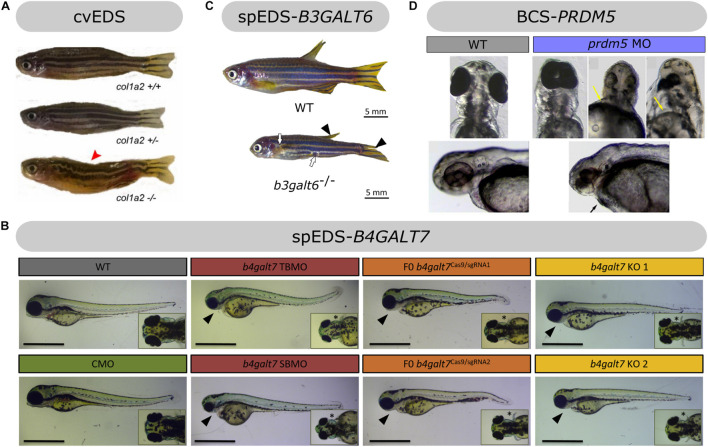
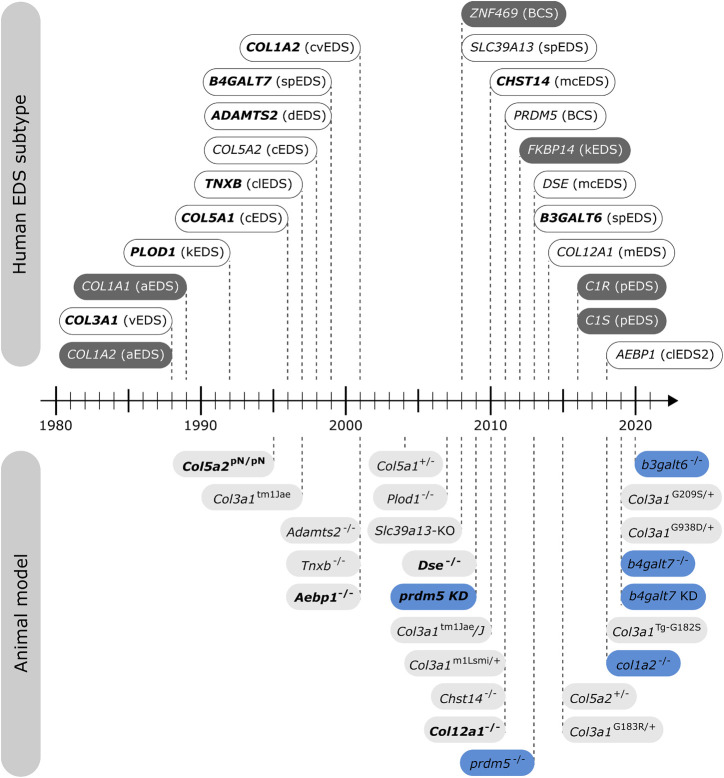
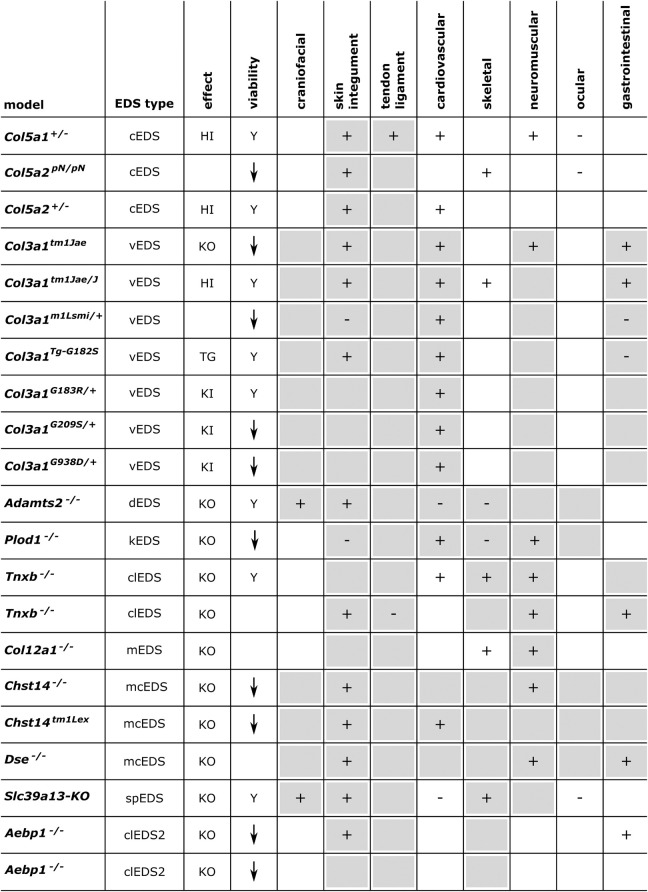
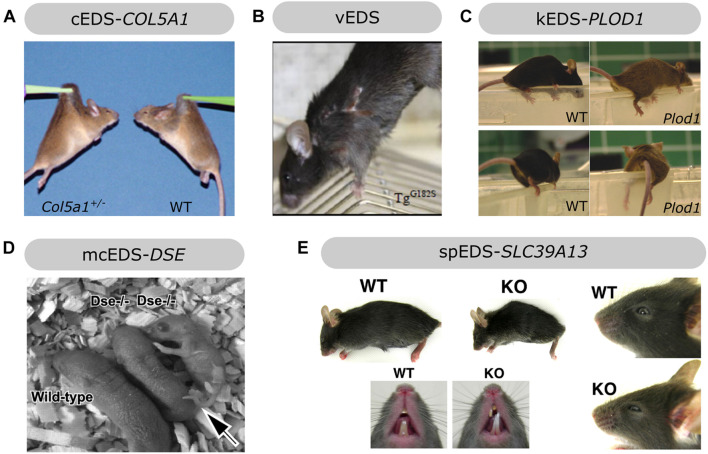
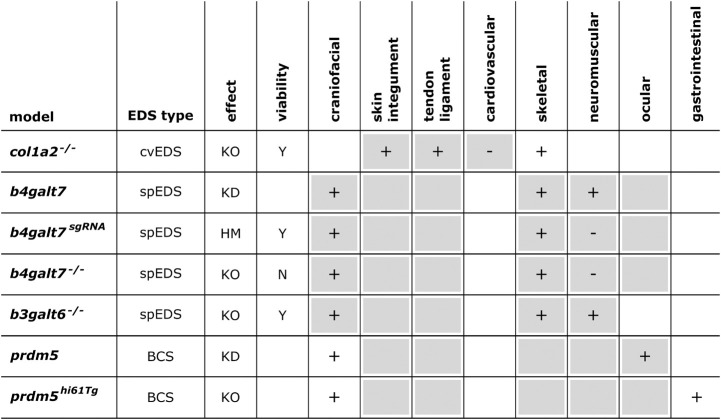
The Ehlers-Danlos syndromes (EDS) are a group of heritable connective tissues disorders mainly characterized by skin hyperextensibility, joint hypermobility and generalized tissue fragility. Currently, 14 EDS subtypes each with particular phenotypic features are recognized and are caused by genetic defects in 20 different genes. All of these genes are involved in the biosynthesis and/or fibrillogenesis of collagens at some level. Although great progress has been made in elucidating the molecular basis of different EDS subtypes, the pathogenic mechanisms underlying the observed phenotypes remain poorly understood, and consequentially, adequate treatment and management options for these conditions remain scarce. To date, several animal models, mainly mice and zebrafish, have been described with defects in 14 of the 20 hitherto known EDS-associated genes. These models have been instrumental in discerning the functions and roles of the corresponding proteins during development, maturation and repair and in portraying their roles during collagen biosynthesis and/or fibrillogenesis, for some even before their contribution to an EDS phenotype was elucidated. Additionally, extensive phenotypical characterization of these models has shown that they largely phenocopy their human counterparts, with recapitulation of several clinical hallmarks of the corresponding EDS subtype, including dermatological, cardiovascular, musculoskeletal and ocular features, as well as biomechanical and ultrastructural similarities in tissues. In this narrative review, we provide a comprehensive overview of animal models manifesting phenotypes that mimic EDS with a focus on engineered mouse and zebrafish models, and their relevance in past and future EDS research. Additionally, we briefly discuss domestic animals with naturally occurring EDS phenotypes. Collectively, these animal models have only started to reveal glimpses into the pathophysiological aspects associated with EDS and will undoubtably continue to play critical roles in EDS research due to their tremendous potential for pinpointing (common) signaling pathways, unveiling possible therapeutic targets and providing opportunities for preclinical therapeutic interventions.
埃勒斯-当洛综合征(EDS)是一组遗传性结缔组织疾病,主要特征为皮肤过度伸展、关节活动过度和全身组织脆弱。目前,已识别出14种具有特定表型特征的EDS亚型,它们由20种不同基因的遗传缺陷引起。所有这些基因在某种程度上都参与胶原蛋白的生物合成和/或纤维形成。尽管在阐明不同EDS亚型的分子基础方面取得了很大进展,但观察到的表型背后的致病机制仍知之甚少,因此,针对这些病症的充分治疗和管理方案仍然稀缺。迄今为止,已经描述了几种动物模型,主要是小鼠和斑马鱼,它们在20种已知的EDS相关基因中的14种存在缺陷。这些模型有助于在发育、成熟和修复过程中识别相应蛋白质的功能和作用,并描绘它们在胶原蛋白生物合成和/或纤维形成过程中的作用,甚至在阐明它们对EDS表型的贡献之前。此外,对这些模型的广泛表型特征分析表明,它们在很大程度上模拟了人类对应物,重现了相应EDS亚型的几个临床特征,包括皮肤、心血管、肌肉骨骼和眼部特征,以及组织中的生物力学和超微结构相似性。在这篇叙述性综述中,我们全面概述了表现出模拟EDS表型的动物模型,重点是工程小鼠和斑马鱼模型,以及它们在过去和未来EDS研究中的相关性。此外,我们简要讨论了具有自然发生的EDS表型的家畜。总的来说,这些动物模型才刚刚开始揭示与EDS相关的病理生理方面,由于它们在确定(共同)信号通路、揭示可能的治疗靶点以及提供临床前治疗干预机会方面具有巨大潜力,无疑将继续在EDS研究中发挥关键作用。