Department of Medical Sciences Surgery and Neurosciences University of Siena Italy.
Stroke Unit University Hospital of Siena Italy.
J Am Heart Assoc. 2021 Nov 2;10(21):e022095. doi: 10.1161/JAHA.121.022095. Epub 2021 Oct 29.
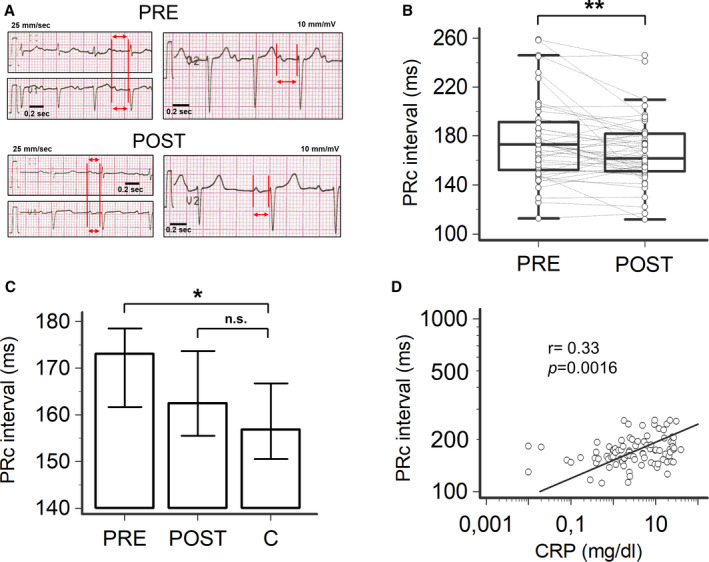
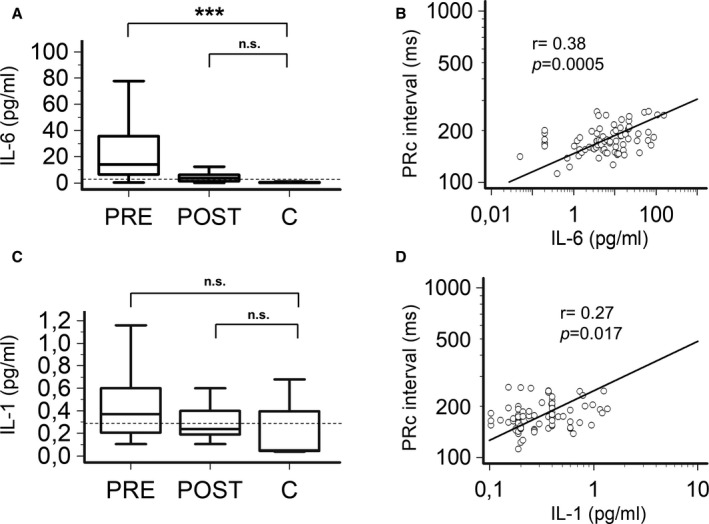
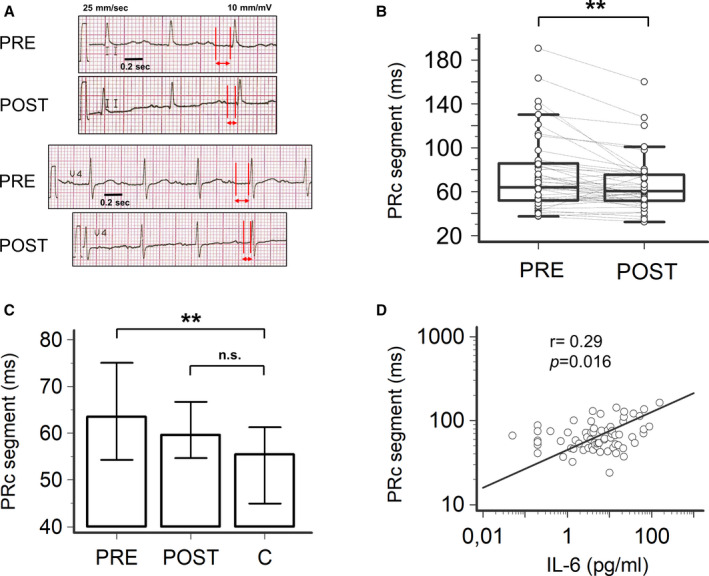
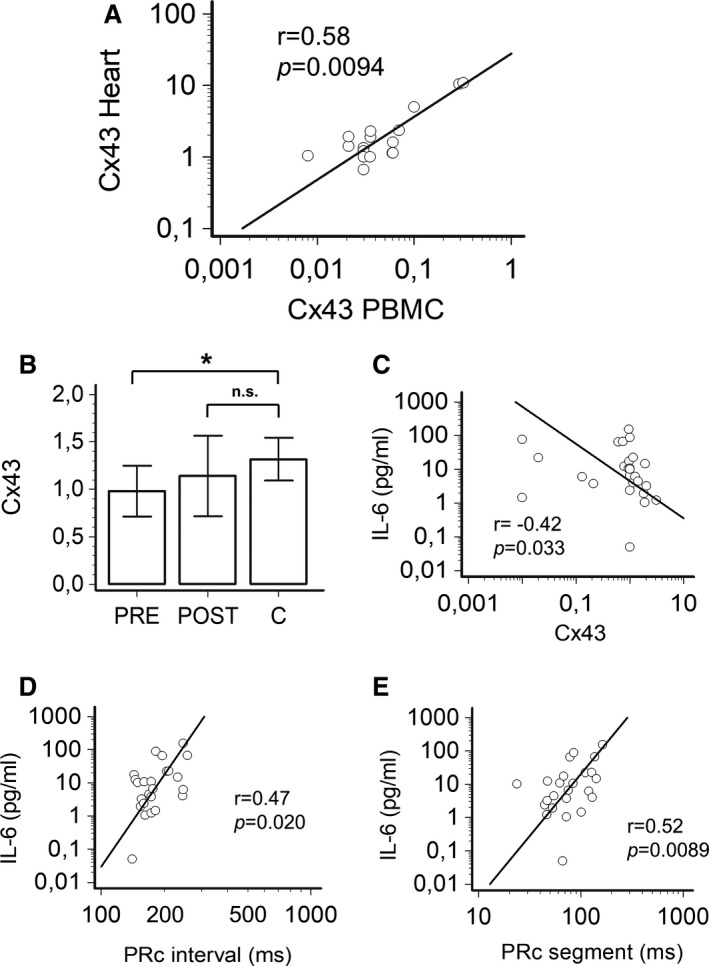
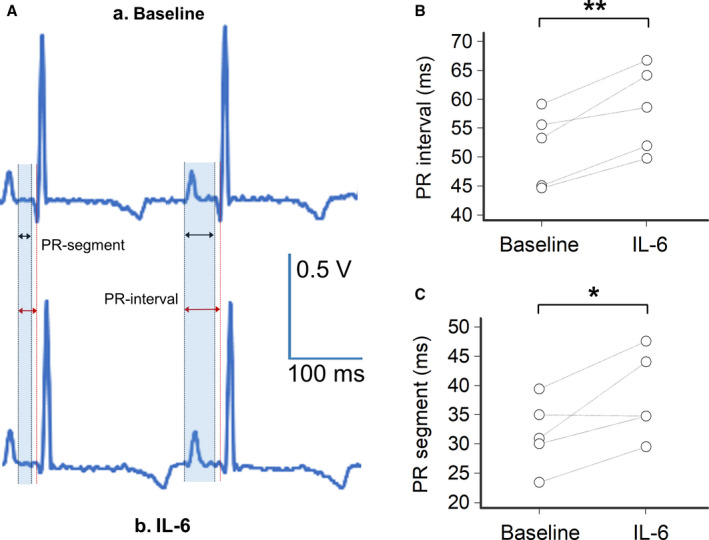
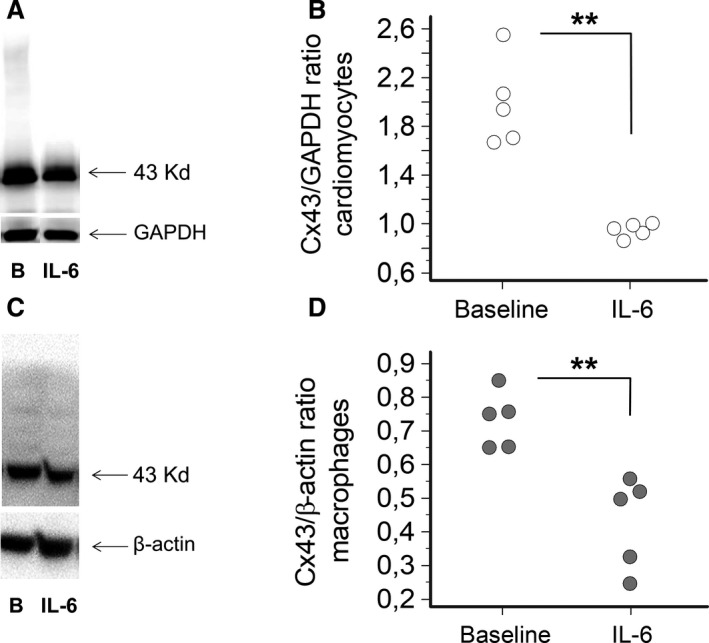
Background Recent data suggest that systemic inflammation can negatively affect atrioventricular conduction, regardless of acute cardiac injury. Indeed, gap-junctions containing connexin43 coupling cardiomyocytes and inflammation-related cells (macrophages) are increasingly recognized as important factors regulating the conduction in the atrioventricular node. The aim of this study was to evaluate the acute impact of systemic inflammatory activation on atrioventricular conduction, and elucidate underlying mechanisms. Methods and Results We analyzed: (1) the PR-interval in patients with inflammatory diseases of different origins during active phase and recovery, and its association with inflammatory markers; (2) the existing correlation between connexin43 expression in the cardiac tissue and peripheral blood mononuclear cells (PBMC), and the changes occurring in patients with inflammatory diseases over time; (3) the acute effects of interleukin(IL)-6 on atrioventricular conduction in an in vivo animal model, and on connexin43 expression in vitro. In patients with elevated C-reactive protein levels, atrioventricular conduction indices are increased, but promptly normalized in association with inflammatory markers reduction, particularly IL-6. In these subjects, connexin43 expression in PBMC, which is correlative of that measured in the cardiac tissue, inversely associated with IL-6 changes. Moreover, direct IL-6 administration increased atrioventricular conduction indices in vivo in a guinea pig model, and IL-6 incubation in both cardiomyocytes and macrophages in culture, significantly reduced connexin43 proteins expression. Conclusions The data evidence that systemic inflammation can acutely worsen atrioventricular conduction, and that IL-6-induced down-regulation of cardiac connexin43 is a mechanistic pathway putatively involved in the process. Though reversible, these alterations could significantly increase the risk of severe atrioventricular blocks during active inflammatory processes.
最近的数据表明,全身炎症可负性影响房室传导,而与急性心脏损伤无关。事实上,含有连接蛋白 43 的缝隙连接将心肌细胞和炎症相关细胞(巨噬细胞)耦联起来,它们正逐渐被认为是调节房室结传导的重要因素。本研究旨在评估全身炎症激活对房室传导的急性影响,并阐明潜在机制。
我们分析了:(1)不同来源炎症性疾病患者活动期和恢复期的 PR 间期及其与炎症标志物的关系;(2)心脏组织和外周血单个核细胞(PBMC)中连接蛋白 43 表达之间的现有相关性,以及炎症性疾病患者随时间的变化;(3)白细胞介素(IL)-6 在体内动物模型中对房室传导的急性影响,以及在体外对连接蛋白 43 表达的影响。在 C 反应蛋白水平升高的患者中,房室传导指数增加,但随着炎症标志物的降低,特别是 IL-6 的降低而迅速恢复正常。在这些患者中,PBMC 中连接蛋白 43 的表达与心脏组织中测量的表达呈负相关,与 IL-6 的变化呈负相关。此外,IL-6 直接给药可在豚鼠体内模型中增加房室传导指数,IL-6 在培养的心肌细胞和巨噬细胞中的孵育显著降低了连接蛋白 43 蛋白的表达。
数据表明,全身炎症可急性加重房室传导,IL-6 诱导的心脏连接蛋白 43 下调是潜在涉及该过程的机制途径。尽管是可逆的,但这些改变可能会在炎症活动期显著增加发生严重房室阻滞的风险。