Department of Pediatrics, Graduate School of Medicine, Kyoto University, Kyoto, Japan.
Laboratory of Human Immunology, Immunology Frontier Research Center, Osaka University, Osaka, Japan.
Cancer Sci. 2022 Jan;113(1):41-52. doi: 10.1111/cas.15186. Epub 2021 Nov 29.
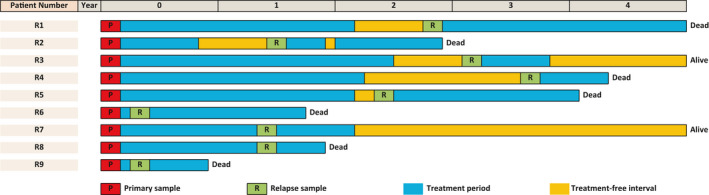
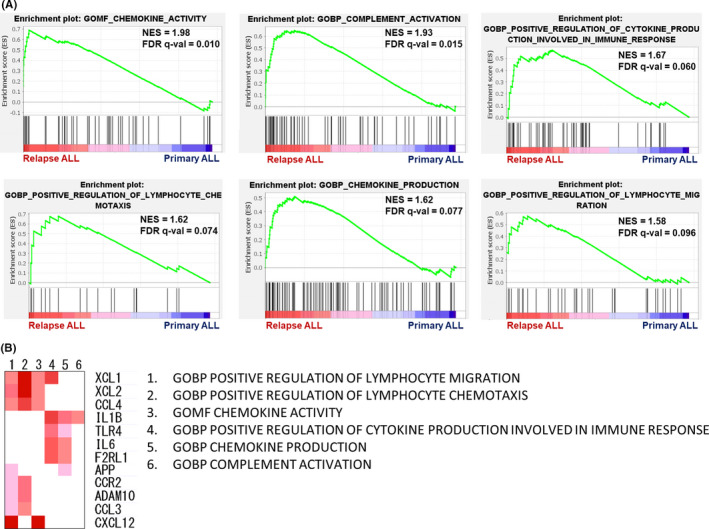
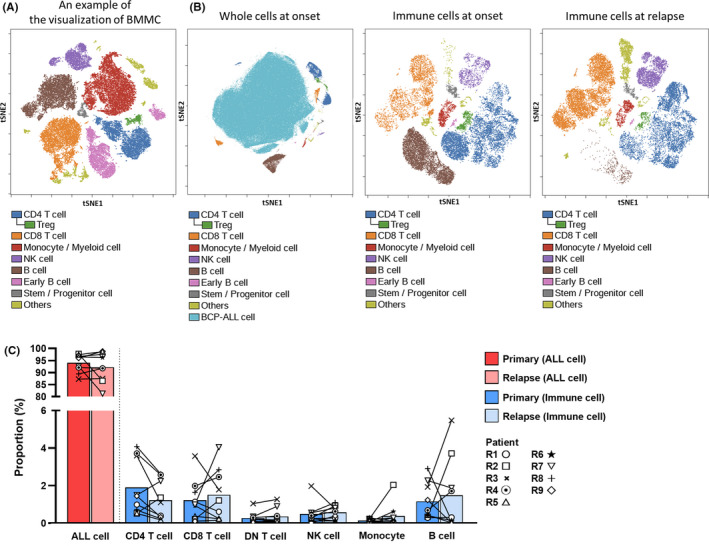
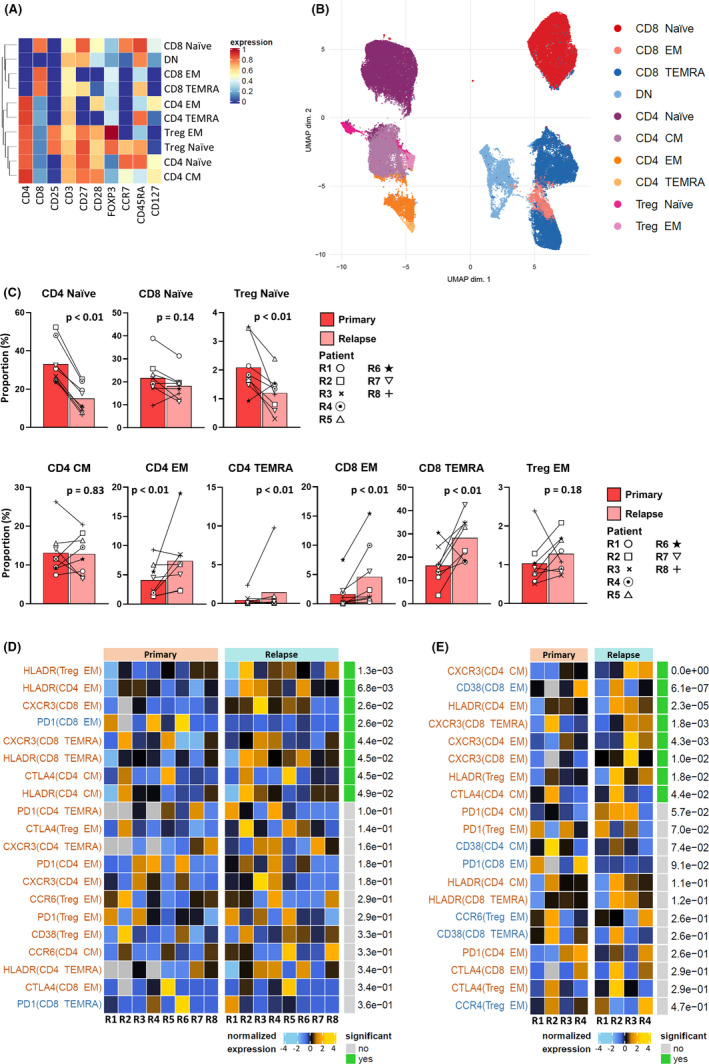
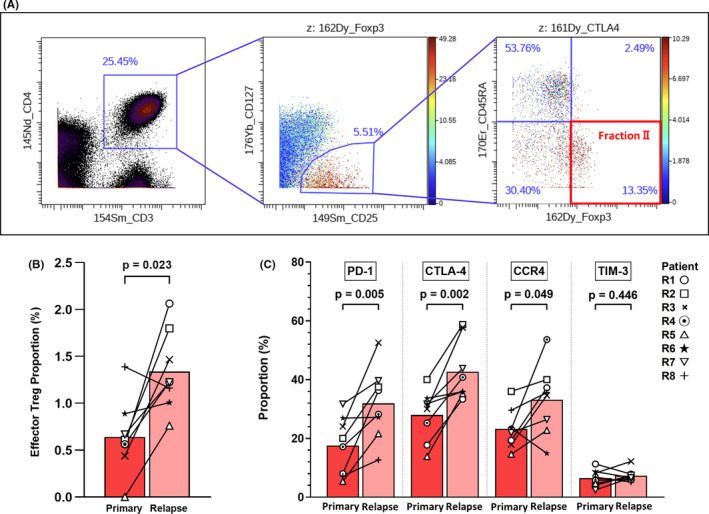
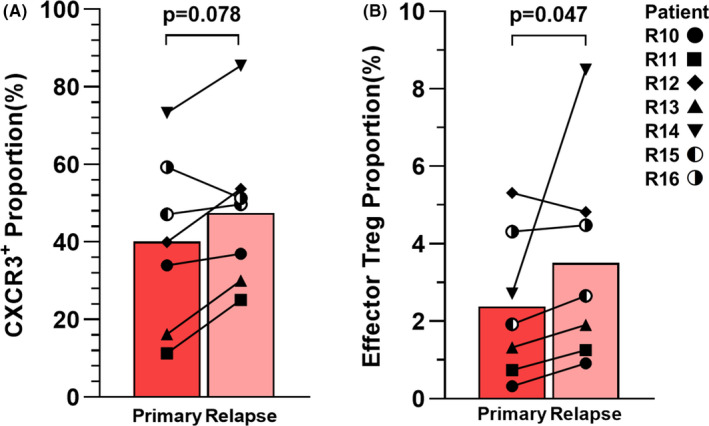
Due to the considerable success of cancer immunotherapy for leukemia, the tumor immune environment has become a focus of intense research; however, there are few reports on the dynamics of the tumor immune environment in leukemia. Here, we analyzed the tumor immune environment in pediatric B cell precursor acute lymphoblastic leukemia by analyzing serial bone marrow samples from nine patients with primary and recurrent disease by mass cytometry using 39 immunophenotype markers, and transcriptome analysis. High-dimensional single-cell mass cytometry analysis elucidated a dynamic shift of T cells from naïve to effector subsets, and clarified that, during relapse, the tumor immune environment comprised a T helper 1-polarized immune profile, together with an increased number of effector regulatory T cells. These results were confirmed in a validation cohort using conventional flow cytometry. Furthermore, RNA transcriptome analysis identified the upregulation of immune-related pathways in B cell precursor acute lymphoblastic leukemia cells during relapse, suggesting interaction with the surrounding environment. In conclusion, a tumor immune environment characterized by a T helper 1-polarized immune profile, with an increased number of effector regulatory T cells, could contribute to the pathophysiology of recurrent B cell precursor acute lymphoblastic leukemia. This information could contribute to the development of effective immunotherapeutic approaches against B cell precursor acute lymphoblastic leukemia relapse.
由于癌症免疫疗法在白血病治疗方面取得了显著成功,肿瘤免疫微环境已成为研究的焦点;然而,关于白血病肿瘤免疫微环境的动态变化的研究报告却很少。在这里,我们通过对 9 例初诊和复发患者的骨髓样本进行高通量单细胞质量 cytometry 分析,使用 39 种免疫表型标志物和转录组分析,研究了儿童 B 细胞前体急性淋巴细胞白血病的肿瘤免疫微环境。高维单细胞质量 cytometry 分析阐明了 T 细胞从幼稚状态向效应亚群的动态转变,并阐明了在复发期间,肿瘤免疫微环境由 Th1 极化的免疫表型组成,同时效应调节性 T 细胞数量增加。这些结果在使用常规流式细胞术的验证队列中得到了证实。此外,RNA 转录组分析在复发期间鉴定出 B 细胞前体急性淋巴细胞白血病细胞中免疫相关途径的上调,提示与周围环境相互作用。总之,以 Th1 极化免疫表型为特征的肿瘤免疫微环境,伴有效应调节性 T 细胞数量增加,可能有助于复发性 B 细胞前体急性淋巴细胞白血病的病理生理学发生。这些信息可能有助于开发针对 B 细胞前体急性淋巴细胞白血病复发的有效免疫治疗方法。