University of North Carolina at Chapel Hill, 101 Manning Drive CB# 7487, Medical School Wing E Room 117, Chapel Hill, NC, 27599-7487, USA.
Takeda Pharmaceuticals International AG, Zurich, Switzerland.
Orphanet J Rare Dis. 2021 Oct 30;16(1):456. doi: 10.1186/s13023-021-02052-4.
Mucopolysaccharidosis II (MPS II; Hunter syndrome) is a rare, life-limiting lysosomal storage disease caused by deficient iduronate-2-sulfatase activity. Enzyme replacement therapy (ERT) with intravenous (IV) idursulfase can stabilize or improve many somatic manifestations, but there remains a need for further analysis of long-term treatment outcomes. Using data from patients with MPS II enrolled in the Hunter Outcome Survey (HOS), mixed modeling was performed to evaluate and predict the effects of IV idursulfase treatment on selected clinical parameters for up to 8 years following treatment start. The modeling population comprised male patients followed prospectively in HOS who had received IV idursulfase for at least 5 years and who had data available for two or more time points (at least one post-ERT). Age at ERT start and time since ERT start were included as covariates.
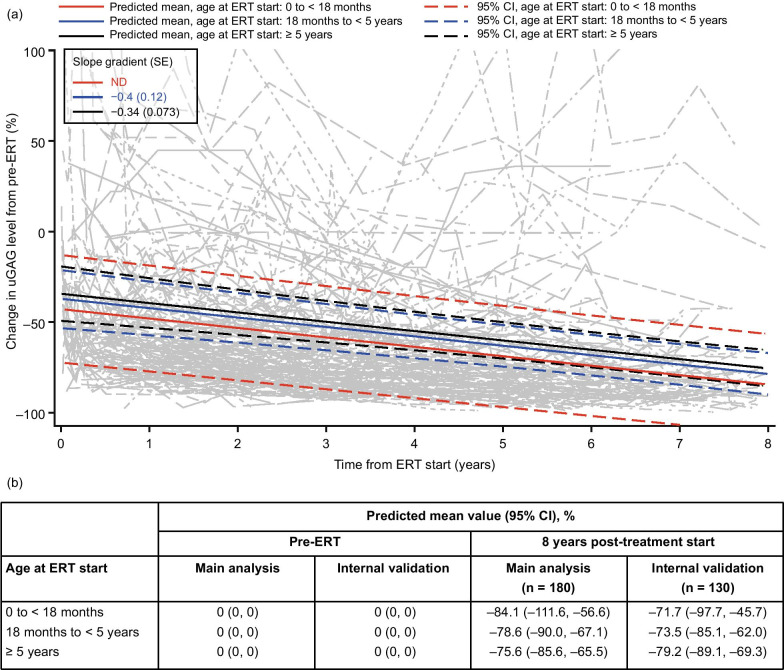
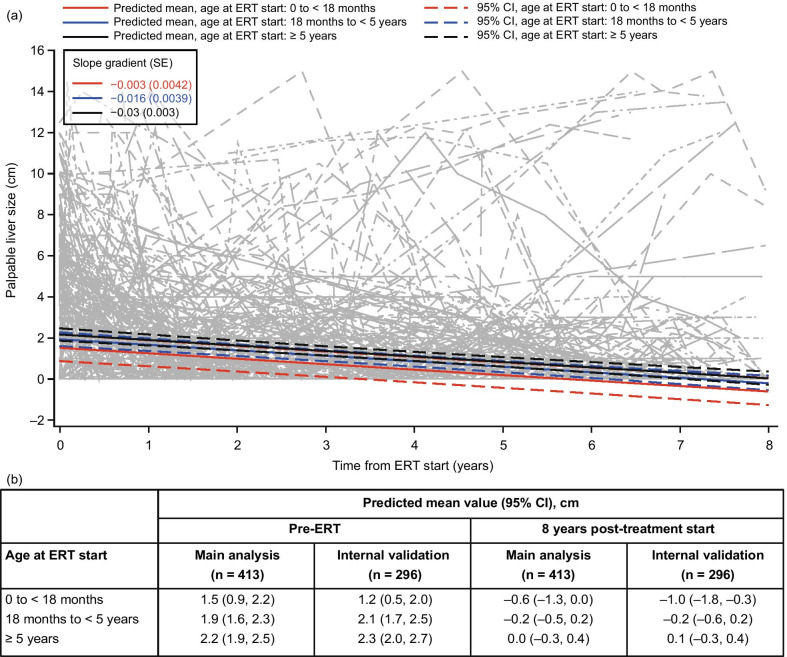
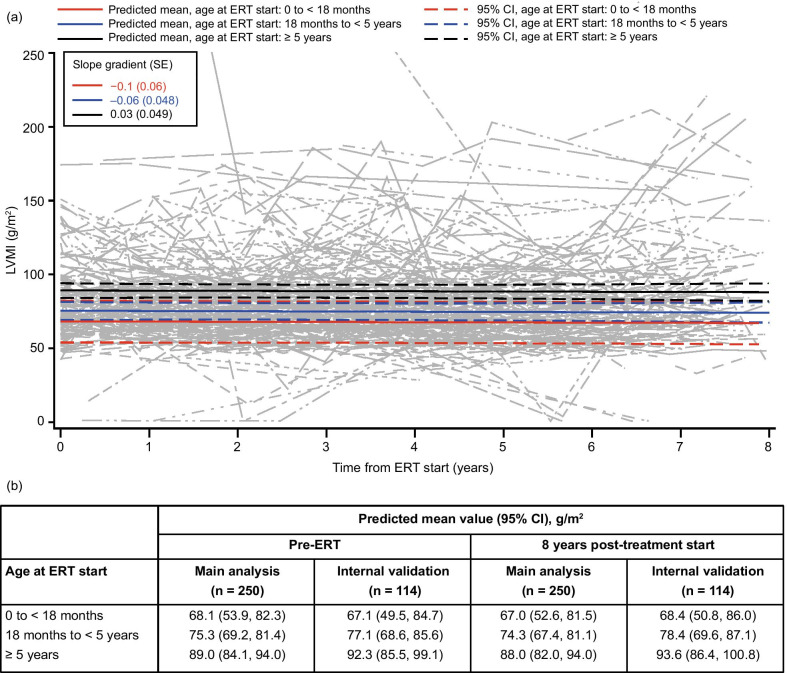
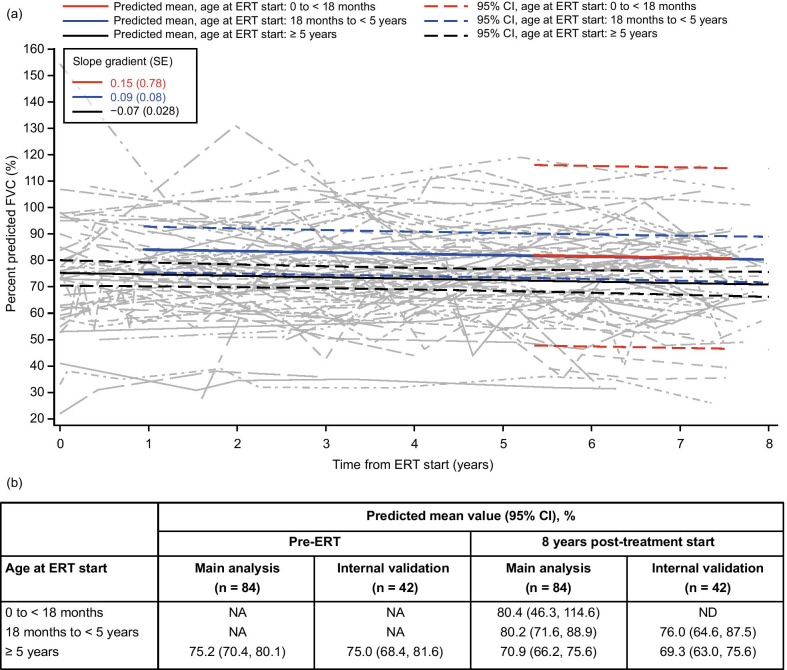
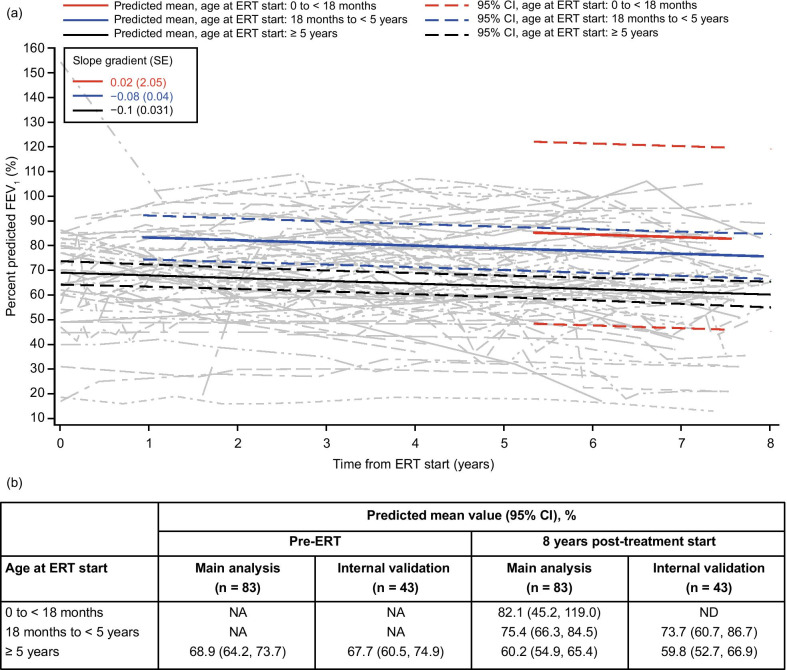
In total, 481 patients were eligible for inclusion in at least one model. At 8 years post-ERT start, improvement from baseline was predicted for each age group (< 18 months, 18 months to < 5 years and ≥ 5 years at treatment start) in the following parameters: mean urinary glycosaminoglycan levels (percentage changes of > -75% in each group), mean left ventricular mass index (decreases of ~ 1 g/m) and mean palpable liver size (decreases of > 2 cm). Improvements in mean 6-min walk test distance (increase of > 50 m) and stabilization in percent predicted forced vital capacity and forced expiratory volume in 1 s (decreases of ~ 4 and ~ 9 percentage points, respectively) at 8 years post-ERT start were predicted for patients aged ≥ 5 years at ERT start (these assessments are unsuitable for patients aged < 5 years). Predicted changes over time were similar across the three age groups; however, overall outcomes were most favorable in children aged < 18 months at ERT start.
These findings suggest that the previously reported positive effects of IV idursulfase on the somatic manifestations of MPS II are predicted to be maintained for at least 8 years following ERT initiation and highlight the value of statistical modeling to predict long-term treatment outcomes in patients with rare diseases.
黏多糖贮积症 II 型(MPS II;亨特综合征)是一种罕见的、危及生命的溶酶体贮积病,由缺乏艾杜糖-2-硫酸酯酶活性引起。静脉注射(IV)伊杜硫酸酶的酶替代疗法(ERT)可以稳定或改善许多躯体表现,但仍需要进一步分析长期治疗结果。使用参与亨特结果调查(HOS)的 MPS II 患者的数据,通过混合建模评估和预测 IV 伊杜硫酸酶治疗对治疗开始后长达 8 年的选定临床参数的影响。建模人群包括前瞻性随访于 HOS 的接受至少 5 年 IV 伊杜硫酸酶治疗且至少有两个时间点(至少一个 ERT 后)数据的男性患者。ERT 开始时的年龄和 ERT 开始后的时间作为协变量。
共有 481 名患者符合至少一个模型的纳入标准。在 ERT 开始后 8 年,预测每个年龄组(治疗开始时<18 个月、18 个月至<5 岁和≥5 岁)在以下参数中自基线的改善:平均尿糖胺聚糖水平(每个组的百分比变化>75%)、平均左心室质量指数(1g/m 的下降)和平均可触及的肝大小(>2cm 的下降)。预测在 ERT 开始时年龄≥5 岁的患者在 ERT 开始后 8 年的 6 分钟步行试验距离的平均增加(增加>50m)和预测用力肺活量和 1 秒用力呼气量的百分比稳定(分别下降4 和~9 个百分点)。这些评估不适用于 ERT 开始时年龄<5 岁的患者。预测随时间的变化在三个年龄组之间相似;然而,ERT 开始时年龄<18 个月的儿童的总体结果最有利。
这些发现表明,先前报道的 IV 伊杜硫酸酶对 MPS II 躯体表现的积极影响预计在 ERT 开始后至少 8 年内保持,突出了统计建模在预测罕见病患者长期治疗结果方面的价值。