Economic Evaluation and HTA (EEHTA), CEIS, Faculty of Economics, University of Rome 'Tor Vergata', Via Columbia, 2, 00133, Rome, Italy.
Department of Statistical Sciences, "Sapienza" University of Rome, Rome, Italy.
Adv Ther. 2022 Jan;39(1):314-327. doi: 10.1007/s12325-021-01960-y. Epub 2021 Oct 31.
Atherosclerotic cardiovascular disease (ASCVD) is the leading cause of mortality in Italy, accounting for 22% of total deaths. Lowering low-density lipoprotein cholesterol (LDL-C) levels reduces the risk of cardiovascular (CV) events; thus, lipid-lowering therapy (LLT) is the first-line treatment for patients with ASCVD and hypercholesterolaemia. However, many patients with ASCVD fail to reach LDL-C treatment thresholds, leaving them at greater risk of CV events. Inpatient care accounts for 51% of total expenditure on cardiovascular disease in the European Union, but healthcare resource utilization (HCRU) data for ASCVD in Italy is limited.
The study analysed healthcare claims data for 17,881 patients with acute coronary syndrome, ischemic stroke or peripheral artery disease from the Umbria 2 and Marche regions of Italy. LLT treatment patterns and CV event rates were collected and HCRU estimated in the year before and after the index event.
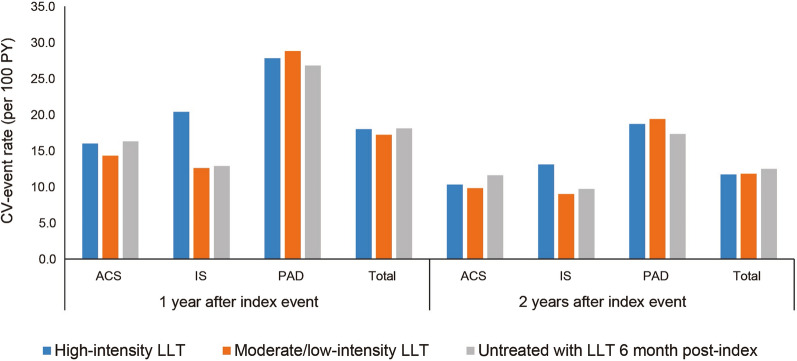
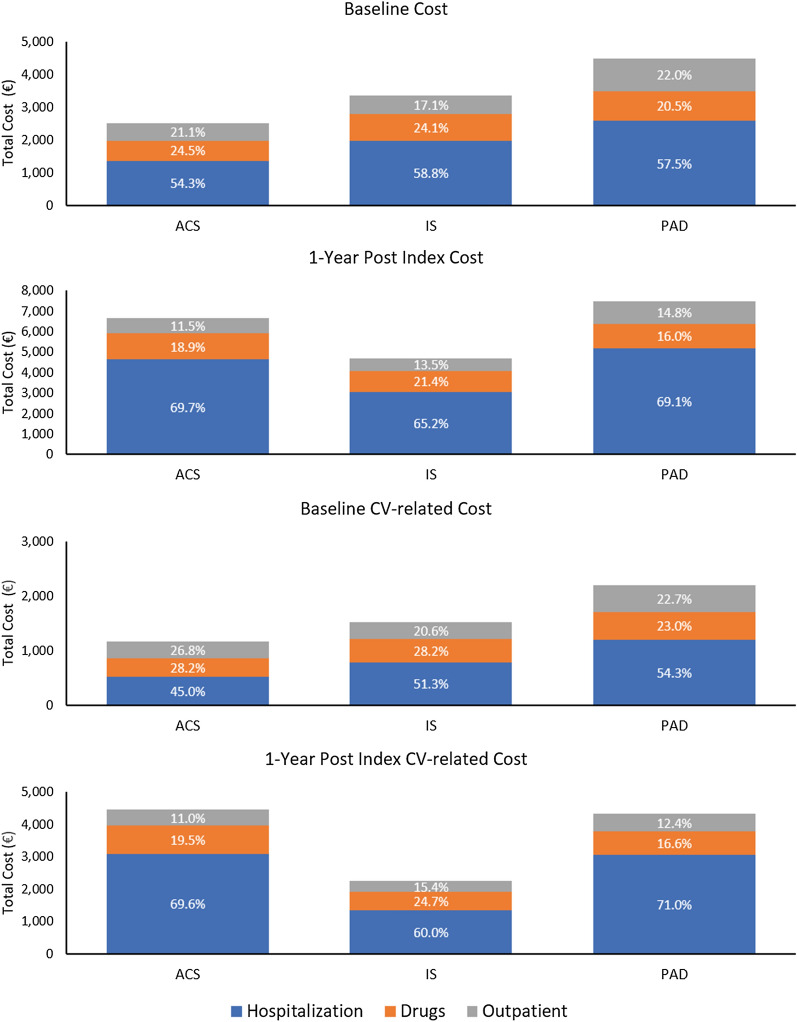
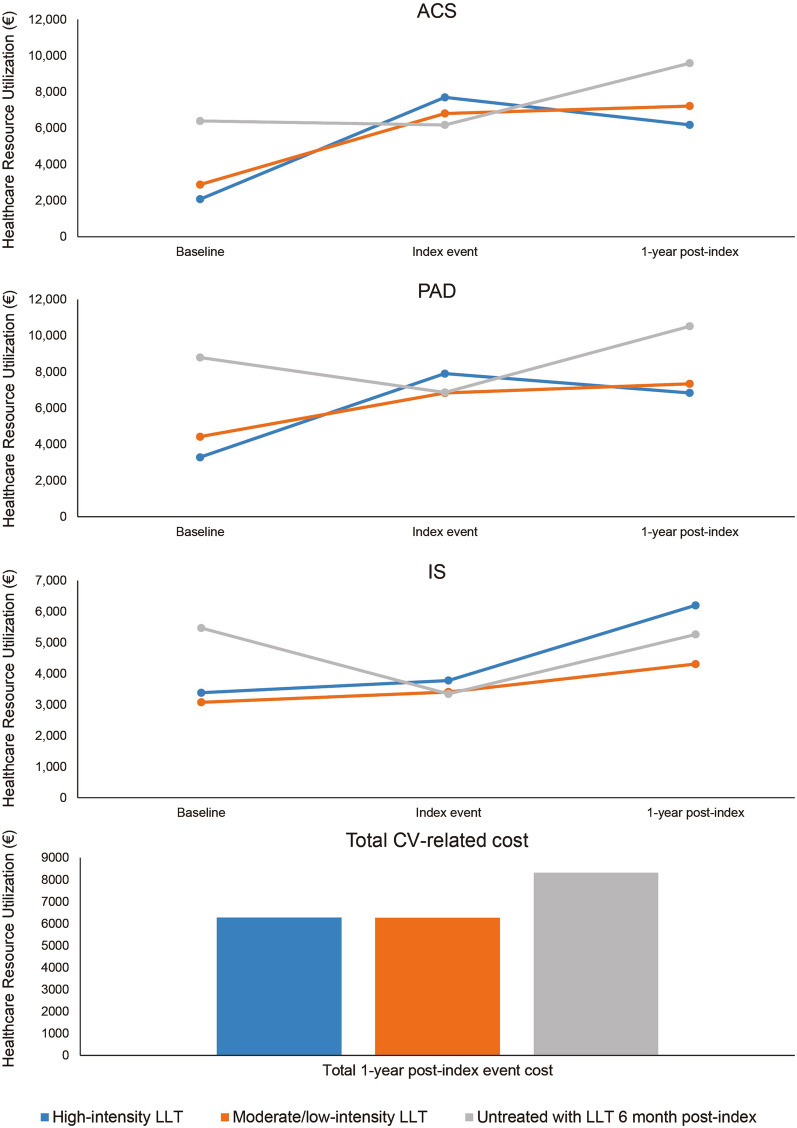
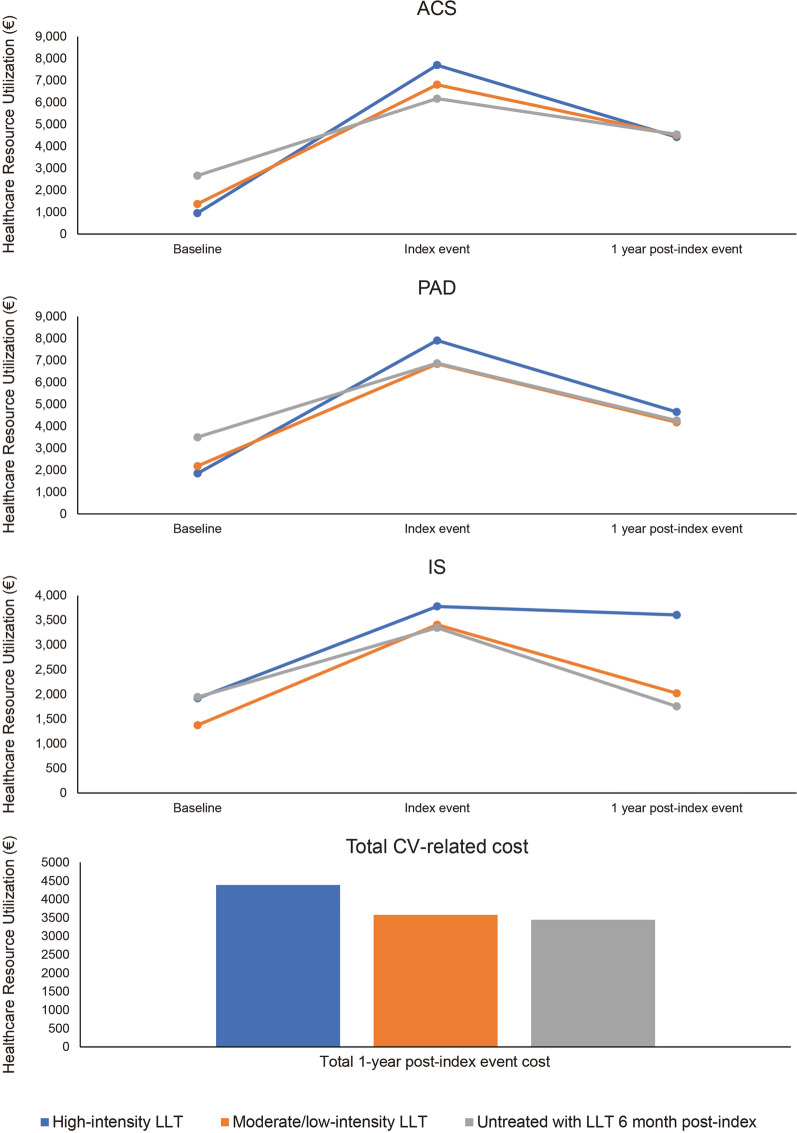
High-intensity LLTs were prescribed to 44.3% of patients and 49.6% received moderate-/low-intensity LLTs during the 6 months after the index event. The first year CV event rate was 18.0/100 patient-years for patients receiving high-intensity LLTs and 17.2/100 patient-years for those on moderate-/low-intensity LLTs. Higher costs were associated with patients untreated with LLT 6 months post-index event (€8323) than patients prescribed high-intensity (€6278) or moderate-/low-intensity LLTs (€6270). Hospitalization accounted for most of the total costs.
This study found that CV events in secondary prevention Italian patients are associated with substantial HCRU and costs. More intensive LDL-C lowering can prevent CV events, easing the financial burden on the healthcare system.
动脉粥样硬化性心血管疾病(ASCVD)是意大利死亡的主要原因,占总死亡人数的 22%。降低低密度脂蛋白胆固醇(LDL-C)水平可降低心血管(CV)事件风险;因此,降脂治疗(LLT)是 ASCVD 和高胆固醇血症患者的一线治疗方法。然而,许多 ASCVD 患者未能达到 LDL-C 治疗阈值,使他们面临更大的 CV 事件风险。在欧盟,住院治疗占心血管疾病总支出的 51%,但意大利 ASCVD 的医疗资源利用(HCRU)数据有限。
该研究分析了意大利翁布里亚 2 区和马尔凯地区 17881 例急性冠状动脉综合征、缺血性卒中和外周动脉疾病患者的医疗保健索赔数据。收集了索引事件前后 6 个月的 LLT 治疗模式和 CV 事件发生率,并估计了 HCRU。
高强度 LLT 被处方给 44.3%的患者,中/低强度 LLT 被处方给 49.6%的患者在索引事件后 6 个月内。接受高强度 LLT 的患者第一年的 CV 事件发生率为 18.0/100 患者年,接受中/低强度 LLT 的患者为 17.2/100 患者年。与未接受 LLT 治疗的患者(6 个月后指数事件)(€8323)相比,接受高强度(€6278)或中/低强度 LLT 治疗的患者(€6270)的成本更高。住院治疗占总费用的大部分。
本研究发现,意大利二级预防患者的 CV 事件与大量的 HCRU 和成本相关。更强化的 LDL-C 降低可以预防 CV 事件,减轻医疗系统的财务负担。