Coccon Francesca, Vanni Lorenzo, Dabalà Caterina, Giunchi Dimitri
CORILA, Consorzio per il coordinamento delle ricerche inerenti al sistema lagunare di Venezia, Palazzo X Savi, S. Polo 19, 30125 Venice, Italy.
Unità di Etologia, Dipartimento di Biologia, Università di Pisa, Via Volta 6, 56126 Pisa, Italy.
Urban Ecosyst. 2022;25(2):643-656. doi: 10.1007/s11252-021-01175-7. Epub 2021 Oct 25.
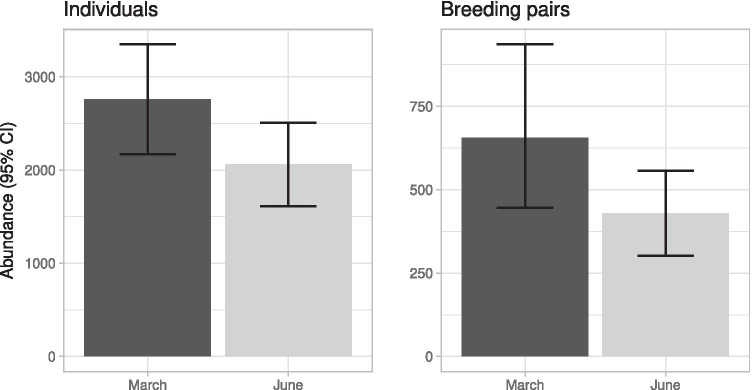
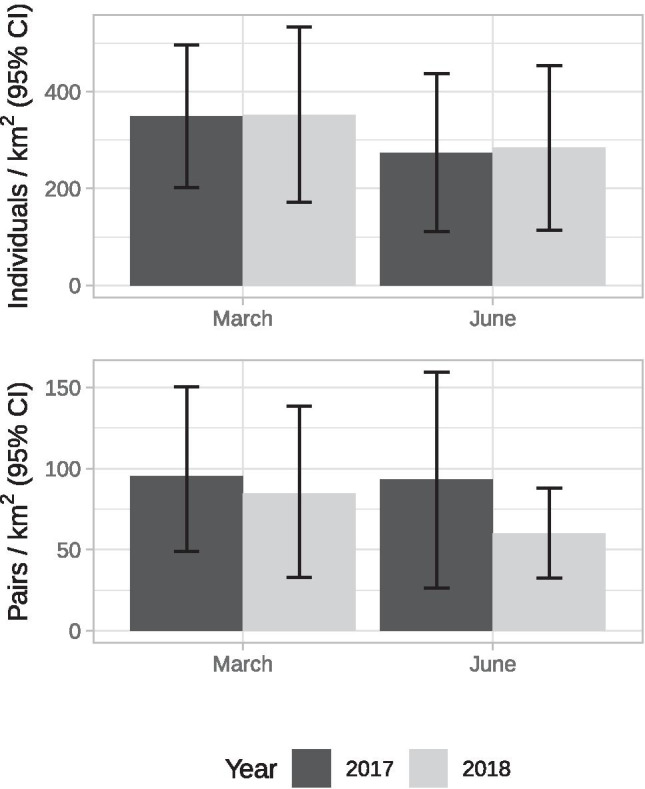
The yellow-legged gull has undergone widespread colonization of the urban environment in the recent past. The first urban breeding gulls were recorded in the historical centre of Venice, Italy, in 2000, and by 2005 there were already 24 roof-nesting pairs, with this number increasing significantly over the last decade. In 2016, a new door-to-door garbage collection system was introduced in Venice to prevent the accumulation of rubbish in the streets and limit the trophic resources available for the species. This study provides an up-to-date estimate of the Venice yellow-legged gull urban population using distance sampling method. We also studied the effect of the new waste collection system on the species by comparing the population estimate before (2017) and after (2018) the full implementation of this change and by analysing the trend of individuals collected in the old town by the wildlife recovery service during 2010-2018. Results estimated ca. 430 breeding pairs in June 2018 showing a 36% decrease with respect to 2017. We also found a decrease in the number of 1-year-old birds and collected by the wildlife recovery service starting from 2016, when the policy implementation began. Our data did not show a significant decrease in the overall number of individuals, suggesting that the new policy has a stronger effect on the breeding success of the species than on adult survival. This study emphasizes the importance of preventing rubbish accumulation in the streets as factor for reducing the abundance of urban yellow-legged gulls.
The online version contains supplementary material available at 10.1007/s11252-021-01175-7.
黄腿鸥在最近已广泛在城市环境中栖息繁衍。2000年,意大利威尼斯历史中心首次记录到城市中繁殖的海鸥,到2005年已有24对在屋顶筑巢,且这一数量在过去十年中显著增加。2016年,威尼斯引入了新的挨家挨户垃圾收集系统,以防止街道垃圾堆积并限制该物种可获取的营养资源。本研究采用距离抽样方法对威尼斯黄腿鸥城市种群进行了最新估计。我们还通过比较这一变化全面实施之前(2017年)和之后(2018年)的种群估计,并分析2010 - 2018年野生动物救助服务机构在老城区收集到的个体趋势,研究了新的垃圾收集系统对该物种的影响。结果估计,2018年6月约有430对繁殖对,相较于2017年减少了36%。我们还发现,从2016年政策实施开始,野生动物救助服务机构收集到的一岁幼鸟数量有所减少。我们的数据并未显示个体总数有显著下降,这表明新政策对该物种繁殖成功率的影响比对成年个体存活率的影响更大。本研究强调了防止街道垃圾堆积作为减少城市黄腿鸥数量因素的重要性。
在线版本包含可在10.1007/s11252 - 021 - 01175 - 7获取的补充材料。