Wang Yi, Liu Miao, Chen Youchao, Zeng Tao, Lu Xuyang, Yang Bin, Wang Yafeng, Zhang Lin, Nie Xiaowei, Xiao Feipeng, Zhang Zhigang, Sun Jian
College of Management Science and Engineering, Guangxi University of Finance and Economics, Nanning, China.
School of Life Sciences and School of Ecology, State Key Laboratory of Biological Control, Sun Yat-sen University, Guangzhou, China.
Front Plant Sci. 2021 Oct 15;12:760599. doi: 10.3389/fpls.2021.760599. eCollection 2021.
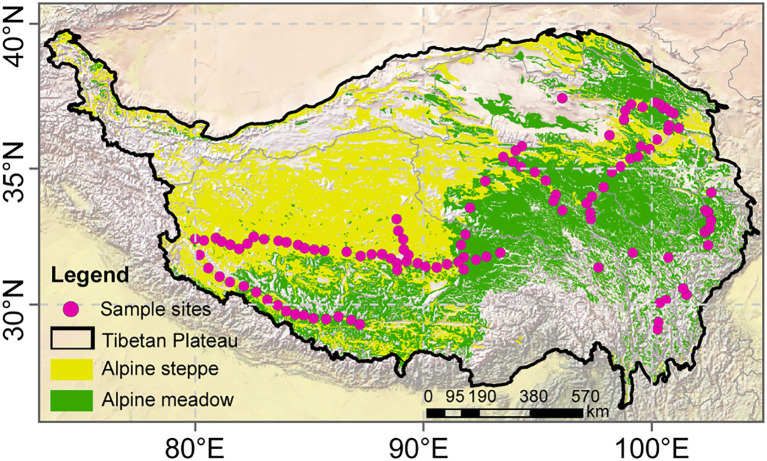
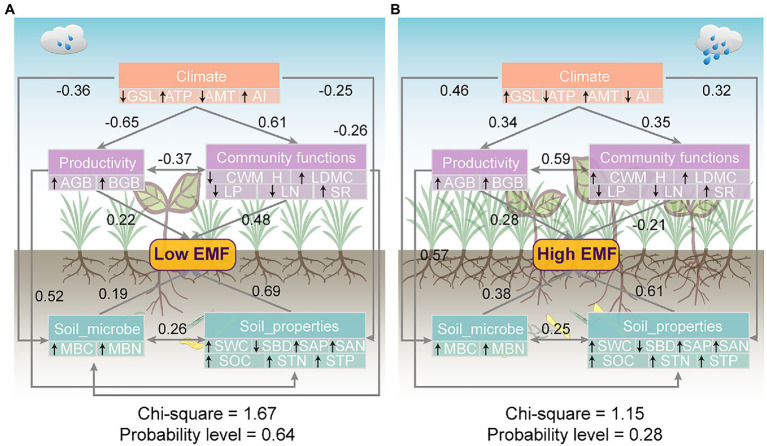
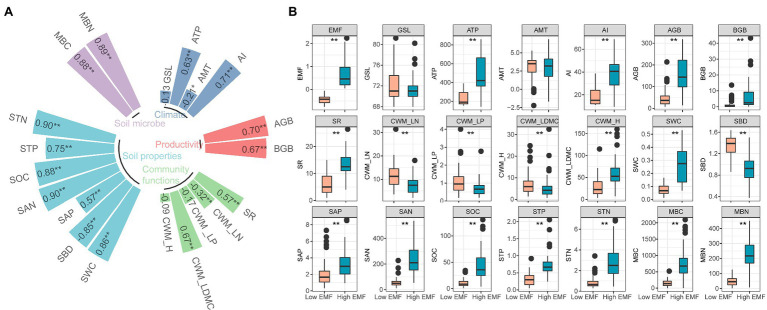
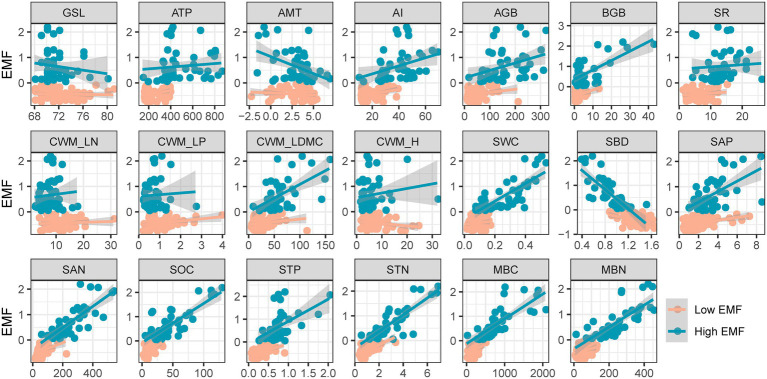
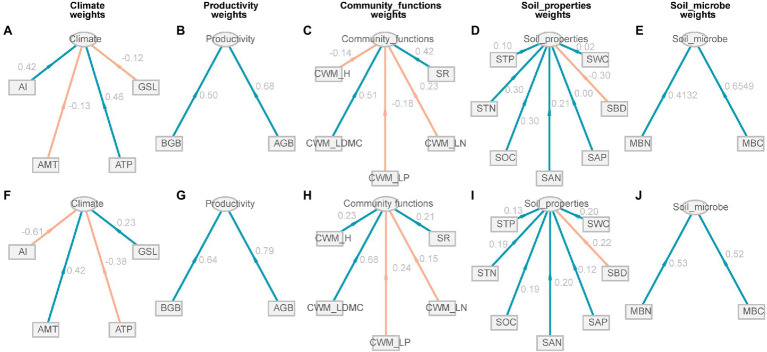
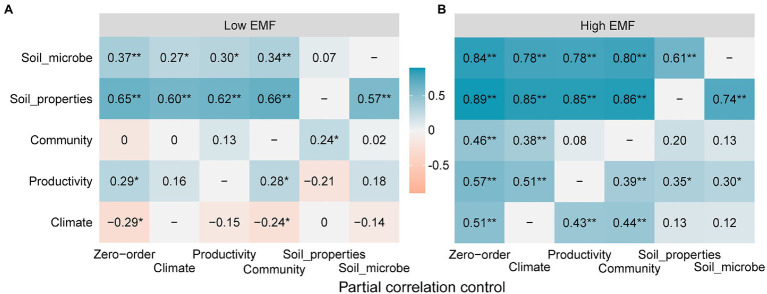
Both plant communities and soil microbes have been reported to be correlated with ecosystem multifunctionality (EMF) in terrestrial ecosystems. However, the process and mechanism of aboveground and belowground communities on different EMF patterns are not clear. In order to explore different response patterns and mechanisms of EMF, we divided EMF into low (<0) and high patterns (>0). We found that there were contrasting patterns of low and high EMF in the alpine grassland ecosystem on the Tibetan Plateau. Specifically, compared with low EMF, environmental factors showed higher sensitivity to high EMF. Soil properties are critical factors that mediate the impact of community functions on low EMF based on the change of partial correlation coefficients from 0 to 0.24. In addition, plant community functions and microbial biomass may mediate the shift of EMF from low to high patterns through the driving role of climate across the alpine grassland ecosystem. Our findings will be vital to clarify the mechanism for the stability properties of grassland communities and ecosystems under ongoing and future climate change.
据报道,陆地生态系统中的植物群落和土壤微生物均与生态系统多功能性(EMF)相关。然而,地上和地下群落对不同EMF模式的过程和机制尚不清楚。为了探究EMF的不同响应模式和机制,我们将EMF分为低(<0)和高模式(>0)。我们发现青藏高原高寒草原生态系统中存在低EMF和高EMF的对比模式。具体而言,与低EMF相比,环境因子对高EMF表现出更高的敏感性。基于偏相关系数从0到0.24的变化,土壤性质是介导群落功能对低EMF影响的关键因素。此外,植物群落功能和微生物生物量可能通过气候对高寒草原生态系统的驱动作用,介导EMF从低模式向高模式的转变。我们的研究结果对于阐明当前和未来气候变化下草地群落和生态系统稳定性特征的机制至关重要。