Meier Isabell M, Eikemo Marie, Leknes Siri
Department of Diagnostic Physics, Oslo University Hospital, Sognsvannsveien 20, 0372 Oslo, Norway.
Department of Psychology, University of Oslo, Blindern, 0317 Oslo, Norway.
Curr Addict Rep. 2021;8(2):306-318. doi: 10.1007/s40429-021-00366-8. Epub 2021 Apr 15.
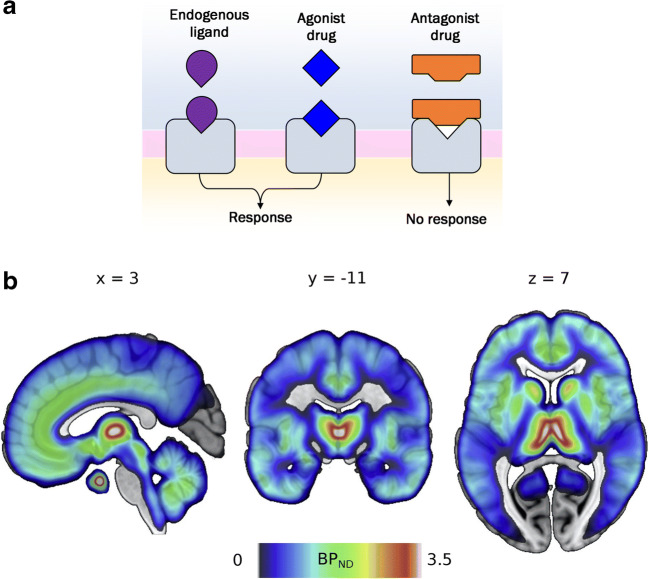
Opioid receptors are widely expressed in the human brain. A number of features commonly associated with drug use disorder, such as difficulties in emotional learning, emotion regulation and anhedonia, have been linked to endogenous opioid signalling. Whereas chronic substance use and misuse are thought to alter the function of the mu-opioid system, the specific mechanisms are not well understood. We argue that understanding exogenous and endogenous opioid effects in the healthy human brain is an essential foundation for bridging preclinical and clinical findings related to opioid misuse. Here, we will examine psychopharmacological evidence to outline the role of the mu-opioid receptor (MOR) system in the processing of threat and reward, and discuss how disruption of these processes by chronic opioid use might alter emotional learning and reward responsiveness.
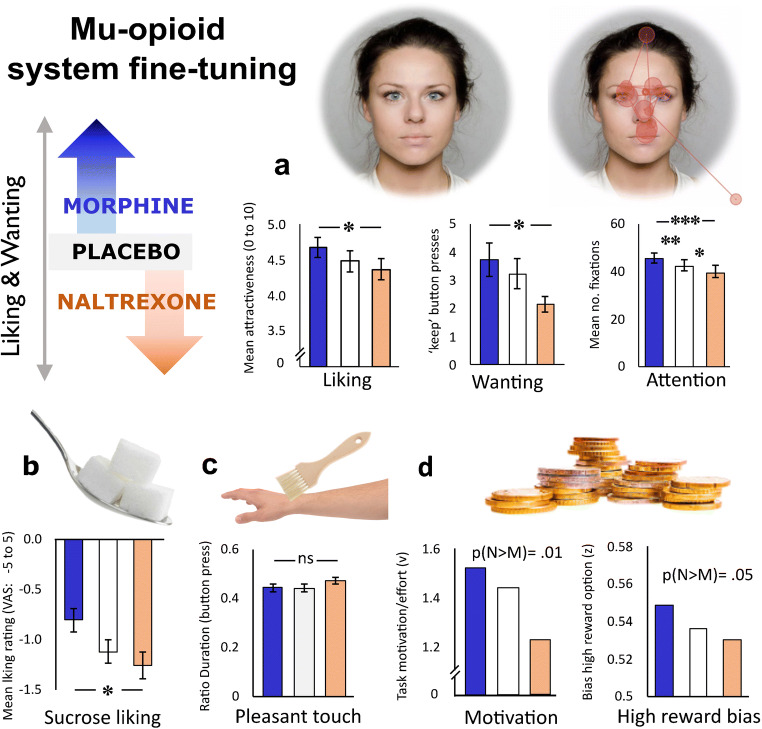
In healthy people, studies using opioid antagonist drugs indicate that the brain's endogenous opioids downregulate fear reactivity and upregulate learning from safety. At the same time, endogenous opioids increase the liking of and motivation to engage with high reward value cues. Studies of acute opioid agonist effects indicate that with non-sedative doses, drugs such as morphine and buprenorphine can mimic endogenous opioid effects on liking and wanting. Disruption of endogenous opioid signalling due to prolonged opioid exposure is associated with some degree of anhedonia to non-drug rewards; however, new results leave open the possibility that this is not directly opioid-mediated.
The available human psychopharmacological evidence indicates that the healthy mu-opioid system contributes to the regulation of reward and threat processing. Overall, endogenous opioids can subtly increase liking and wanting responses to a wide variety of rewards, from sweet tastes to feelings of being connected to close others. For threat-related processing, human evidence suggests that endogenous opioids inhibit fear conditioning and reduce the sensitivity to aversive stimuli, although inconsistencies remain. The size of effects reported in healthy humans are however modest, clearly indicating that MORs play out their role in close concert with other neurotransmitter systems. Relevant candidate systems for future research include dopamine, serotonin and endocannabinoid signalling. Nevertheless, it is possible that endogenous opioid fine-tuning of reward and threat processing, when unbalanced by e.g. opioid misuse, could over time develop into symptoms associated with opioid use disorder, such as anhedonia and depression/anxiety.
阿片受体在人类大脑中广泛表达。一些通常与药物使用障碍相关的特征,如情绪学习困难、情绪调节和快感缺失,已与内源性阿片信号传导联系起来。虽然慢性药物使用和滥用被认为会改变μ-阿片系统的功能,但其具体机制尚不清楚。我们认为,了解健康人脑中内源性和外源性阿片的作用是弥合与阿片滥用相关的临床前和临床研究结果的重要基础。在此,我们将研究心理药理学证据,以概述μ-阿片受体(MOR)系统在威胁和奖赏处理中的作用,并讨论长期使用阿片类药物对这些过程的干扰如何改变情绪学习和奖赏反应性。
在健康人群中,使用阿片拮抗剂药物的研究表明,大脑的内源性阿片会下调恐惧反应,并上调从安全信号中学习的能力。同时,内源性阿片会增加对高奖赏价值线索的喜爱和与之互动的动机。急性阿片激动剂作用的研究表明,在非镇静剂量下,吗啡和丁丙诺啡等药物可以模拟内源性阿片对喜爱和渴望的作用。由于长期接触阿片类药物导致内源性阿片信号传导中断,与对非药物奖赏的某种程度的快感缺失有关;然而,新的结果留下了这种情况并非直接由阿片介导的可能性。
现有的人类心理药理学证据表明,健康的μ-阿片系统有助于调节奖赏和威胁处理。总体而言,内源性阿片可以微妙地增加对从甜味到与亲密他人建立联系的感觉等各种奖赏的喜爱和渴望反应。对于与威胁相关的处理,人类证据表明内源性阿片会抑制恐惧条件反射并降低对厌恶刺激的敏感性,尽管仍存在不一致之处。然而,在健康人中报告的效应大小适中,清楚地表明MOR与其他神经递质系统密切配合发挥作用。未来研究的相关候选系统包括多巴胺、5-羟色胺和内源性大麻素信号传导。尽管如此,内源性阿片对奖赏和威胁处理的微调,如果因例如阿片滥用而失衡,随着时间的推移可能会发展为与阿片使用障碍相关的症状,如快感缺失和抑郁/焦虑。