Amanso A M, Turner T C, Kamalakar A, Ballestas S A, Hymel L A, Randall J, Johnston R, Arthur R A, Willett N J, Botchwey E A, Goudy S L
Department of Otolaryngology, Emory University School of Medicine, 2015 Uppergate Drive, Atlanta, GA 30322 USA.
Coulter Department of Biomedical Engineering, Georgia Institute of Technology and Emory University, Atlanta, GA USA.
Regen Eng Transl Med. 2021;7(2):160-174. doi: 10.1007/s40883-021-00208-z. Epub 2021 May 13.
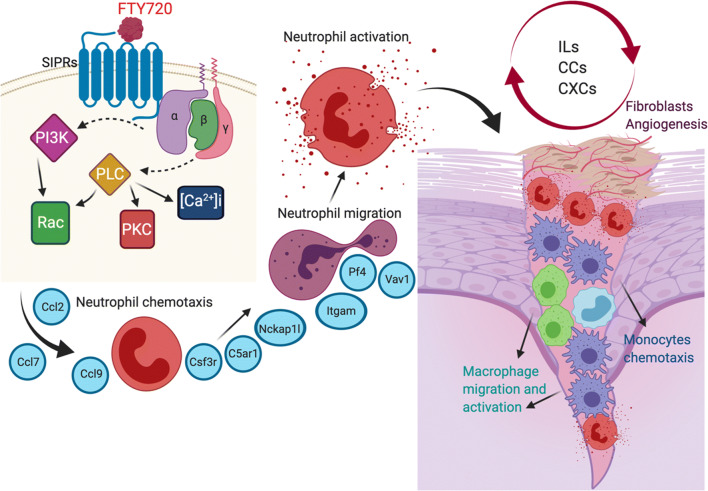
Cleft palate repair surgeries lack a regenerative reconstructive option and, in many cases, develop complications including oronasal fistula (ONF). Our group has developed a novel murine phenocopy of ONF to study the oral cavity wound healing program. Using this model, our team previously identified that delivery of FTY720 on a nanofiber scaffold had a unique immunomodulatory effect directing macrophages and monocytes into a pro-regenerative state during ONF healing. Here, the objective of this study was to determine the effects of local biomaterial-based FTY720 delivery in the ONF model on the early bulk gene expression and neutrophil phenotypic response within the regenerating tissue.
Using a mouse model of ONF formation, a palate defect was created and was treated with FTY720 nanofiber scaffolds or (blank) vehicle control nanofibers. At 1 and 3 days post-implantation, ONF oral mucosal tissue from the defect region was collected for RNA sequencing analysis or flow cytometry. For the RNA-seq expression profiling, intracellular pathways were assessed using the KEGG Pathway database and Gene Ontology (GO) Terms enrichment interactive graph. To assess the effects of FTY720 on different neutrophil subpopulations, flow cytometry data was analyzed using pseudotime analysis based on Spanning-tree Progression Analysis of Density-normalized Events (SPADE).
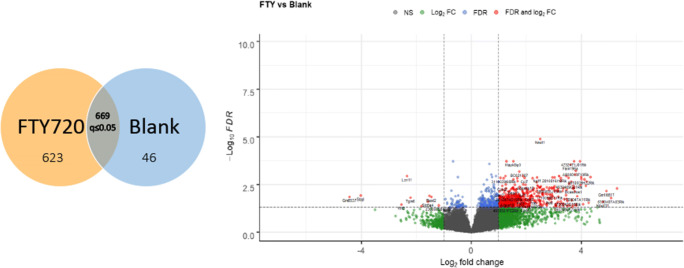
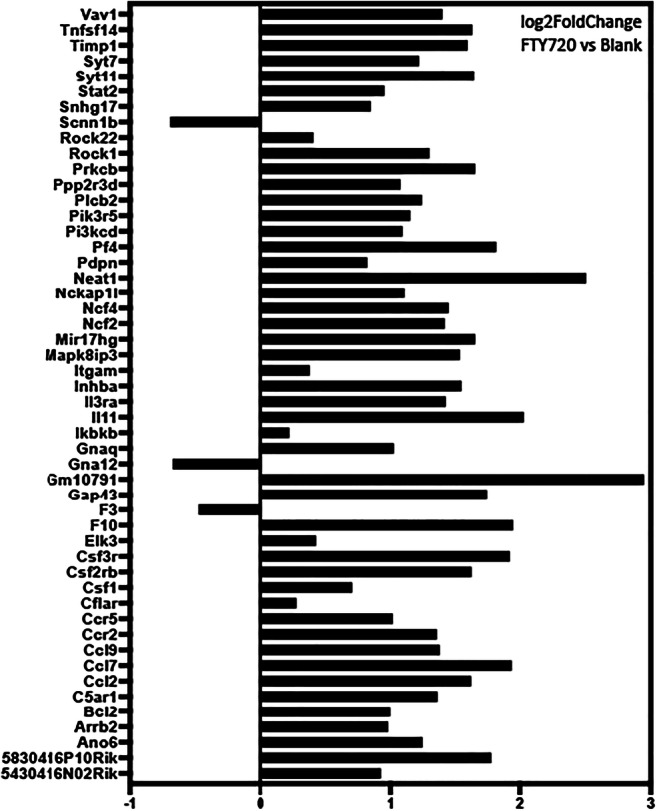
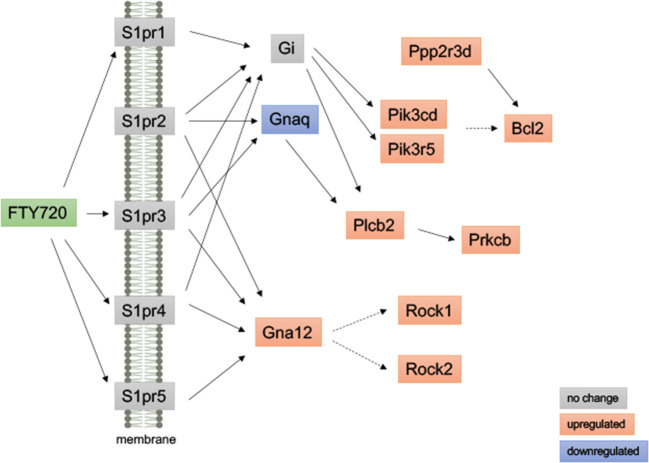
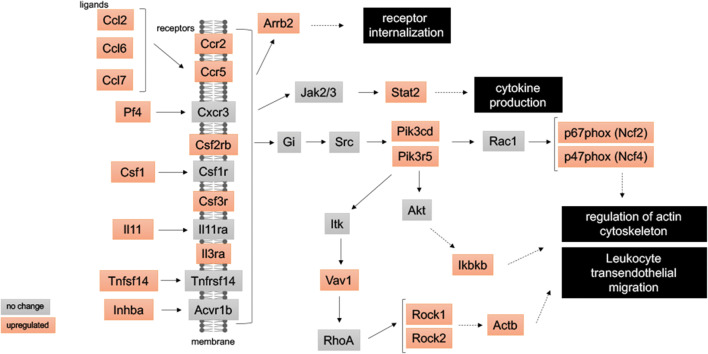
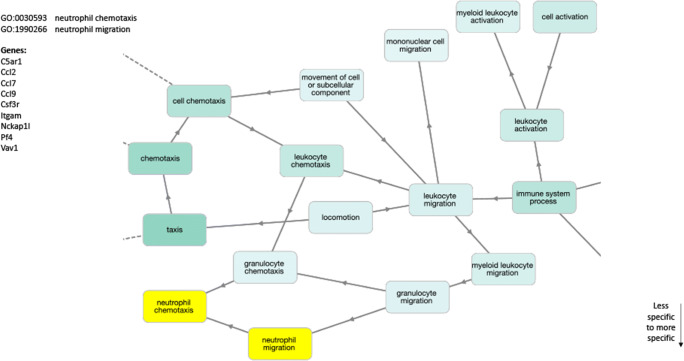
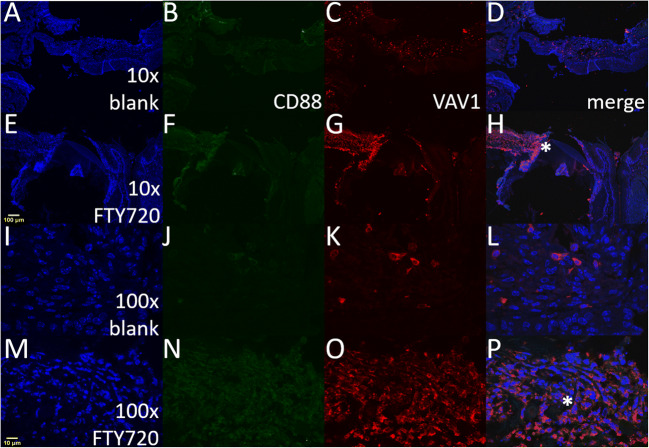
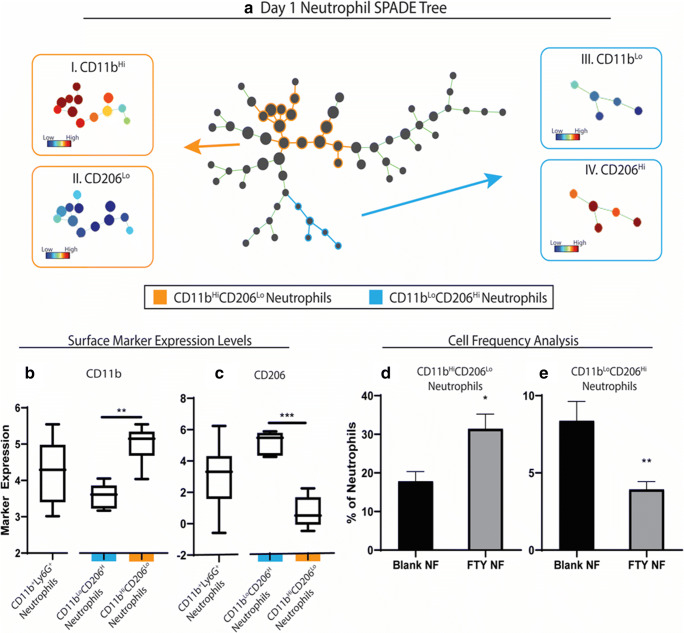
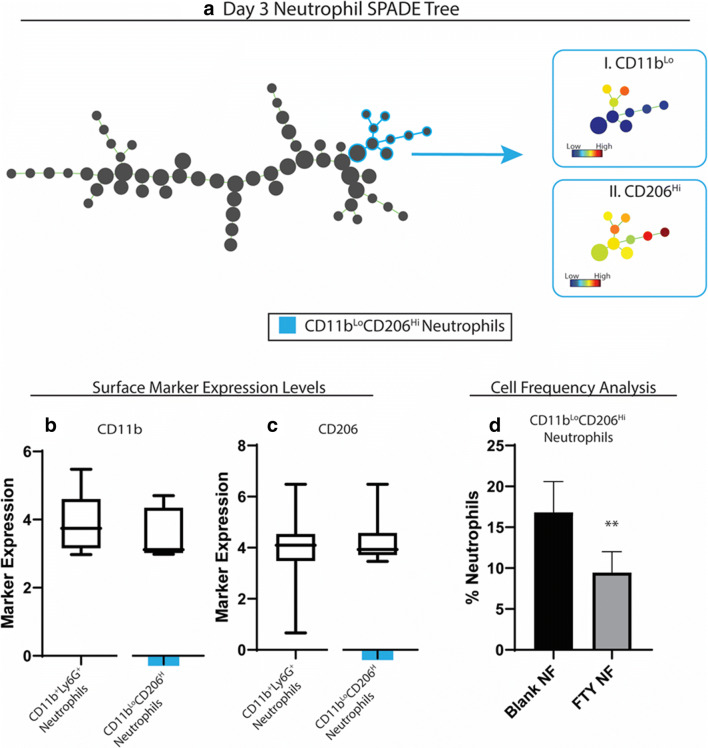
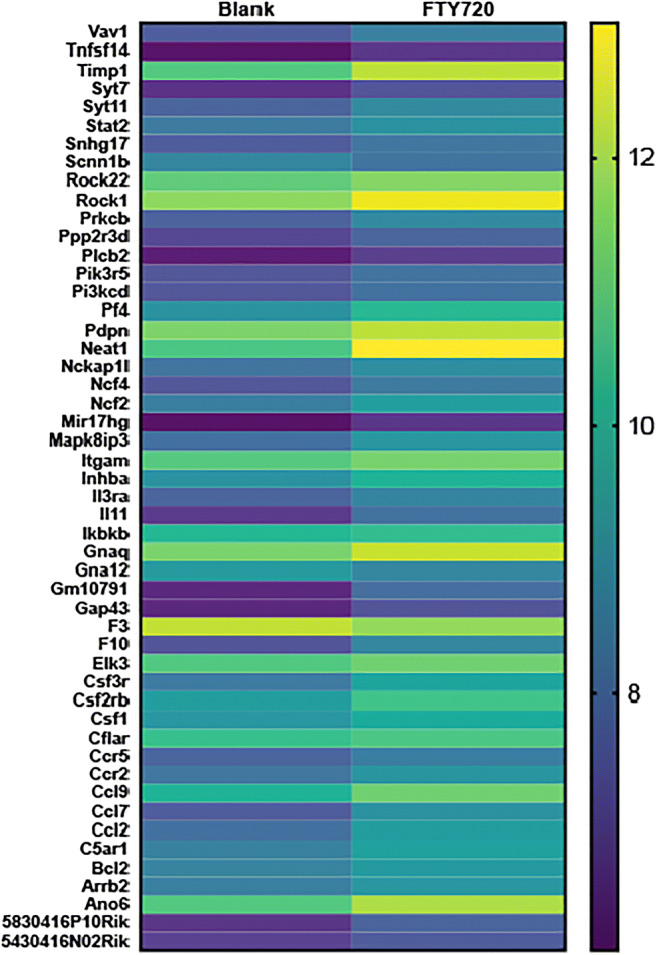
RNA sequencing analysis of palate mucosa injured tissue identified 669 genes that were differentially expressed (DE) during the first 3 days of ONF wound healing after local delivery of FTY720, including multiple genes in the sphingolipid signaling pathway. Evaluation of the DE genes at the KEGG Pathway database also identified the inflammatory immune response pathways (chemokine signaling, cytokine-cytokine receptor interaction, and leukocyte transendothelial migration), and the Gene Ontology enrichment analysis identified neutrophil chemotaxis and migration terms. SPADE dendrograms of CD11bLy6G neutrophils at both day 1 and day 3 post-injury showed significantly distinct subpopulations of neutrophils in oral mucosal defect tissue from the FTY720 scaffold treatment group compared to the vehicle control group (blank). Increased expression of CD88 and Vav1, among other genes, were found and staining of the ONF area demonstrated increased VAV1 staining in FTY720-treated healing oral mucosa.
Treatment of oral mucosal defects using FTY720 scaffolds is a promising new immunotherapy to improve healing outcomes and reducing ONF formation during cleft palate surgical repair. Local delivery of FTY720 nanofiber scaffolds during ONF healing significantly shifted early gene transcription associated with immune cell recruitment and modulation of the immune microenvironment results in distinct neutrophil subpopulations in the oral mucosal defect tissue that provides a critical shift toward pro-regenerative immune signaling.
The online version contains supplementary material available at 10.1007/s40883-021-00208-z.
腭裂修复手术缺乏再生性重建选择,并且在许多情况下会出现包括口鼻瘘(ONF)在内的并发症。我们团队开发了一种新型的ONF小鼠模型来研究口腔伤口愈合过程。利用该模型,我们团队之前发现,在纳米纤维支架上递送FTY720在ONF愈合过程中具有独特的免疫调节作用,可引导巨噬细胞和单核细胞进入促再生状态。在此,本研究的目的是确定在ONF模型中基于生物材料的局部FTY720递送对再生组织中早期整体基因表达和中性粒细胞表型反应的影响。
使用ONF形成的小鼠模型,制造腭裂缺损,并用FTY720纳米纤维支架或(空白)载体对照纳米纤维进行治疗。在植入后1天和3天,收集缺损区域的ONF口腔黏膜组织用于RNA测序分析或流式细胞术。对于RNA-seq表达谱分析,使用KEGG通路数据库和基因本体(GO)术语富集交互式图评估细胞内通路。为了评估FTY720对不同中性粒细胞亚群的影响,基于密度归一化事件的生成树进展分析(SPADE),使用伪时间分析对流式细胞术数据进行分析。
对腭黏膜损伤组织的RNA测序分析确定,在局部递送FTY720后的ONF伤口愈合的前3天内,有669个基因差异表达(DE),包括鞘脂信号通路中的多个基因。在KEGG通路数据库中对DE基因的评估还确定了炎症免疫反应通路(趋化因子信号传导、细胞因子-细胞因子受体相互作用和白细胞跨内皮迁移),并且基因本体富集分析确定了中性粒细胞趋化和迁移术语。损伤后第1天和第3天CD11bLy6G中性粒细胞的SPADE树状图显示,与载体对照组(空白)相比,FTY720支架治疗组的口腔黏膜缺损组织中的中性粒细胞亚群明显不同。发现CD88和Vav1等其他基因的表达增加,并且ONF区域的染色显示FTY720处理的愈合口腔黏膜中VAV1染色增加。
使用FTY720支架治疗口腔黏膜缺损是一种有前景的新免疫疗法,可改善愈合结果并减少腭裂手术修复期间ONF的形成。在ONF愈合过程中局部递送FTY720纳米纤维支架显著改变了与免疫细胞募集相关的早期基因转录,并且免疫微环境的调节导致口腔黏膜缺损组织中出现不同的中性粒细胞亚群,这为向促再生免疫信号的关键转变提供了条件。
在线版本包含可在10.1007/s40883-021-00208-z获取的补充材料。