Department of Molecular Genetics and Cell Biology, The University of Chicago, Chicago, Illinois, United States of America.
The Genome Center & Department of Plant Sciences, University of California, Davis, California, United States of America.
PLoS Pathog. 2021 Nov 1;17(11):e1010017. doi: 10.1371/journal.ppat.1010017. eCollection 2021 Nov.
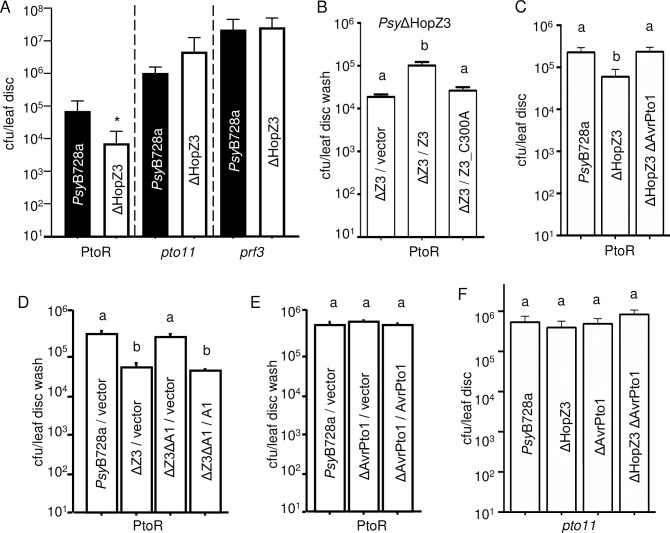
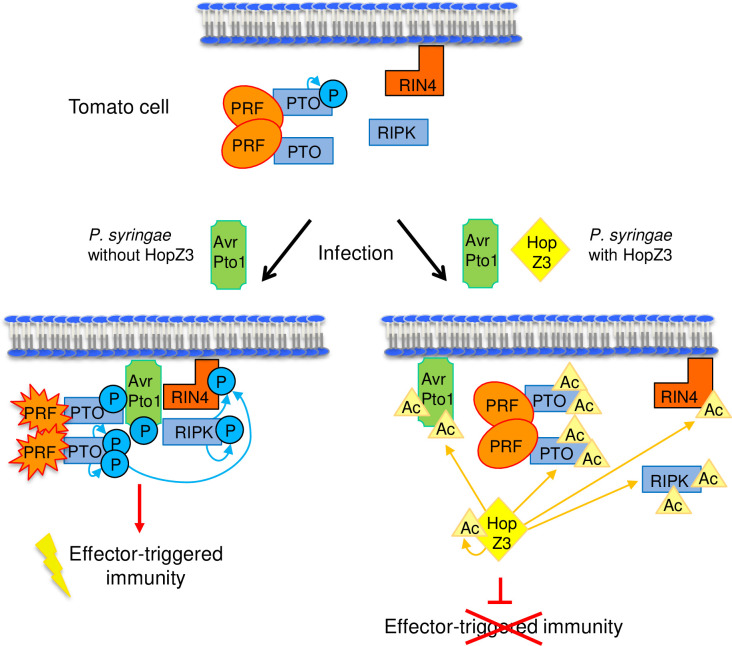
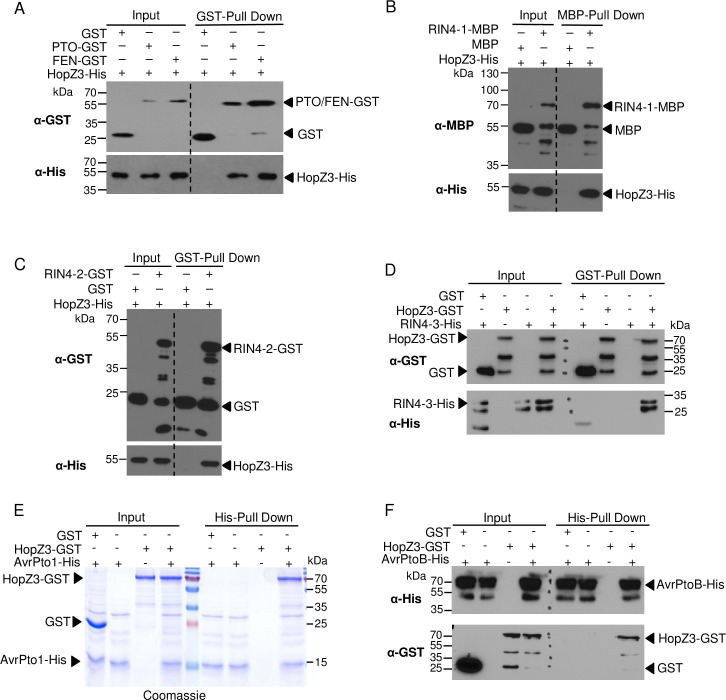
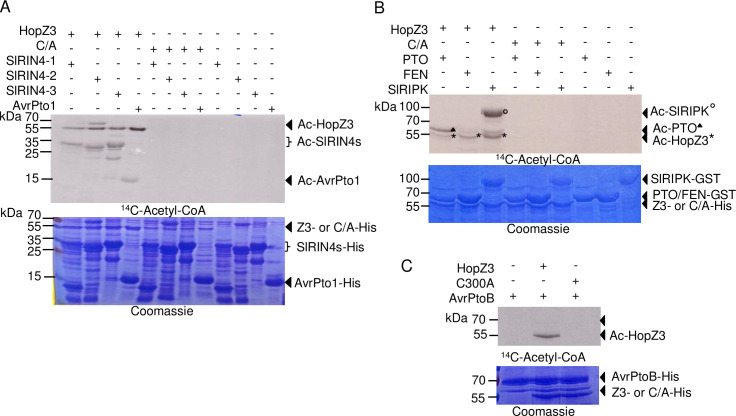
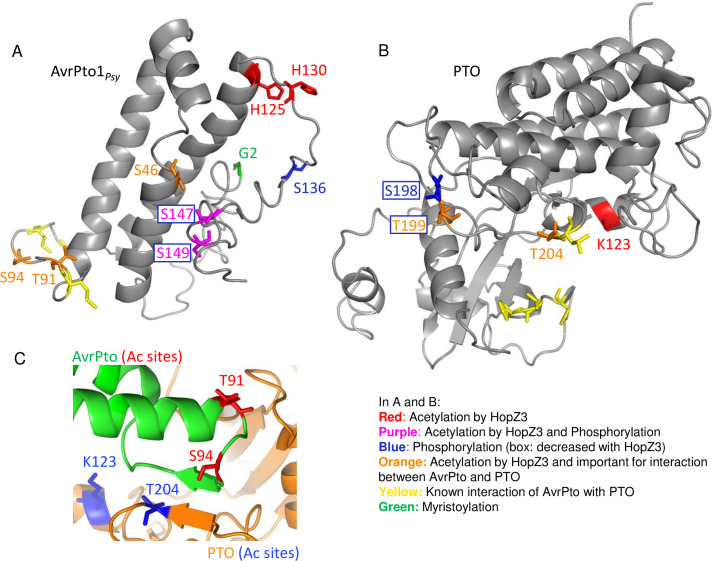
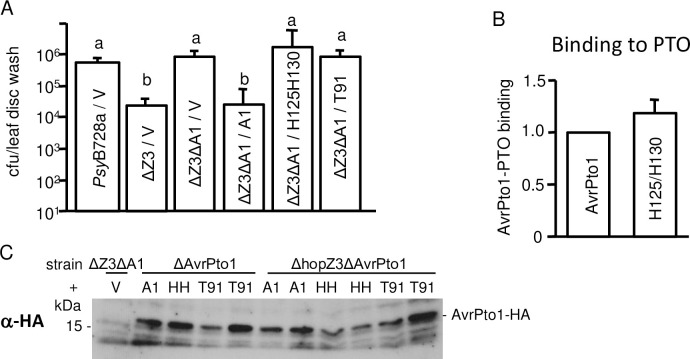
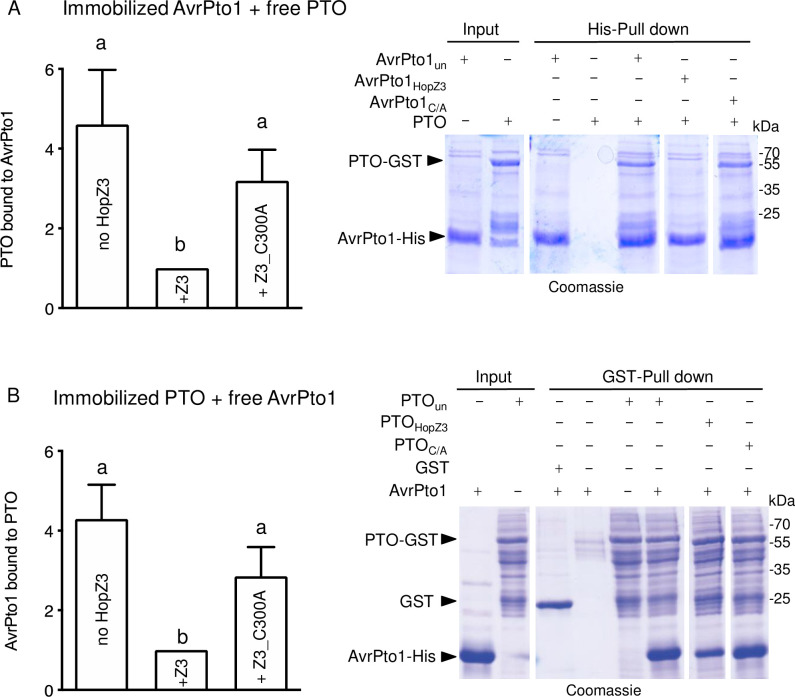
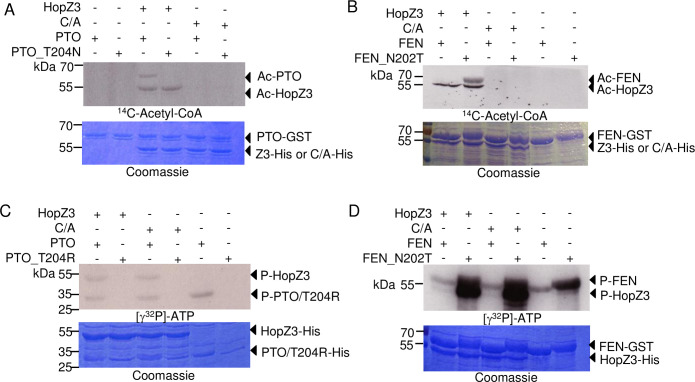
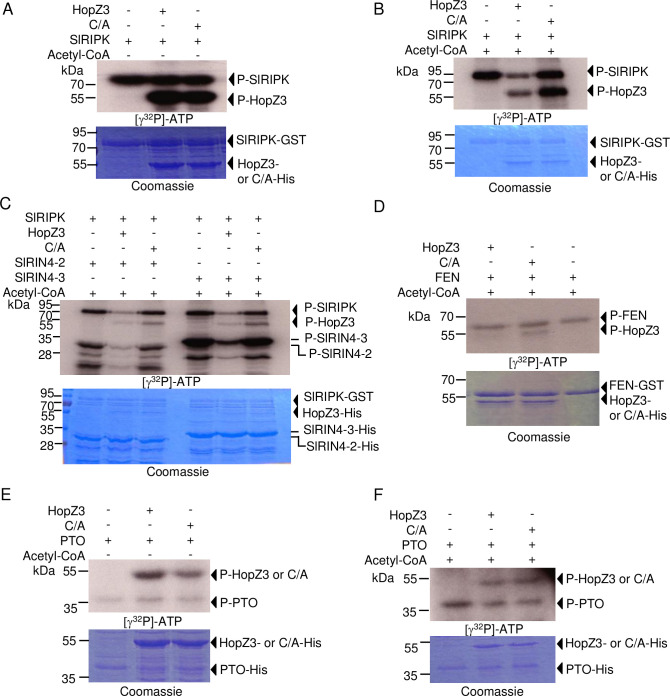
The plant pathogen Pseudomonas syringae secretes multiple effectors that modulate plant defenses. Some effectors trigger defenses due to specific recognition by plant immune complexes, whereas others can suppress the resulting immune responses. The HopZ3 effector of P. syringae pv. syringae B728a (PsyB728a) is an acetyltransferase that modifies not only components of plant immune complexes, but also the Psy effectors that activate these complexes. In Arabidopsis, HopZ3 acetylates the host RPM1 complex and the Psy effectors AvrRpm1 and AvrB3. This study focuses on the role of HopZ3 during tomato infection. In Psy-resistant tomato, the main immune complex includes PRF and PTO, a RIPK-family kinase that recognizes the AvrPto effector. HopZ3 acts as a virulence factor on tomato by suppressing AvrPto1Psy-triggered immunity. HopZ3 acetylates AvrPto1Psy and the host proteins PTO, SlRIPK and SlRIN4s. Biochemical reconstruction and site-directed mutagenesis experiments suggest that acetylation acts in multiple ways to suppress immune signaling in tomato. First, acetylation disrupts the critical AvrPto1Psy-PTO interaction needed to initiate the immune response. Unmodified residues at the binding interface of both proteins and at other residues needed for binding are acetylated. Second, acetylation occurs at residues important for AvrPto1Psy function but not for binding to PTO. Finally, acetylation reduces specific phosphorylations needed for promoting the immune-inducing activity of HopZ3's targets such as AvrPto1Psy and PTO. In some cases, acetylation competes with phosphorylation. HopZ3-mediated acetylation suppresses the kinase activity of SlRIPK and the phosphorylation of its SlRIN4 substrate previously implicated in PTO-signaling. Thus, HopZ3 disrupts the functions of multiple immune components and the effectors that trigger them, leading to increased susceptibility to infection. Finally, mass spectrometry used to map specific acetylated residues confirmed HopZ3's unusual capacity to modify histidine in addition to serine, threonine and lysine residues.
植物病原菌丁香假单胞菌分泌多种效应物来调节植物防御。一些效应物由于植物免疫复合物的特异性识别而触发防御,而另一些则可以抑制由此产生的免疫反应。丁香假单胞菌 pv. 丁香假单胞菌 B728a(PsyB728a)的 HopZ3 效应物是一种乙酰转移酶,不仅可以修饰植物免疫复合物的成分,还可以修饰激活这些复合物的 Psy 效应物。在拟南芥中,HopZ3 乙酰化宿主 RPM1 复合物和 Psy 效应物 AvrRpm1 和 AvrB3。本研究主要关注 HopZ3 在番茄感染过程中的作用。在 Psy 抗性番茄中,主要免疫复合物包括 PRF 和 PTO,后者是一种识别 AvrPto 效应物的 RIPK 家族激酶。HopZ3 通过抑制 AvrPto1Psy 触发的免疫来作为番茄的毒力因子。HopZ3 乙酰化 AvrPto1Psy 和宿主蛋白 PTO、SlRIPK 和 SlRIN4s。生化重建和定点突变实验表明,乙酰化以多种方式抑制番茄中的免疫信号。首先,乙酰化破坏了起始免疫反应所需的关键 AvrPto1Psy-PTO 相互作用。两个蛋白的结合界面上的未修饰残基和其他需要结合的残基都被乙酰化。其次,乙酰化发生在对 AvrPto1Psy 功能很重要但对与 PTO 结合不重要的残基上。最后,乙酰化降低了促进 HopZ3 靶标(如 AvrPto1Psy 和 PTO)免疫诱导活性所需的特异性磷酸化。在某些情况下,乙酰化与磷酸化竞争。HopZ3 介导的乙酰化抑制了 SlRIPK 的激酶活性及其先前涉及 PTO 信号转导的 SlRIN4 底物的磷酸化。因此,HopZ3 破坏了多种免疫成分及其触发它们的效应物的功能,导致感染易感性增加。最后,用于绘制特定乙酰化残基的质谱法证实了 HopZ3 除了丝氨酸、苏氨酸和赖氨酸残基外,还具有修饰组氨酸的异常能力。