Department of Neurology, Faculty of Medicine and University Hospital Cologne, University of Cologne, Cologne, Germany.
Department of Neurology with Experimental Neurology, Charité-Universitätsmedizin Berlin, Corporate Member of Free University of Berlin, Humboldt University of Berlin, and Berlin Institute of Health, Berlin, Germany.
Ann Neurol. 2022 Jan;91(1):150-157. doi: 10.1002/ana.26262. Epub 2021 Nov 22.
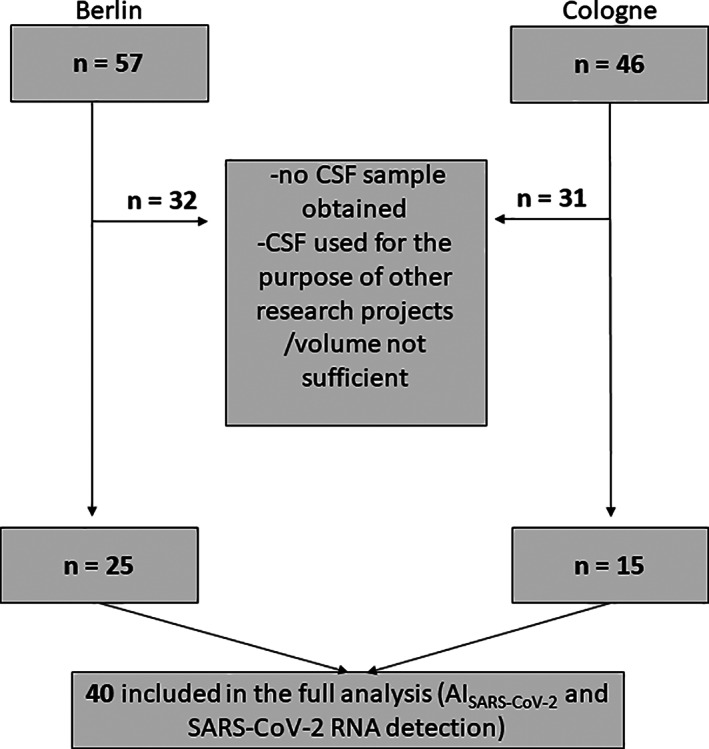
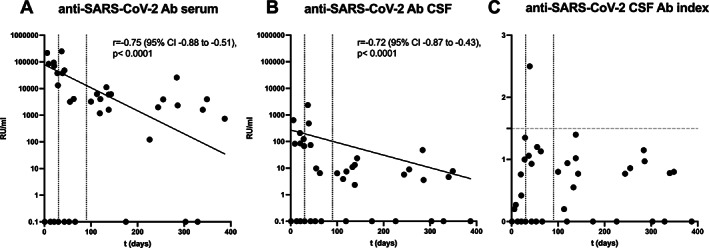
This study was undertaken to assess whether SARS-CoV-2 causes a persistent central nervous system infection. SARS-CoV-2-specific antibody index and SARS-CoV-2 RNA were studied in cerebrospinal fluid following COVID-19. Cerebrospinal fluid was assessed between days 1 and 30 (n = 12), between days 31 and 90 (n = 8), or later than 90 days (post-COVID-19, n = 20) after COVID-19 diagnosis. SARS-CoV-2 RNA was absent in all patients, and in none of the 20 patients with post-COVID-19 syndrome were intrathecally produced anti-SARS-CoV-2 antibodies detected. The absence of evidence of SARS-CoV-2 in cerebrospinal fluid argues against a persistent central nervous system infection as a cause of neurological or neuropsychiatric post-COVID-19 syndrome. ANN NEUROL 2022;91:150-157.
本研究旨在评估 SARS-CoV-2 是否会导致持续性中枢神经系统感染。在 COVID-19 后对脑脊液中的 SARS-CoV-2 特异性抗体指数和 SARS-CoV-2 RNA 进行了研究。在 COVID-19 诊断后第 1 至 30 天(n=12)、第 31 至 90 天(n=8)或 90 天后(COVID-19 后,n=20)评估了脑脊液。所有患者的 SARS-CoV-2 RNA 均为阴性,在 COVID-19 后综合征的 20 名患者中均未检测到鞘内产生的抗 SARS-CoV-2 抗体。脑脊液中未发现 SARS-CoV-2 的证据,这表明持续性中枢神经系统感染不是 COVID-19 后神经或神经精神综合征的病因。ANN NEUROL 2022;91:150-157.