Turhan Veysel Barış, Ünsal Abdulkadir, Gök Halil Fatih, Öztürk Bülent, Öztürk Doğan, Simsek Gulcin Guler, Buluş Hakan
General Surgery, Health Sciences University Keçiören Training and Research Hospital, Ankara, TUR.
Pathology, University of Medical Sciences, Gülhane Training and Research Hospital, Ankara, TUR.
Cureus. 2021 Sep 29;13(9):e18381. doi: 10.7759/cureus.18381. eCollection 2021 Sep.
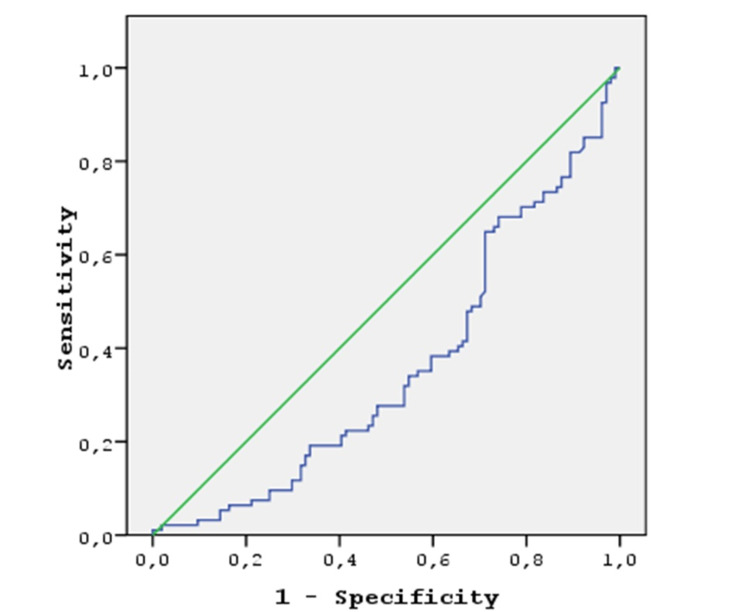
Introduction Biomarkers such as the neutrophil-lymphocyte ratio (NLR) and the platelet-lymphocyte ratio (PLR) are associated with the colon tumor stage and prognosis. Therefore, in our study, we investigated whether these biomarkers are important in determining the colon cancer stage. Materials and methods The outcomes in 268 patients operated on with the diagnosis of colon cancer between January 2011 and March 2019 were retrospectively analyzed. The relationship of the stage of the patients with the NLR or PLR was evaluated. In addition, according to the stage of colorectal tumors, stage I and other stages (stages II, III, and IV) were compared in terms of NLR and PLR. Groups that had lymph node (LN) metastasis were compared with those that did not. Finally, groups with and without metastasis were also compared. Results In our cohort, 144 patients (57.6%) were male, and 84 (42.4%) were female. The mean age was found to be 68.28 ±12.71 years. The patients were evaluated according to their stages: 26 patients were stage I, 78 patients were stage II, 75 patients were stage III, and 19 patients were stage IV. There was a significant difference in NLR values between the groups (p: 0.05). Also, 104 patients were LN-negative (stages I-II), and 94 patients were LN-positive (stages III-IV). When PLR was compared between the two groups, no significant difference was found between tumor stages and these values (p: 0.099). However, there was a significant difference in NLR values (p: 0.034). Conclusion Based on our findings, it has been concluded that increased PLR may not be associated with the colon cancer stage. However, the increase in NLR was found to be correlated with tumor stage and LN metastasis.
引言 中性粒细胞与淋巴细胞比值(NLR)和血小板与淋巴细胞比值(PLR)等生物标志物与结肠肿瘤分期及预后相关。因此,在我们的研究中,我们调查了这些生物标志物在确定结肠癌分期方面是否重要。
材料与方法 回顾性分析了2011年1月至2019年3月期间268例诊断为结肠癌并接受手术的患者的结果。评估了患者分期与NLR或PLR的关系。此外,根据结直肠肿瘤分期,比较了I期与其他分期(II期、III期和IV期)的NLR和PLR。比较了有淋巴结(LN)转移的组与无淋巴结转移的组。最后,还比较了有转移和无转移的组。
结果 在我们的队列中,144例患者(57.6%)为男性,84例患者(42.4%)为女性。平均年龄为68.28±12.71岁。根据分期对患者进行评估:26例为I期,78例为II期,75例为III期,19例为IV期。各组间NLR值存在显著差异(p:0.05)。此外,104例患者LN阴性(I-II期),94例患者LN阳性(III-IV期)。比较两组的PLR时,肿瘤分期与这些值之间未发现显著差异(p:0.099)。然而,NLR值存在显著差异(p:0.034)。
结论 根据我们的研究结果,得出结论:PLR升高可能与结肠癌分期无关。然而,发现NLR升高与肿瘤分期及LN转移相关。