Center for Liver and Pancreatobiliary Cancer, National Cancer Center, Goyang, Republic of Korea.
Department of Internal Medicine and Liver Research Institute, Seoul National University College of Medicine, Seoul, Republic of Korea.
J Gastroenterol Hepatol. 2022 Mar;37(3):428-439. doi: 10.1111/jgh.15727. Epub 2021 Nov 17.
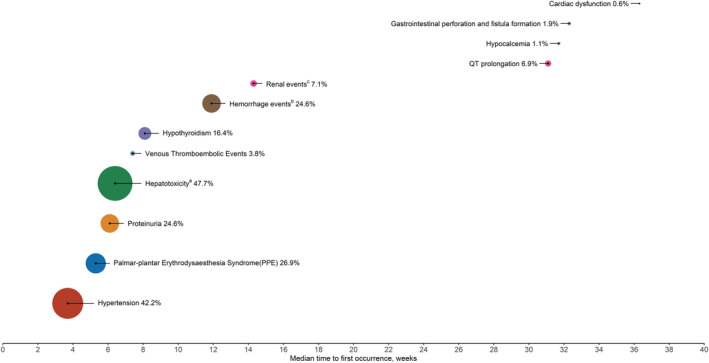
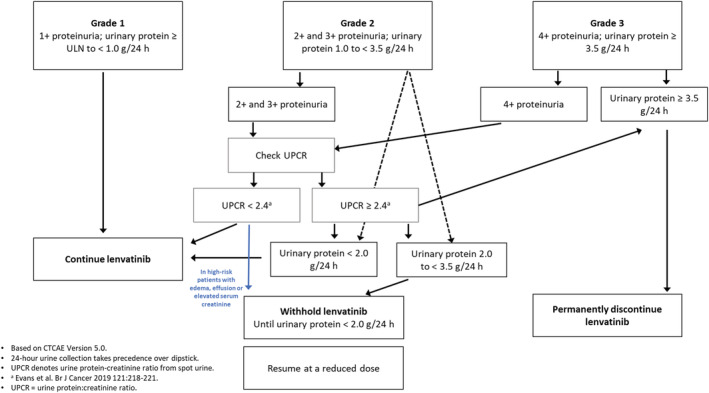
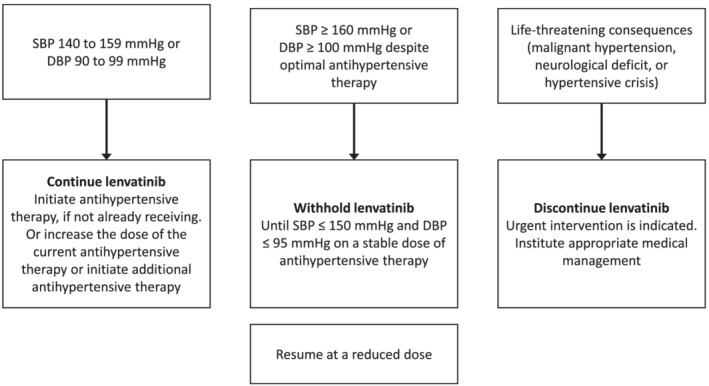
Lenvatinib is an oral multikinase inhibitor approved for use as first-line treatment for patients with advanced hepatocellular carcinoma (HCC). However, like other agents in this drug class, lenvatinib is associated with clinically important adverse events (AEs) that could adversely affect patient outcomes. Hypertension, diarrhea, decreased appetite/weight, hand-foot skin reaction, and proteinuria are among the most common AEs associated with lenvatinib therapy. This article provides strategies for the effective management of lenvatinib-associated AEs based on the expert opinion of authors and currently available literature. Due to the high risk of AEs in patients receiving lenvatinib, prophylactic measures and regular monitoring for AEs are recommended. Lenvatinib dose interruption, adjustment, or discontinuation of treatment may be required for patients who develop AEs. For grade 1 or 2 AEs, dose interruption is generally not required. For persistent or intolerable grade 2 or 3 AEs, lenvatinib treatment should be interrupted until symptoms improve/resolve to grade 0-1 or baseline levels. Thereafter, treatment should be resumed at the same or a lower dose. Disease progression may occur in patients who do not initially respond to treatment or receive a suboptimal lenvatinib dose following dose reduction, resulting in lack of efficacy. Therefore, to derive maximum treatment benefit and ensure long-term disease control, lenvatinib should be maintained at the highest possible dose when managing AEs. To conclude, lenvatinib-associated AEs can be managed with prophylactic measures, regular monitoring and symptomatic management, which can ensure continued treatment and maximum survival benefit in patients with advanced HCC receiving first-line lenvatinib therapy.
乐伐替尼是一种口服多激酶抑制剂,被批准用于治疗晚期肝细胞癌(HCC)患者的一线治疗。然而,与该类别的其他药物一样,乐伐替尼与临床重要的不良反应(AE)相关,这些不良反应可能会对患者的预后产生不利影响。高血压、腹泻、食欲/体重下降、手足皮肤反应和蛋白尿是与乐伐替尼治疗相关的最常见的 AE 之一。本文基于作者的专家意见和当前可用的文献,提供了有效管理乐伐替尼相关 AE 的策略。由于接受乐伐替尼治疗的患者发生 AE 的风险较高,建议采取预防措施并定期监测 AE。对于发生 AE 的患者,可能需要中断、调整或停止乐伐替尼治疗。对于 1 级或 2 级 AE,通常不需要中断剂量。对于持续或不可耐受的 2 级或 3 级 AE,应中断乐伐替尼治疗,直至症状改善/缓解至 0-1 级或基线水平。此后,应在相同或较低剂量下恢复治疗。对于最初对治疗无反应或在剂量减少后接受乐伐替尼剂量不足的患者,可能会发生疾病进展,导致疗效不佳。因此,为了获得最大的治疗益处并确保长期疾病控制,在管理 AE 时,应尽可能维持乐伐替尼的最高剂量。总之,通过预防措施、定期监测和对症治疗,可以管理乐伐替尼相关的 AE,从而确保接受一线乐伐替尼治疗的晚期 HCC 患者能够继续治疗并获得最大的生存获益。