Department of Anesthesiology, University of Virginia, Charlottesville, VA, United States; Department of Anesthesiology, Second Clinical College of North Sichuan Medical College, Nanchong Central Hospital, Nanchong, China.
Department of Anesthesiology, University of Virginia, Charlottesville, VA, United States; Anesthesia and Operation Center, First Medical Center of Chinese PLA General Hospital, Beijing, China.
Brain Res Bull. 2022 Jan;178:9-16. doi: 10.1016/j.brainresbull.2021.10.020. Epub 2021 Oct 30.
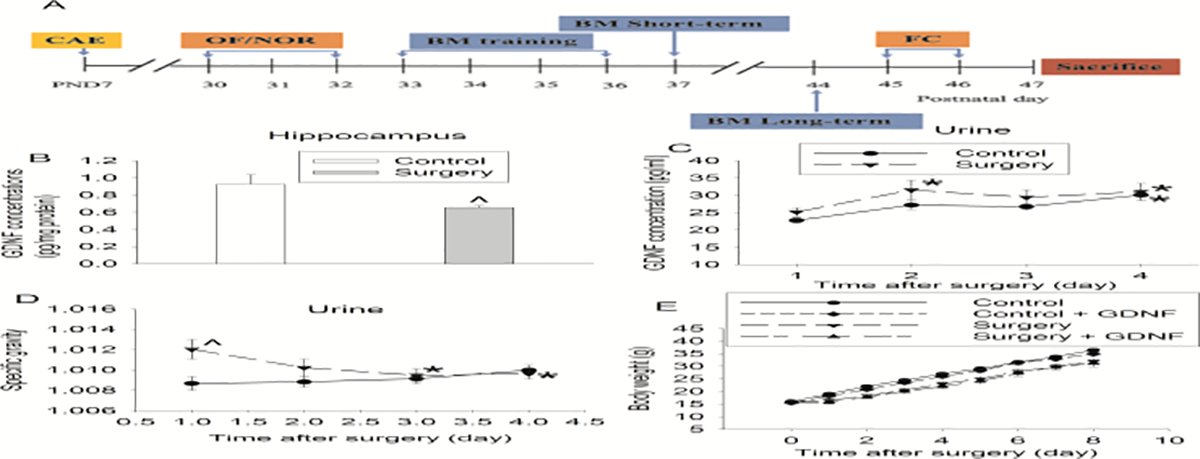
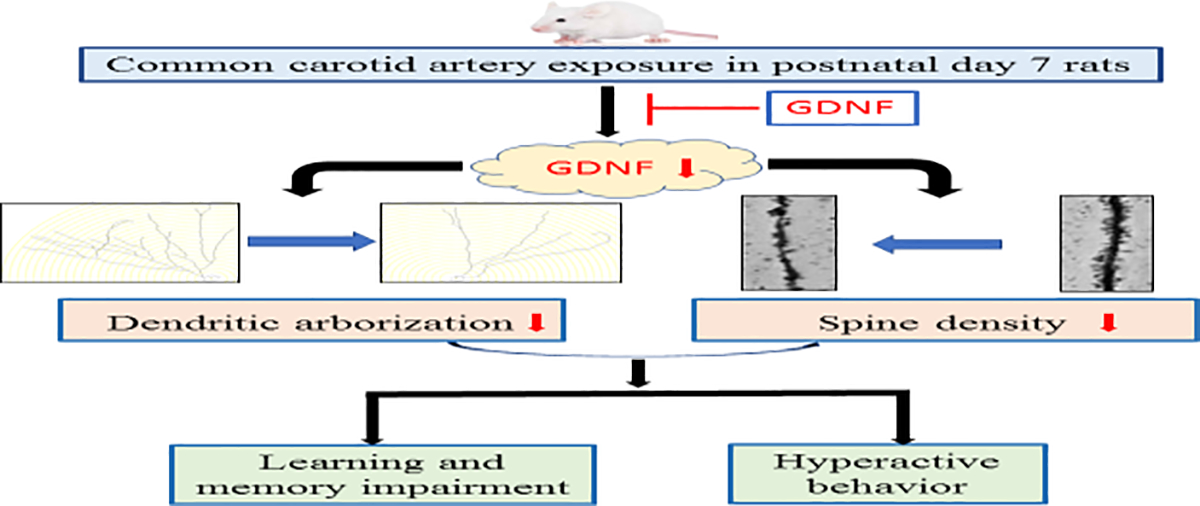
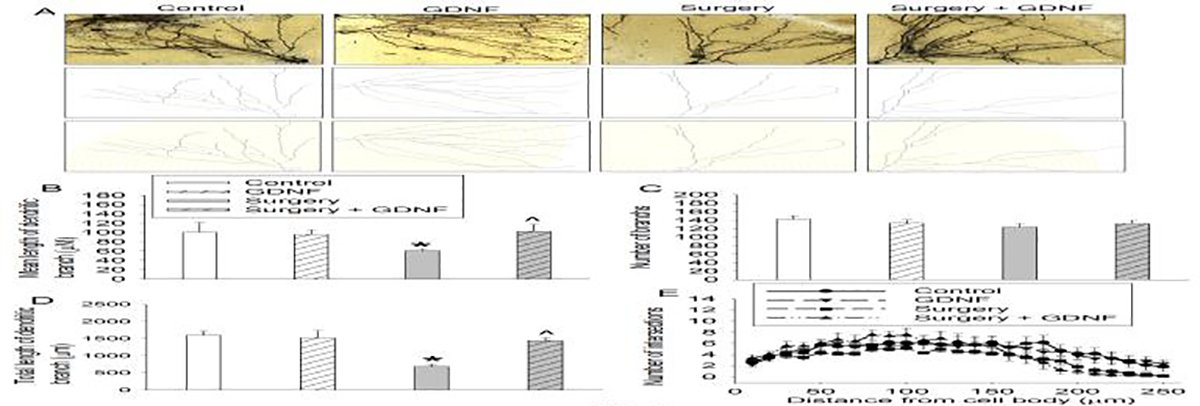
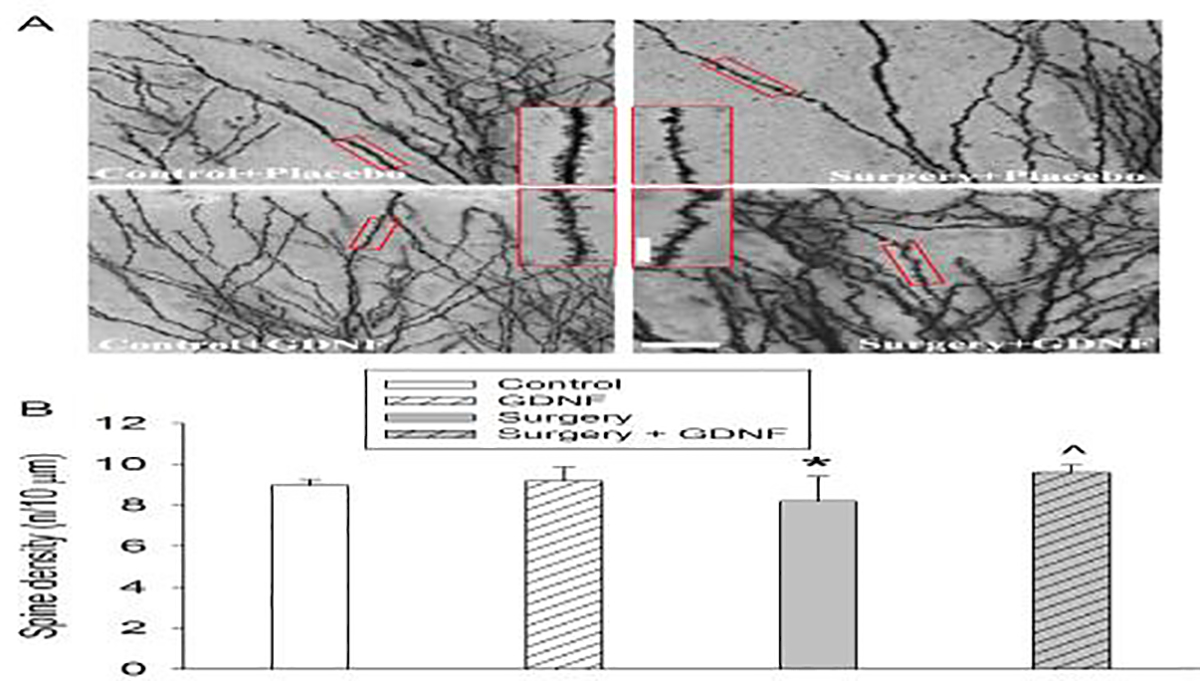
Patients who have surgery during the first few years of their lives may have an increased risk of behavioral abnormality. Our previous study has shown a role of glial cell-derived neurotrophic factor (GDNF) in neonatal surgery-induced learning and memory impairment in rats. This study was designed to determine whether neonatal surgery induced hyperactive behavior in addition to learning and memory impairment and whether GDNF played a role in these changes. Postnatal day 7 male and female Sprague-Dawley rats were subjected to right common carotid arterial exposure under sevoflurane anesthesia. Their learning, memory and behavior were tested from 23 days after the surgery. GDNF was injected intracerebroventricularly at the end of surgery. Surgery reduced GDNF expression in the hippocampus. Surgery impaired learning and memory and induced a hyperactive behavior as assessed by Barnes maze, fear conditioning and open field tests. In addition, surgery reduced dendritic arborization and spine density. The effects were attenuated by GDNF injection. These results suggest that surgery induces a hyperactive behavior pattern, impairment of learning and memory, and neuronal microstructural damage later in the lives in rats. GDNF reduction may mediate these surgical effects.
婴儿期接受手术的患者可能存在行为异常的风险增加。我们之前的研究表明胶质细胞源性神经营养因子(GDNF)在新生大鼠手术诱导的学习和记忆损伤中起作用。本研究旨在确定新生儿手术是否除了学习和记忆损伤外还会引起多动行为,以及 GDNF 是否在这些变化中起作用。新生 7 天的雄性和雌性 Sprague-Dawley 大鼠在七氟醚麻醉下接受右侧颈总动脉暴露。术后 23 天测试其学习、记忆和行为。手术结束时,将 GDNF 脑室内注射。手术导致海马区 GDNF 表达减少。手术导致学习和记忆损伤,并通过 Barnes 迷宫、恐惧条件反射和旷场试验评估引起多动行为。此外,手术还减少了树突分支和棘密度。GDNF 注射可减轻这些影响。这些结果表明,手术会在大鼠的后期生活中引起多动行为模式、学习和记忆损伤以及神经元微结构损伤。GDNF 减少可能介导这些手术影响。