Research Service, Veteran Administration Greater Los Angeles Healthcare System, Los Angeles, CA, United States.
Division of Rheumatology, Department of Medicine, University of California, Los Angeles, Los Angeles, CA, United States.
Front Immunol. 2021 Oct 18;12:725325. doi: 10.3389/fimmu.2021.725325. eCollection 2021.
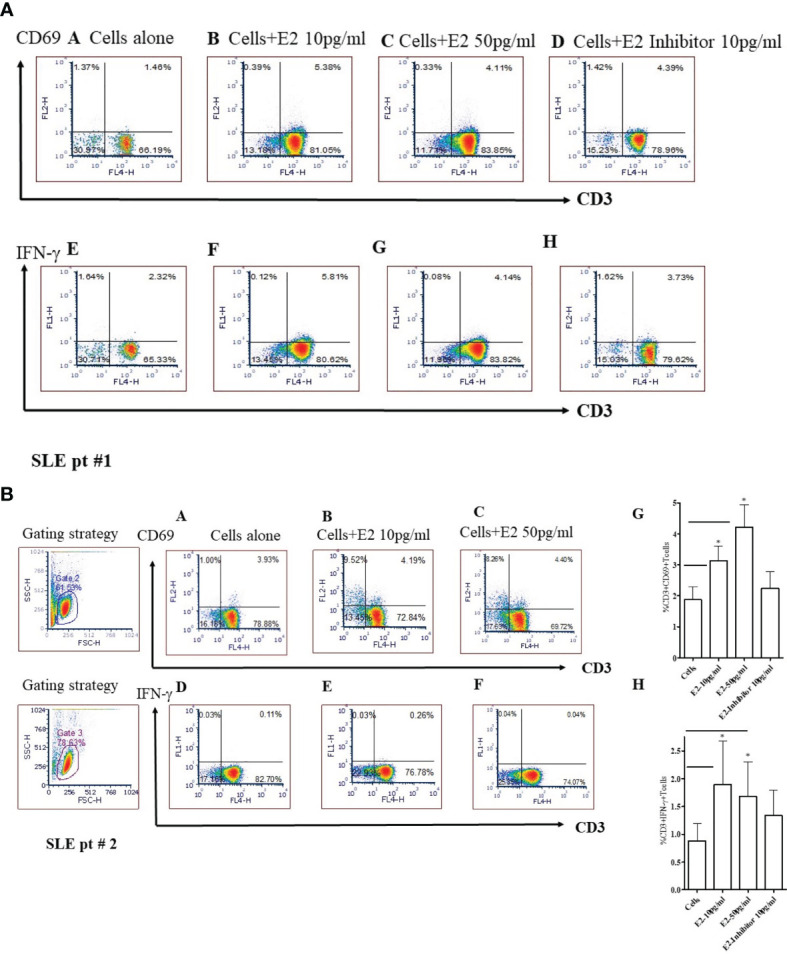
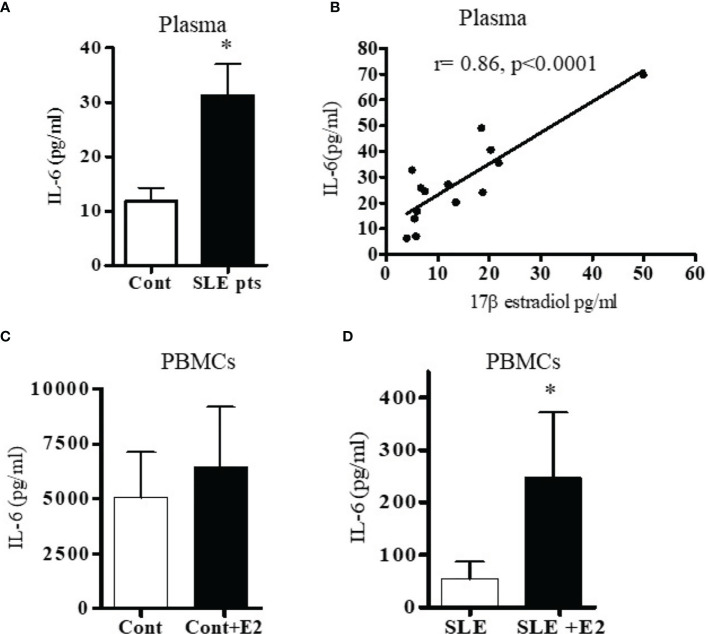
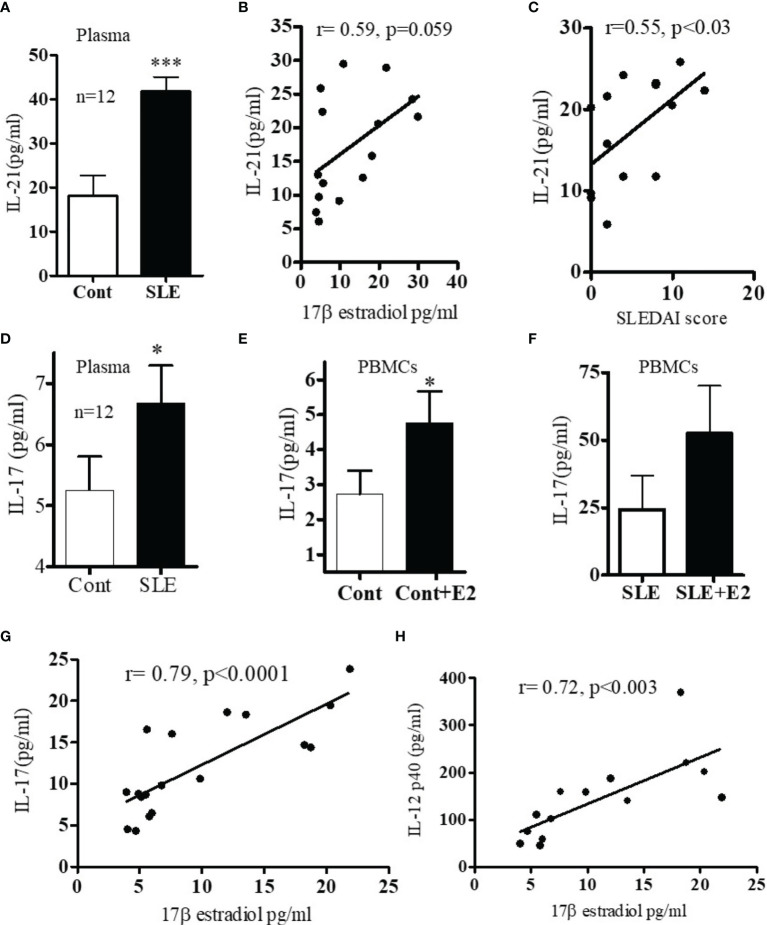
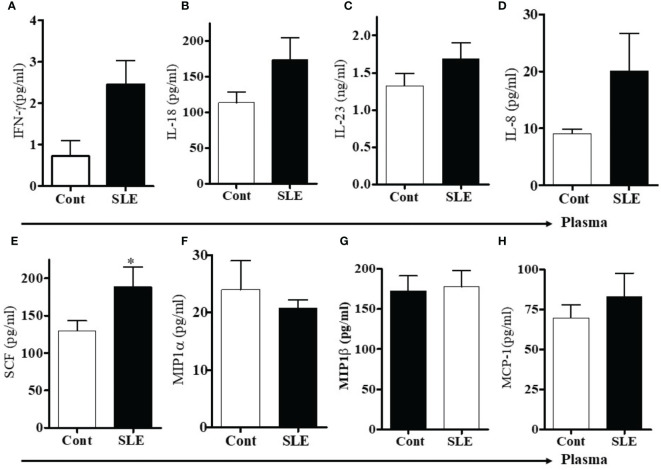
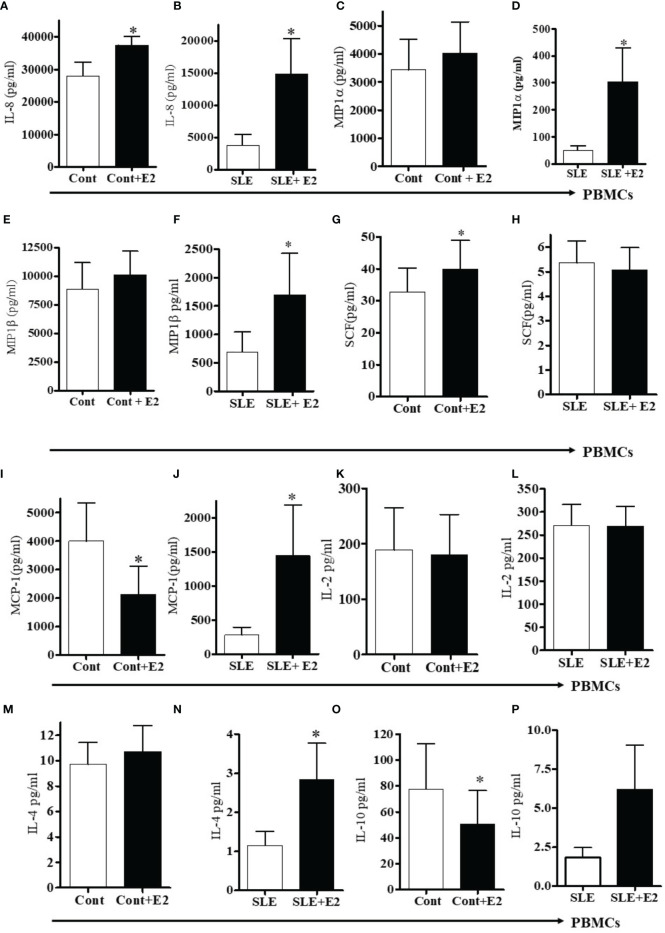
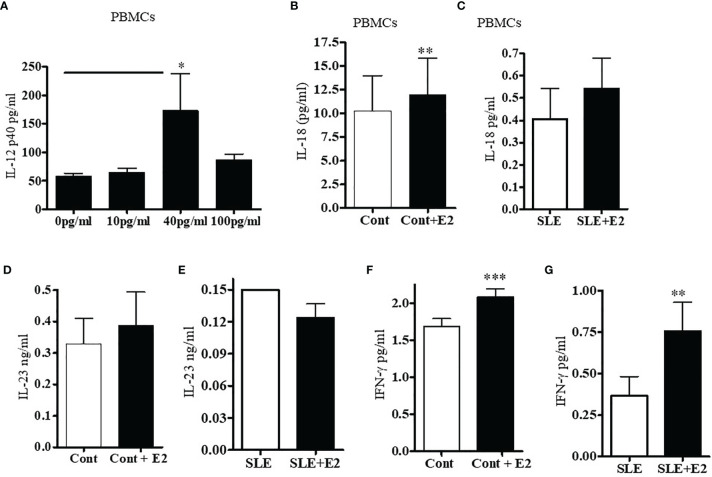
Recent evidence suggests the existence of a nexus between inflammatory pathways and the female sex hormone 17β-estradiol, resulting in increased interferon-stimulated genes (ISGs), autoantibodies, and dysregulation of immune cells in SLE. However, the molecular mechanisms and the effect of estradiol on candidate target genes and their pathways remains poorly understood. Our previous work suggests that female SLE patients have increased estradiol levels compared to healthy controls. In the present study, we explored the effects of 17β-estradiol treatment on expression of IFN (interferons)-stimulated genes and pro-inflammatory cytokines/chemokines. We found significantly increased (5-10-fold) expression of IFN-regulated genes in healthy females. Furthermore, we found significantly increased plasma levels of IL-6, IL-12, IL-17, IL-18, stem cell factor (SCF), and IL-21/IL-23 in SLE patients compared to healthy controls, and those levels positively correlated with the plasma levels of 17β-estradiol. In addition, levels of IL-21 positively correlated with the SLE disease activity index (SLEDAI) score of SLE patients. treatment of PBMCs from either SLE patients or healthy controls with 17β-estradiol at physiological concentration (~50 pg/ml) also significantly increased secretion of many pro-inflammatory cytokines and chemokines (IL-6, IL-12, IL-17, IL-8, IFN-γ; MIP1α, and MIP1β) in both groups. Further our data revealed that 17β-estradiol significantly increased the percentage of CD3CD69 and CD3IFNγ T cells; whereas, simultaneous addition of 17β-estradiol and an ERα inhibitor prevented this effect. Collectively, our findings indicate that 17β-estradiol participates in the induction of pro-inflammatory cytokines and chemokines and further influences interferon genes and pathways.
最近的证据表明,炎症途径和女性性激素 17β-雌二醇之间存在联系,导致干扰素刺激基因(ISGs)、自身抗体增加,以及 SLE 中的免疫细胞失调。然而,雌激素对候选靶基因及其途径的分子机制和影响仍知之甚少。我们之前的工作表明,与健康对照组相比,女性 SLE 患者的雌二醇水平升高。在本研究中,我们探讨了 17β-雌二醇处理对 IFN(干扰素)刺激基因和前炎症细胞因子/趋化因子表达的影响。我们发现健康女性的 IFN 调节基因表达显著增加(5-10 倍)。此外,我们发现 SLE 患者的血浆 IL-6、IL-12、IL-17、IL-18、干细胞因子(SCF)和 IL-21/IL-23 水平显著高于健康对照组,并且这些水平与血浆 17β-雌二醇水平呈正相关。此外,IL-21 水平与 SLE 患者的 SLE 疾病活动指数(SLEDAI)评分呈正相关。用生理浓度(~50 pg/ml)的 17β-雌二醇处理来自 SLE 患者或健康对照者的 PBMCs 也显著增加了两组中许多前炎症细胞因子和趋化因子(IL-6、IL-12、IL-17、IL-8、IFN-γ;MIP1α 和 MIP1β)的分泌。此外,我们的数据表明,17β-雌二醇显著增加了 CD3CD69 和 CD3IFNγ T 细胞的百分比;而同时添加 17β-雌二醇和 ERα 抑制剂可防止这种作用。综上所述,我们的研究结果表明,17β-雌二醇参与诱导前炎症细胞因子和趋化因子,并进一步影响干扰素基因和途径。