Department of Ophthalmology, Cheng Hsin General Hospital, Taipei, Taiwan.
School of Medicine, National Yang Ming Chiao Tung University, Hsinchu, Taiwan.
Sci Rep. 2021 Nov 5;11(1):21740. doi: 10.1038/s41598-021-00968-2.
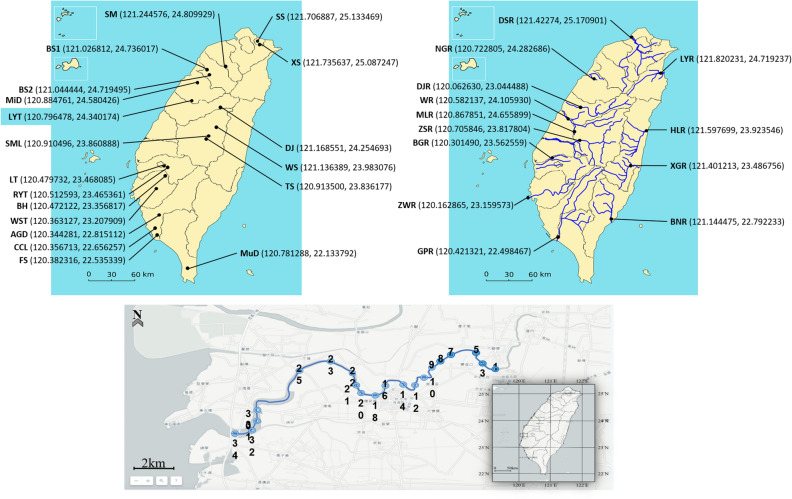
Acanthamoeba spp. are opportunistic human pathogens that cause granulomatous amoebic encephalitis and keratitis, and their accurate detection and enumeration in environmental samples is a challenge. In addition, information regarding the genotyping of Acanthamoeba spp. using various PCR methods is equally critical. Therefore, considering the diverse niches of habitats, it is necessary to develop an even more efficient genotyping method for Acanthamoeba spp. detection. This study improved the sensitivity of detection to avoid underestimation of Acanthamoeba spp. occurrence in aquatic environmental samples, and to accurately define the pathogenic risk by developing an efficient PCR method. In this study, a new nested genotyping method was established and compared with various PCR-based methods using in silico, lab, and empirical tests. The in silico test showed that many PCR-based methods could not successfully align specific genotypes of Acanthamoeba, except for the newly designed nested PCR and real-time PCR method. Furthermore, 52 water samples from rivers, reservoirs, and a river basin in Taiwan were analysed by six different PCR methods and compared for genotyping and detection efficiency of Acanthamoeba. The newly developed nested-PCR-based method of genotyping was found to be significantly sensitive as it could effectively detect the occurrence of Acanthamoeba spp., which was underestimated by the JDP-PCR method. Additionally, the present results are consistent with previous studies indicating that the high prevalence of Acanthamoeba in the aquatic environment of Taiwan is attributed to the commonly found T4 genotype. Ultimately, we report the development of a small volume procedure, which is a combination of recent genotyping PCR and conventional real-time PCR for enumeration of aquatic Acanthamoeba and acquirement of biologically meaningful genotyping information. We anticipate that the newly developed detection method will contribute to the precise estimation, evaluation, and reduction of the contamination risk of pathogenic Acanthamoeba spp., which is regularly found in the water resources utilised for domestic purposes.
棘阿米巴属是一种机会性致病人类病原体,可引起肉芽肿性阿米巴脑炎和角膜炎,其在环境样本中的准确检测和计数是一个挑战。此外,使用各种 PCR 方法对棘阿米巴属进行基因分型的信息同样至关重要。因此,考虑到栖息地的多样化生态位,有必要开发一种更有效的棘阿米巴属检测基因分型方法。本研究通过开发一种有效的 PCR 方法,提高了检测的灵敏度,以避免低估水生环境样本中棘阿米巴属的存在,并准确定义致病风险。在本研究中,建立了一种新的巢式基因分型方法,并通过计算机模拟、实验室和实际测试与各种基于 PCR 的方法进行了比较。计算机模拟测试表明,除了新设计的巢式 PCR 和实时 PCR 方法外,许多基于 PCR 的方法无法成功对齐棘阿米巴的特定基因型。此外,还使用六种不同的 PCR 方法对来自台湾河流、水库和流域的 52 个水样进行了分析,并比较了棘阿米巴的基因分型和检测效率。新开发的基于巢式 PCR 的基因分型方法具有较高的灵敏度,可有效检测到被 JDP-PCR 方法低估的棘阿米巴属的存在。此外,本研究结果与之前的研究一致,表明台湾水生环境中棘阿米巴属的高流行率归因于常见的 T4 基因型。最终,我们报告了一种小体积程序的开发,该程序是最近的基因分型 PCR 与传统实时 PCR 的组合,用于水生棘阿米巴的计数和获得有生物学意义的基因分型信息。我们预计,新开发的检测方法将有助于对经常在用于家庭用途的水资源中发现的致病棘阿米巴属的污染风险进行精确估计、评估和降低。