Department of Laboratory Medicine, Lund University, Skåne University Hospital, Lund, Sweden.
Department of Infectious Diseases, Skåne University Hospital, Lund, Sweden.
BMC Microbiol. 2021 Nov 6;21(1):307. doi: 10.1186/s12866-021-02368-y.
The dysregulation of B cell activation is prevalent during naturally acquired immunity against malaria. Osteopontin (OPN), a protein produced by various cells including B cells, is a phosphorylated glycoprotein that participates in immune regulation and has been suggested to be involved in the immune response against malaria. Here we studied the longitudinal concentrations of OPN in infants and their mothers living in Uganda, and how OPN concentrations correlated with B cell subsets specific for P. falciparum and B cell activating factor (BAFF). We also investigated the direct effect of OPN on P. falciparum in vitro.
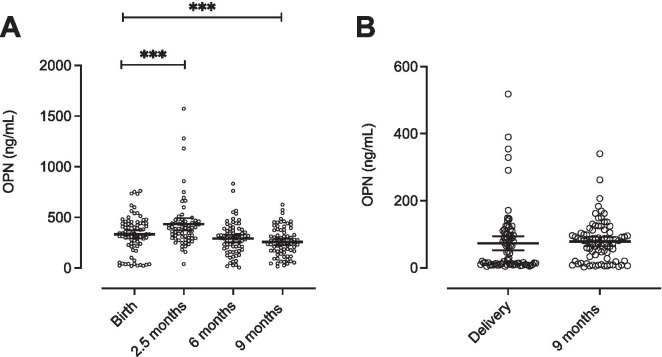
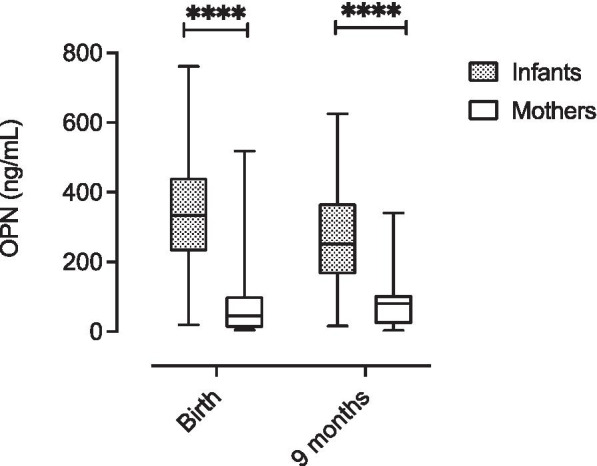
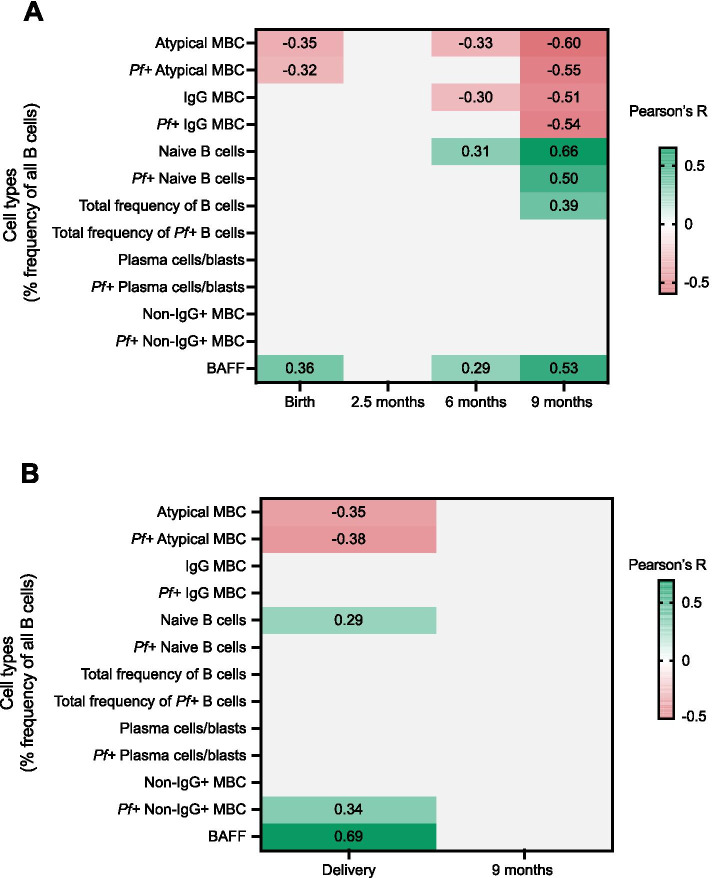
The OPN concentration was higher in the infants compared to the mothers, and OPN concentration in infants decreased from birth until 9 months. OPN concentration in infants during 9 months were independent of OPN concentrations in corresponding mothers. OPN concentrations in infants were inversely correlated with total atypical memory B cells (MBCs) as well as P. falciparum-specific atypical MBCs. There was a positive correlation between OPN and BAFF concentrations in both mothers and infants. When OPN was added to P. falciparum cultured in vitro, parasitemia was unaffected regardless of OPN concentration.
The concentrations of OPN in infants were higher and independent of the OPN concentrations in corresponding mothers. In vitro, OPN does not have a direct effect on P. falciparum growth. Our correlation analysis results suggest that OPN could have a role in the B cell immune response and acquisition of natural immunity against malaria.
在疟疾自然免疫过程中,B 细胞激活失调较为常见。骨桥蛋白(OPN)是一种由包括 B 细胞在内的多种细胞产生的磷酸化糖蛋白,参与免疫调节,被认为与疟疾的免疫反应有关。本研究旨在探讨生活在乌干达的婴儿及其母亲体内 OPN 的纵向浓度及其与针对疟原虫 falciparum 的 B 细胞亚群和 B 细胞激活因子(BAFF)的相关性,还研究了 OPN 对体外疟原虫 falciparum 的直接作用。
与母亲相比,婴儿体内的 OPN 浓度更高,且婴儿体内的 OPN 浓度从出生开始下降,直至 9 个月。9 个月时婴儿体内的 OPN 浓度与相应母亲体内的 OPN 浓度无关。婴儿体内的 OPN 浓度与总非典型记忆 B 细胞(MBC)以及疟原虫 falciparum 特异性非典型 MBC 呈负相关。母亲和婴儿体内的 OPN 浓度与 BAFF 浓度呈正相关。当将 OPN 添加到体外培养的疟原虫 falciparum 中时,无论 OPN 浓度如何,寄生虫血症均不受影响。
婴儿体内的 OPN 浓度较高,且与相应母亲体内的 OPN 浓度无关。体外实验表明,OPN 对疟原虫 falciparum 的生长没有直接影响。我们的相关分析结果表明,OPN 可能在 B 细胞免疫反应和获得对疟疾的自然免疫中发挥作用。