Department of Traditional Chinese Medicine, School of Medicine, Xiamen University, Xiamen, China.
Department of Traditional Chinese Medicine, Xiamen University Hospital, Xiamen, China.
Front Immunol. 2021 Oct 22;12:774966. doi: 10.3389/fimmu.2021.774966. eCollection 2021.
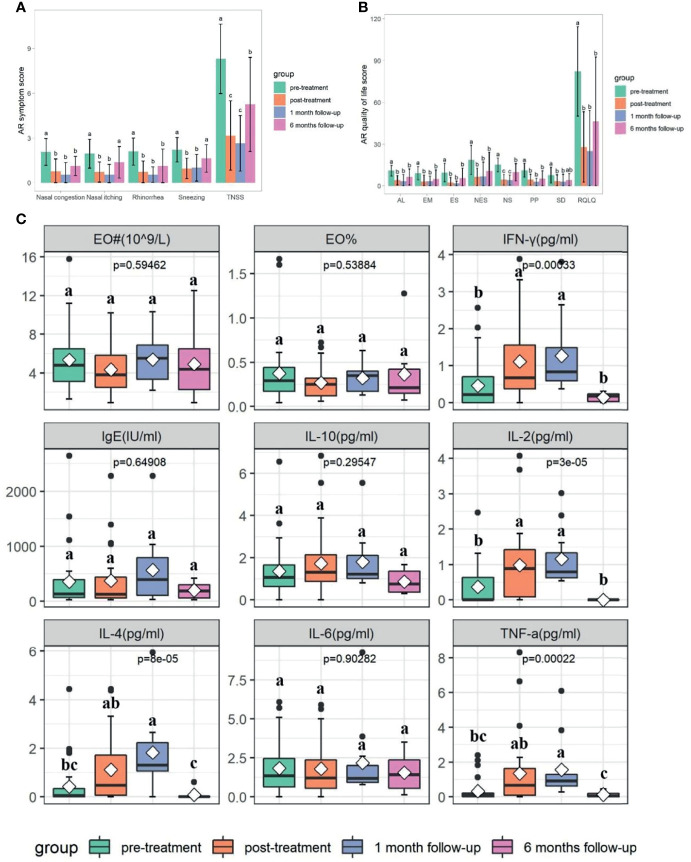
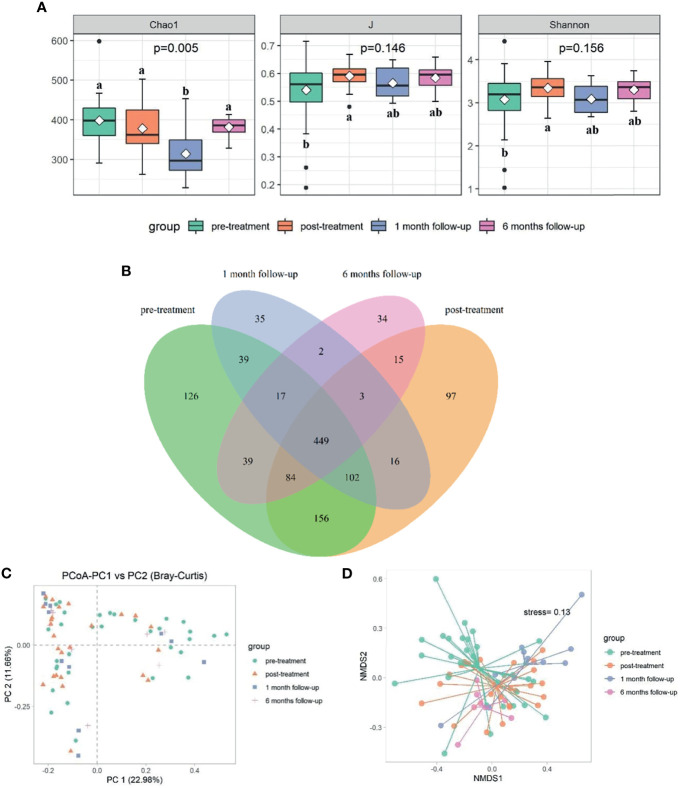
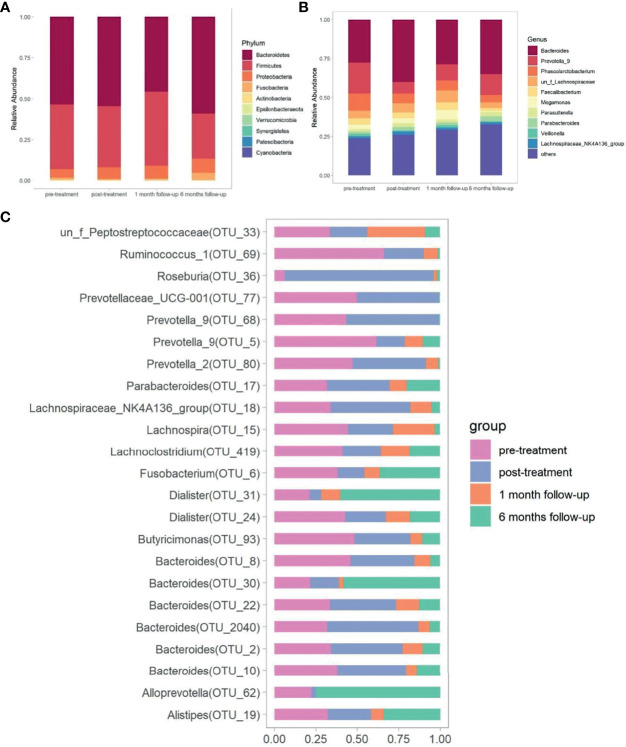
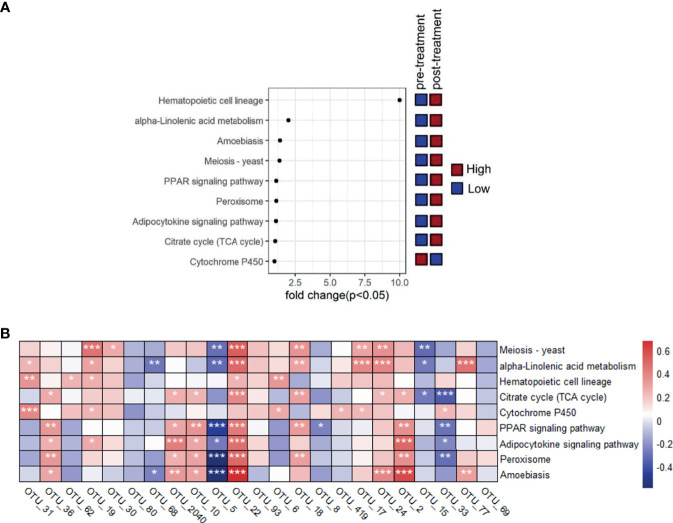
A mixed Chinese herbal formula, Xiao-Qing-Long-Decoction (XQLD), may contribute to sustained remission in allergic rhinitis (AR), but it is unknown which factors determine such long-term effect. Here, we aimed to identify bacterial signatures associated with sustained remission. To this end, samples from AR patients at four different times were analyzed to compare the dynamic bacterial community and structure shifts. Diversity indices Chao1 showed significant difference across different time (<0.05), and the Kruskal-Wallis test identified that (OTU_31), (OTU_36), (OTU_22), (OTU_2040), and 9 (OTU_5) were the significant differential bacterial taxa (<0.05). These distinctive genera were significantly associated with the change of AR clinical indices and the predicted functional pathways such as PPAR signaling pathway, peroxisome, and citrate cycle (TCA cycle) (<0.05), indicating that they may be important bacterial signatures involving in the sustained remission in AR (<0.05). Besides, lower Firmicutes/Bacteroidetes (F/B) ratio at 6 months follow-up may also contribute to the long-term remission of AR. No seriously adverse events and safety concerns were observed in this study. In conclusion, XQLD is a meaningful, long-term efficient and safe medication for AR treatment. The underlying mechanisms of sustained remission in AR after XQLD treatment may be associated with the dynamic alteration of featured gut bacteria taxa.
一种混合中草药配方,小青龙汤(XQLD),可能有助于过敏性鼻炎(AR)的持续缓解,但尚不清楚哪些因素决定了这种长期疗效。在这里,我们旨在确定与持续缓解相关的细菌特征。为此,分析了 AR 患者在四个不同时间点的样本,以比较动态细菌群落和结构变化。多样性指数 Chao1 在不同时间点(<0.05)有显著差异,Kruskal-Wallis 检验鉴定出(OTU_31)、(OTU_36)、(OTU_22)、(OTU_2040)和 9(OTU_5)是显著差异的细菌分类群(<0.05)。这些独特的属与 AR 临床指标的变化和预测的功能途径(如过氧化物酶体增殖物激活受体信号通路、过氧化物酶体和柠檬酸循环(TCA 循环))显著相关(<0.05),表明它们可能是涉及 AR 持续缓解的重要细菌特征(<0.05)。此外,6 个月随访时较低的厚壁菌门/拟杆菌门(F/B)比值也可能有助于 AR 的长期缓解。本研究未观察到严重不良事件和安全性问题。总之,XQLD 是治疗 AR 的一种有意义的、长期有效的、安全的药物。XQLD 治疗后 AR 持续缓解的潜在机制可能与特征性肠道细菌分类群的动态变化有关。