Samsuri Azrul Hisyam, Ang May Yen, Ng Shean Yeaw
Shimadzu Malaysia Sdn. Bhd, No. 6, Lorong Teknologi 3/4A, Nouvelle Industrial Park 2, Taman Sains Selangor 1, Kota Damansara, 47810 Petaling Jaya, Selangor, Malaysia.
Institute for Tropical Biology and Conservation, Universiti Malaysia Sabah, Jalan UMS, 88400 Kota Kinabalu, Sabah, Malaysia.
Int J Anal Chem. 2021 Oct 29;2021:1941336. doi: 10.1155/2021/1941336. eCollection 2021.
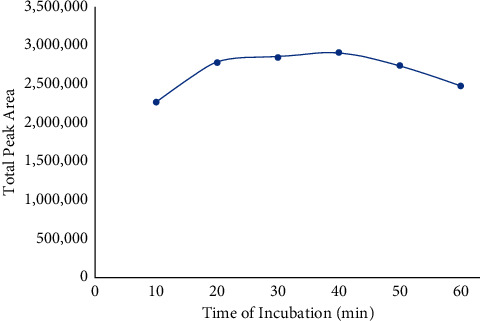
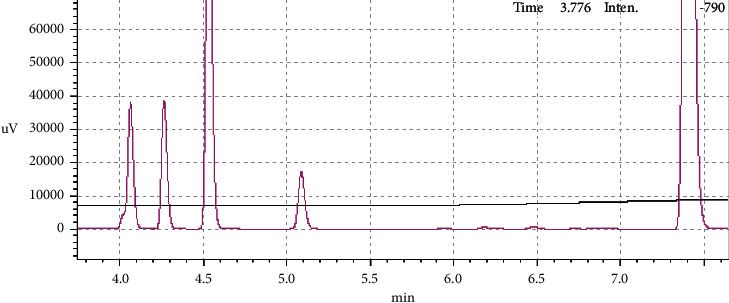
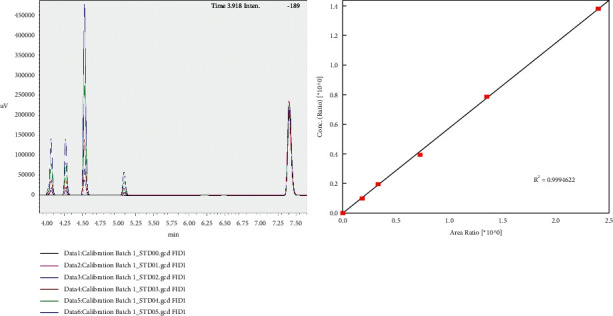
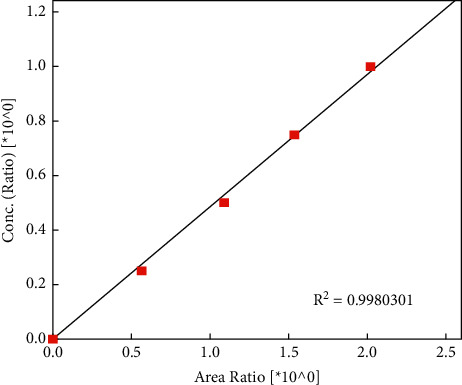
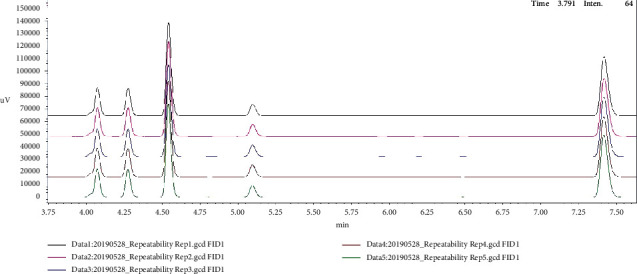
This study aims to determine the residual hexane in four edible oils in Malaysia using a simple, rapid, and automated method in order to improve the efficiency and productivity of the analysis. Gas chromatography (GC/FID) equipped with a headspace autosampler (HS-20) was used to perform the analysis. Incubation time for each injection was successfully optimized from one hour to 30 minutes (50% reduction) compared to the official AOCS method Ca 3b-87. Out of the four tested edible oils, only the hexane residues detected in sunflower oil exceeded the maximum residue limit (MRL) set by the European Union regulation. Significant difference of the results obtained between large calibration range (0-938 mg kg) and small calibration range (0-68 mg kg) suggests that there is a need to use a lower standard calibration concentration to avoid misinterpretation of analysis results. Method validation applies to the technical hexane; 2-methylpentane, 3-methylpentane, cyclohexane, and methylcyclopentane, the signal-to-noise (S/N), as well as the limit of quantification (LoQ) values was found to be 218.20, 221.45, 746.37, 97.37 and 0.85, 0.84, 0.25, 1.93 mg kg, respectively. Good linearity, repeatability, and low carryover of this method have provided an alternative way to analyze the content of the residual hexane in edible oils in a more efficient manner. Current study might provide a fundamental reference for the improvement of the AOCS official Ca 3b-87 method for determination of hexane residues in fats and oils analysis in the future.
本研究旨在采用一种简单、快速且自动化的方法测定马来西亚四种食用油中的残留己烷,以提高分析效率和生产率。使用配备顶空自动进样器(HS - 20)的气相色谱仪(GC/FID)进行分析。与官方AOCS方法Ca 3b - 87相比,每次进样的孵育时间成功从1小时优化至30分钟(减少了50%)。在四种测试食用油中,仅葵花籽油中检测到的己烷残留量超过了欧盟法规设定的最大残留限量(MRL)。在大校准范围(0 - 938 mg/kg)和小校准范围(0 - 68 mg/kg)之间获得的结果存在显著差异,这表明需要使用较低的标准校准浓度以避免对分析结果的误判。方法验证适用于工业己烷;2 - 甲基戊烷、3 - 甲基戊烷、环己烷和甲基环戊烷,发现其信噪比(S/N)以及定量限(LoQ)值分别为218.20、221.45、746.37、97.37和0.85、0.84、0.25、1.93 mg/kg。该方法具有良好的线性、重复性和低残留,为更高效地分析食用油中残留己烷的含量提供了一种替代方法。当前研究可能为未来改进AOCS官方Ca 3b - 87方法用于油脂分析中己烷残留量的测定提供基本参考。