Leitwein Maeva, Laporte Martin, Le Luyer Jeremy, Mohns Kayla, Normandeau Eric, Withler Ruth, Bernatchez Louis
Institut de Biologie Intégrative et des Systèmes (IBIS) Université Laval Québec QC Canada.
Ifremer IRD Institut Louis-Malardé Univ Polynésie Française, EIO Tahiti France.
Evol Appl. 2021 May 4;14(10):2402-2413. doi: 10.1111/eva.13235. eCollection 2021 Oct.
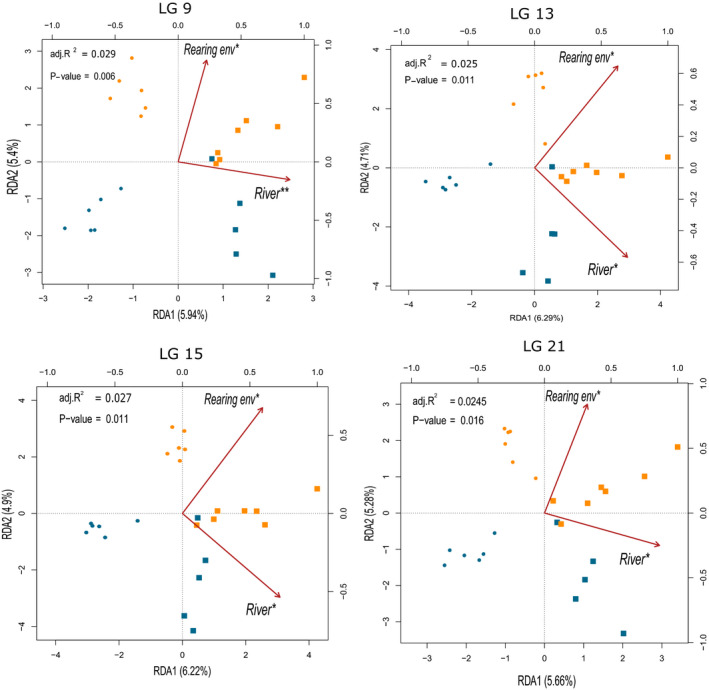
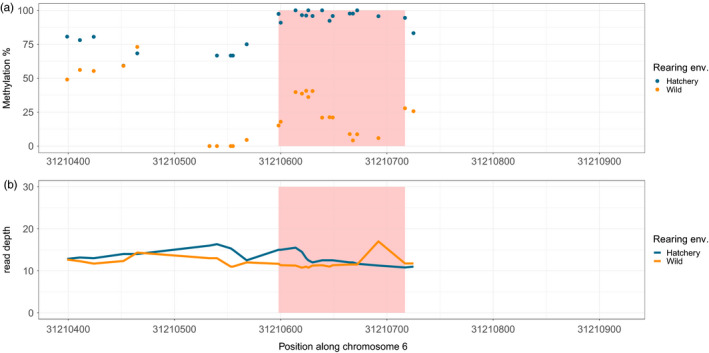
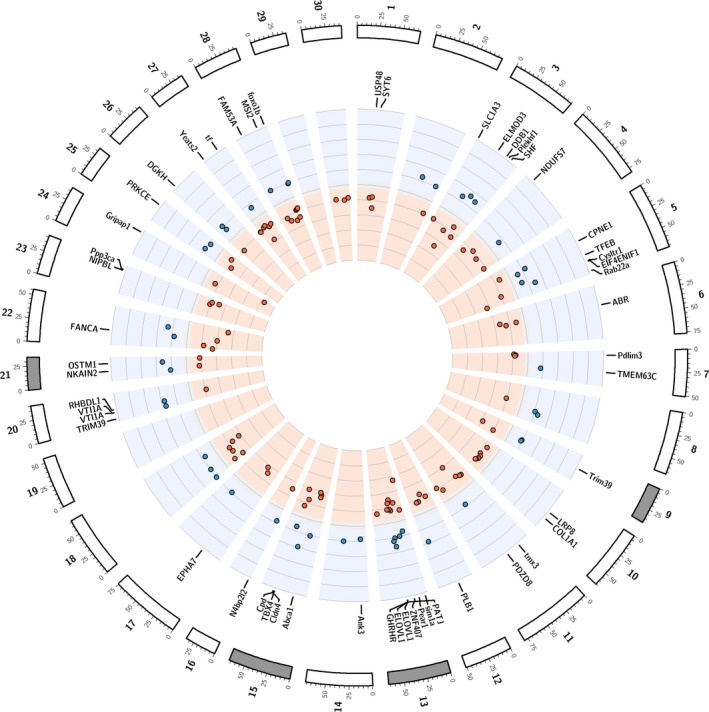
Human activities induce direct or indirect selection pressure on natural population and may ultimately affect population's integrity. While numerous conservation programs aimed to minimize human-induced genomic variation, human-induced environmental variation may generate epigenomic variation potentially affecting fitness through phenotypic modifications. Major questions remain pertaining to how much epigenomic variation arises from environmental heterogeneity, whether this variation can persist throughout life, and whether it can be transmitted across generations. We performed whole genome bisulfite sequencing (WGBS) on the sperm of genetically indistinguishable hatchery and wild-born migrating adults of Coho salmon () from two geographically distant rivers at different epigenome scales. Our results showed that coupling WGBS with fine-scale analyses (local and chromosomal) allows the detection of parallel early-life hatchery-induced epimarks that differentiate wild from hatchery-reared salmon. Four chromosomes and 183 differentially methylated regions (DMRs) displayed a significant signal of methylation differentiation between hatchery and wild-born Coho salmon. Moreover, those early-life epimarks persisted in germ line cells despite about 1.5 year spent in the ocean following release from hatchery, opening the possibility for transgenerational inheritance. Our results strengthen the hypothesis that epigenomic modifications environmentally induced during early-life development persist in germ cells of adults until reproduction, which could potentially impact their fitness.
人类活动对自然种群施加直接或间接的选择压力,并可能最终影响种群的完整性。虽然众多保护计划旨在尽量减少人类引起的基因组变异,但人类引起的环境变异可能会产生表观基因组变异,通过表型修饰潜在地影响适应性。关于环境异质性产生多少表观基因组变异、这种变异是否能在整个生命过程中持续存在以及是否能跨代传递等主要问题仍然存在。我们在不同表观基因组尺度上,对来自两条地理上相距遥远河流的遗传上无法区分的孵化场养殖和野生出生的银大麻哈鱼()洄游成年个体的精子进行了全基因组亚硫酸氢盐测序(WGBS)。我们的结果表明,将WGBS与精细尺度分析(局部和染色体水平)相结合,能够检测到区分野生和孵化场养殖大麻哈鱼的平行的早期孵化场诱导表观标记。四条染色体和183个差异甲基化区域(DMRs)在孵化场养殖和野生出生的银大麻哈鱼之间显示出显著的甲基化分化信号。此外,尽管从孵化场放流后在海洋中度过了约1.5年时间,但这些早期表观标记在生殖系细胞中仍然存在,这为跨代遗传提供了可能性。我们的结果强化了这样一种假说,即在早期发育过程中由环境诱导的表观基因组修饰在成年个体的生殖细胞中持续存在直至繁殖,这可能会潜在地影响它们的适应性。