Olry de Labry Lima Antonio, Díaz Castro Óscar, Romero-Requena Jorge M, García Díaz-Guerra M de Los Reyes, Arroyo Pineda Virginia, de la Hija Díaz M Belén, Ascanio Meritxell, Darbà Josep, Cruzado Josep M
Escuela Andaluza de Salud Pública, Granada, Spain.
Servizo de Cardioloxía, Complejo Hospitalario Universitario de Vigo, Servizo Galego de Saúde, Vigo, Pontevedra, Spain.
Clin Kidney J. 2021 Apr 7;14(11):2391-2400. doi: 10.1093/ckj/sfab076. eCollection 2021 Nov.
Hyperkalaemia (HK) is a common electrolyte disorder in patients with chronic kidney disease (CKD) and/or treated with renin-angiotensin-aldosterone system inhibitors (RAASis). The aim of this study is to determine the severity, current management and cost of chronic HK.
We performed a retrospective cohort study of patients with chronic HK and CKD, heart failure or diabetes mellitus between 2011 and 2018. The study follow-up was 36 months.
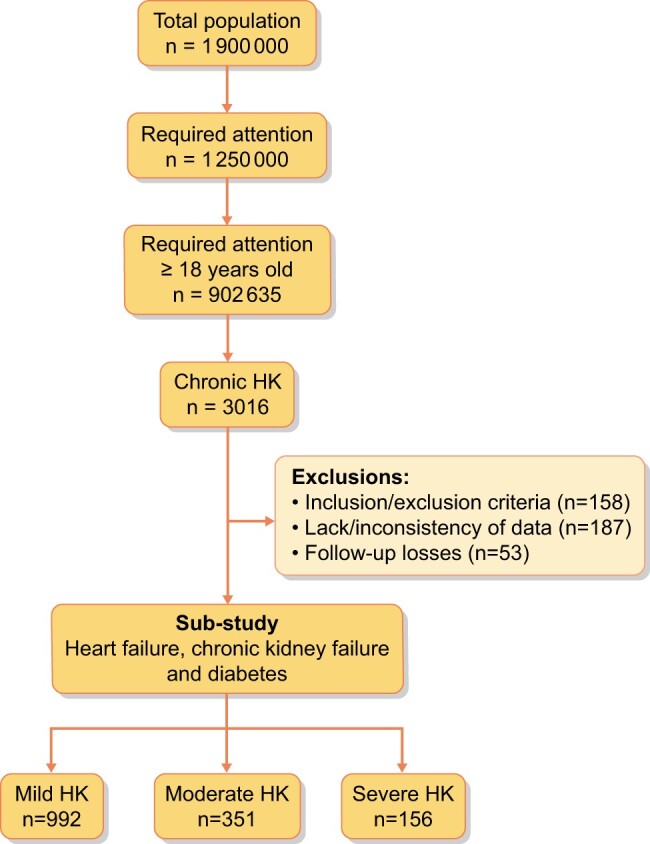
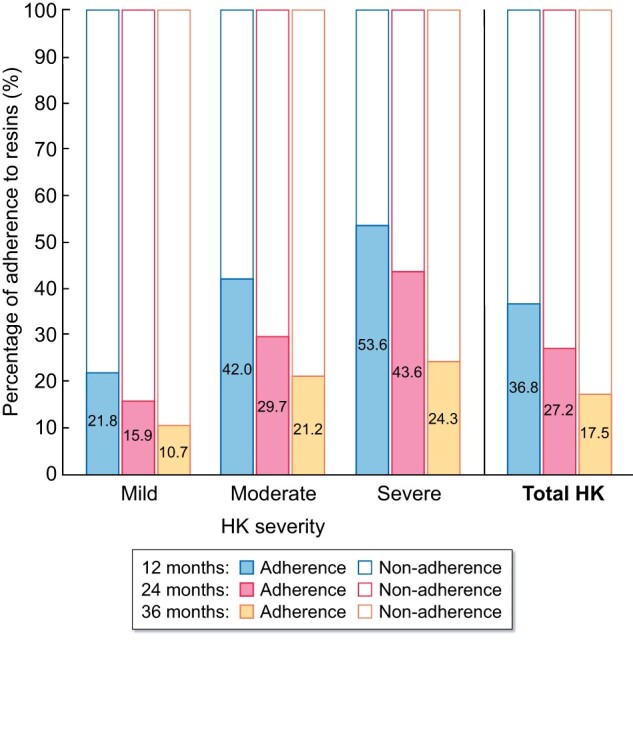
A total of 1499 patients with chronic HK were analysed: 66.2% presented with mild HK, 23.4% with moderate HK and 10.4% with severe HK. The severity was associated with CKD stage. Most patients (70.4%) were on RAASi therapies, which were frequently discontinued (discontinuation rate was 39.8, 49.8 and 51.8% in mild, moderate and severe HK, respectively). This RAASi discontinuation was similar with or without resin prescription. Overall, ion-exchange resins were prescribed to 42.5% of patients with HK and prescriptions were related to the severity of HK, being 90% for severe HK. Adherence to resin treatment was very low (36.8% in the first year and 17.5% in the third year) and potassium remained elevated in most patients with severe HK. The annual healthcare cost per patient with HK was €5929, reaching €12 705 in severe HK. Costs related to HK represent 31.9% of the annual cost per HK patient and 58.8% of the specialized care cost.
HK was usually managed by RAASi discontinuation and ion-exchange resin treatment. Most patients with HK were non-adherent to resins and those with severe HK remained with high potassium levels, despite bearing elevated healthcare expenditures.
高钾血症(HK)是慢性肾脏病(CKD)患者和/或接受肾素-血管紧张素-醛固酮系统抑制剂(RAASi)治疗的患者中常见的电解质紊乱。本研究的目的是确定慢性HK的严重程度、当前管理情况及成本。
我们对2011年至2018年间患有慢性HK和CKD、心力衰竭或糖尿病的患者进行了一项回顾性队列研究。研究随访时间为36个月。
共分析了1499例慢性HK患者:66.2%为轻度HK,23.4%为中度HK,10.4%为重度HK。严重程度与CKD分期相关。大多数患者(70.4%)接受RAASi治疗,且经常停药(轻度、中度和重度HK的停药率分别为39.8%、49.8%和51.8%)。无论是否开具树脂处方,RAASi停药情况相似。总体而言,42.5%的HK患者开具了离子交换树脂处方,且处方与HK的严重程度相关,重度HK患者的处方率为90%。树脂治疗的依从性非常低(第一年为36.8%,第三年为17.5%),大多数重度HK患者的血钾仍升高。HK患者的年医疗费用为5929欧元,重度HK患者达到12705欧元。与HK相关的费用占HK患者年费用的31.9%,占专科护理费用的58.8%。
HK通常通过停用RAASi和离子交换树脂治疗来管理。大多数HK患者对树脂治疗不依从,重度HK患者尽管医疗费用增加,但血钾水平仍居高不下。