Department of Neuroscience, University of Kentucky College of Medicine, Lexington, KY 40508-0536, USA; Markey Cancer Center, Lexington, KY 40508-0536, USA.
Department of Neuroscience, University of Kentucky College of Medicine, Lexington, KY 40508-0536, USA.
Trends Endocrinol Metab. 2021 Dec;32(12):980-993. doi: 10.1016/j.tem.2021.09.006. Epub 2021 Oct 29.
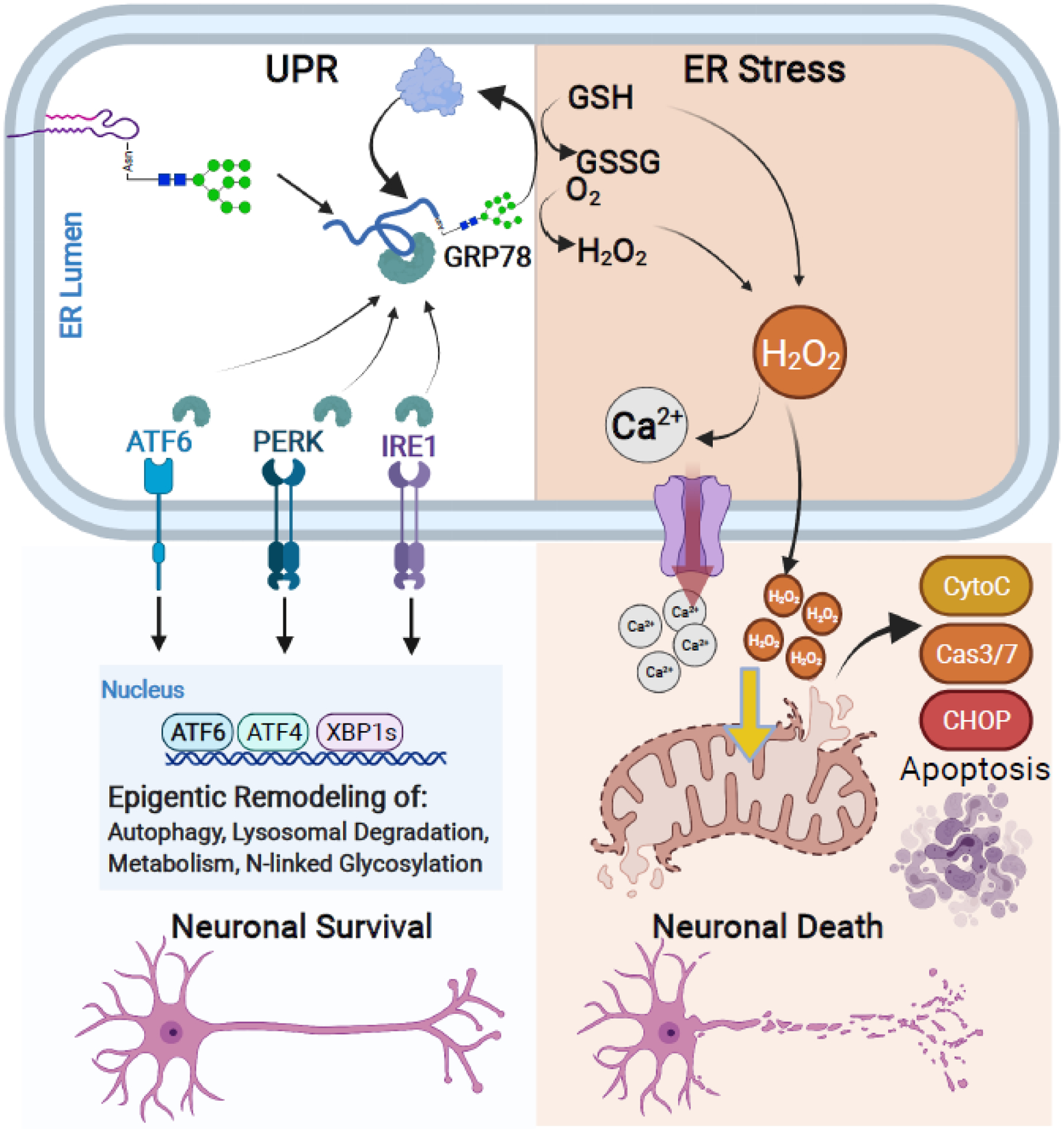
N-linked glycosylation is a complex, co- and post-translational series of events that connects metabolism to signaling in almost all cells. Metabolic assembly of N-linked glycans spans multiple cellular compartments, and early N-linked glycan biosynthesis is a central mediator of protein folding and the unfolded protein response (UPR). In the brain, N-linked glycosylated proteins participate in a myriad of processes, from electrical gradients to neurotransmission. However, it is less clear how perturbations in N-linked glycosylation impact and even potentially drive aspects of neurological disorders. In this review, we discuss our current understanding of the metabolic origins of N-linked glycans in the brain, their role in modulating neuronal function, and how aberrant N-linked glycosylation can drive neurological disorders.
N-连接糖基化是一个复杂的、共翻译和翻译后事件系列,几乎在所有细胞中都将代谢与信号联系起来。N-连接糖基的代谢组装跨越多个细胞区室,早期的 N-连接糖基生物合成是蛋白质折叠和未折叠蛋白反应(UPR)的中心介质。在大脑中,N-连接糖基化蛋白参与了从电梯度到神经递质传递的众多过程。然而,N-连接糖基化如何影响甚至可能驱动神经紊乱的某些方面还不太清楚。在这篇综述中,我们讨论了我们目前对大脑中 N-连接糖基的代谢起源、它们在调节神经元功能中的作用以及异常的 N-连接糖基化如何驱动神经紊乱的理解。