Health Economics & Data Analytics, Curtin School of Population Health, Faculty of Health Sciences, Curtin University - Bentley Campus, Perth, Western Australia, Australia
Department of Community Health, Institute of Public Health Vietnam, Ho Chi Minh City, Viet Nam.
BMJ Open. 2021 Nov 11;11(11):e052954. doi: 10.1136/bmjopen-2021-052954.
While CT scanning plays a significant role in healthcare, its increasing use has raised concerns about inappropriate use. This study investigated factors driving the changing use of CT among people admitted to tertiary hospitals in Western Australia (WA).
A repeated cross-sectional study of CT use in WA in 2003-2005 and 2013-2015 using linked administrative heath data at the individual patient level.
A total of 2 375 787 tertiary hospital admissions of people aged 18 years or older.
Rate of CT scanning per 1000 hospital admissions.
A multivariable decomposition model was used to quantify the contribution of changes in patient characteristics and changes in the probability of having a CT over the study period.
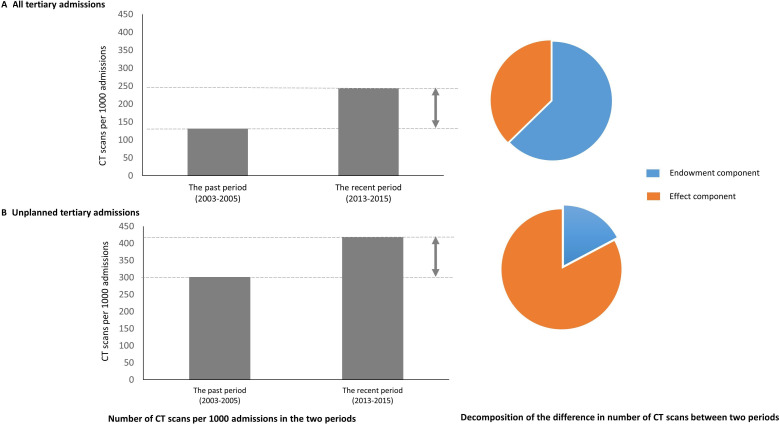
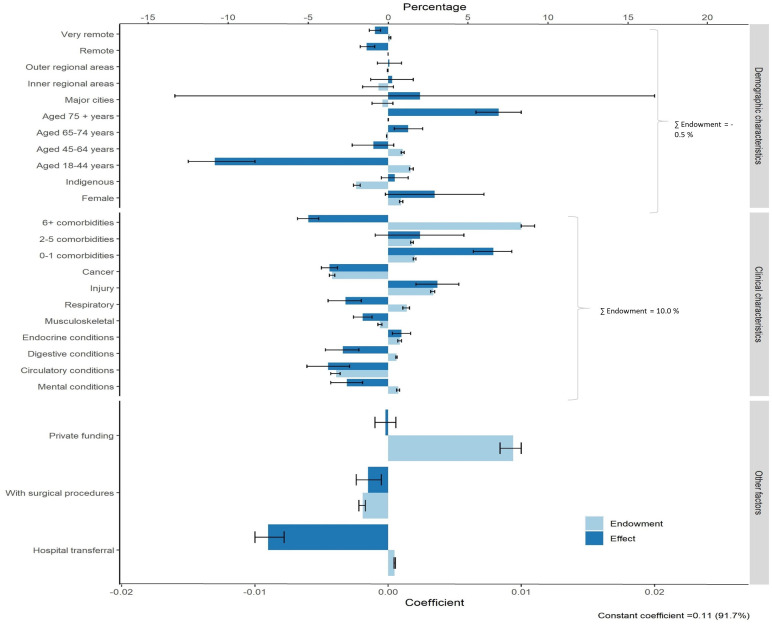
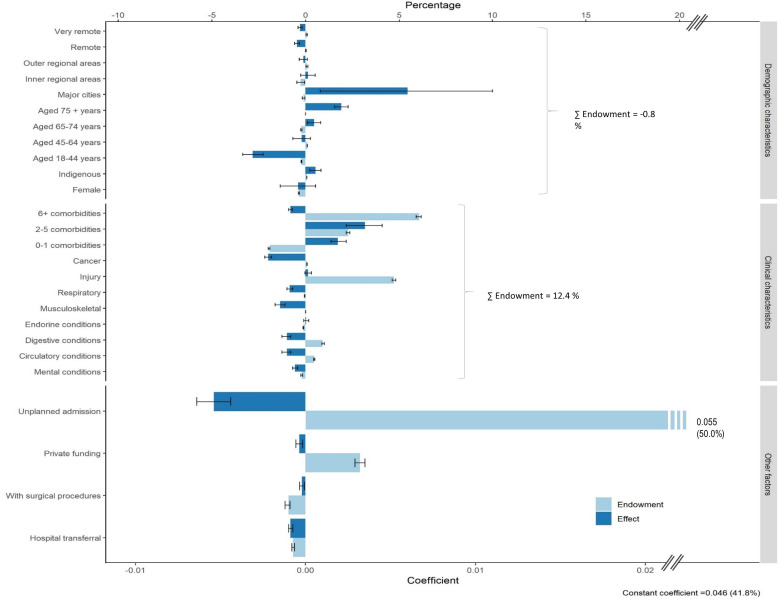
The rate of CT scanning increased by 112 CT scans per 1000 admissions over the study period. Changes in the distribution of the observed patient characteristics were accounted for 62.7% of the growth in CT use. However, among unplanned admissions, changes in the distribution of patient characteristics only explained 17% of the growth in CT use, the remainder being explained by changes in the probability of having a CT scan. While the relative probability of having a CT scan generally increased over time across most observed characteristics, it reduced in young adults (-2.8%), people living in the rural/remote areas (-0.8%) and people transferred from secondary hospitals (-0.8%).
Our study highlights potential improvements in practice towards reducing medical radiation exposure in certain high risk population. Since changes in the relative probability of having a CT scan (representing changes in scope) rather than changes in the distribution of the patient characteristics (representing changes in need) explained a major proportion of the growth in CT use, this warrants more in-depth investigations in clinical practices to better inform health policies promoting appropriate use of diagnostic imaging tests.
虽然 CT 扫描在医疗保健中发挥着重要作用,但它的使用日益增加引起了人们对不当使用的关注。本研究调查了导致西澳大利亚州(WA)三级医院入院患者 CT 扫描使用变化的因素。
这是一项使用链接的个体患者水平的行政健康数据,对 2003-2005 年和 2013-2015 年 WA 中 CT 使用情况进行的重复横断面研究。
共有 2375787 名年龄在 18 岁或以上的三级医院入院患者。
每 1000 例住院患者的 CT 扫描率。
使用多变量分解模型来量化研究期间患者特征变化和进行 CT 的概率变化对 CT 扫描率的贡献。
研究期间,每 1000 例入院患者的 CT 扫描率增加了 112 次。观察到的患者特征分布变化解释了 CT 使用增长的 62.7%。然而,在非计划性入院中,患者特征分布的变化仅解释了 CT 使用增长的 17%,其余部分则归因于进行 CT 扫描的概率变化。尽管随着时间的推移,进行 CT 扫描的相对概率在大多数观察到的特征中普遍增加,但在年轻成年人(-2.8%)、居住在农村/偏远地区的人群(-0.8%)和从二级医院转来的人群(-0.8%)中有所降低。
本研究强调了在某些高危人群中朝着减少医疗辐射暴露的方向改进实践的潜力。由于进行 CT 扫描的相对概率变化(代表范围的变化)而不是患者特征分布的变化(代表需求的变化)解释了 CT 使用增长的主要部分,因此需要对临床实践进行更深入的调查,以便更好地为促进适当使用诊断成像测试的卫生政策提供信息。