Mehmood Siddiqui Ehraz, Mehan Sidharth, Upadhayay Shubham, Khan Andleeb, Halawi Maryam, Ahmed Halawi Azhar, Alsaffar Rana M
Neuropharmacology Division, Department of Pharmacology, ISF College of Pharmacy, Moga, Punjab, India.
Department of Pharmacology and Toxicology, College of Pharmacy, Jazan University, Jazan 45142, Saudi Arabia.
Saudi J Biol Sci. 2021 Nov;28(11):6417-6431. doi: 10.1016/j.sjbs.2021.07.010. Epub 2021 Jul 10.
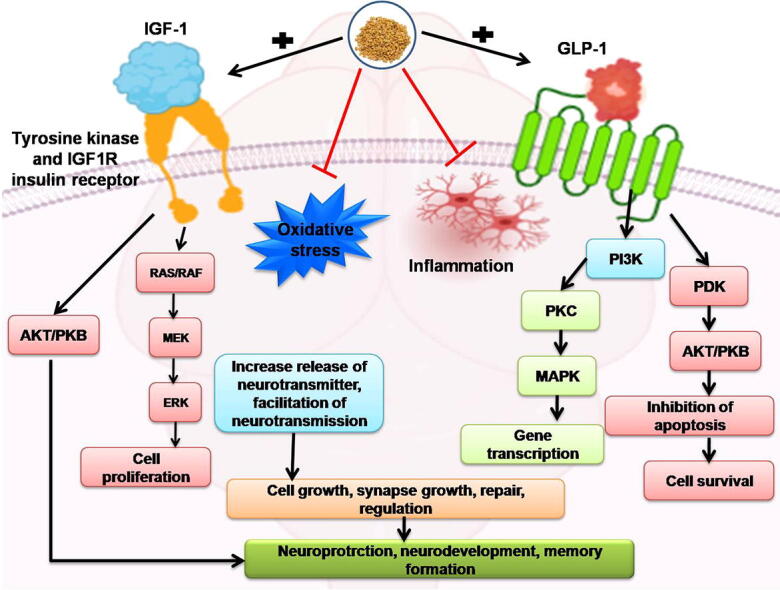
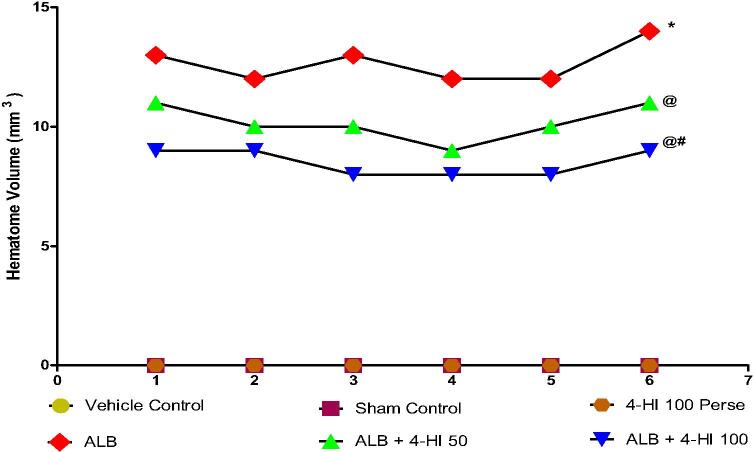
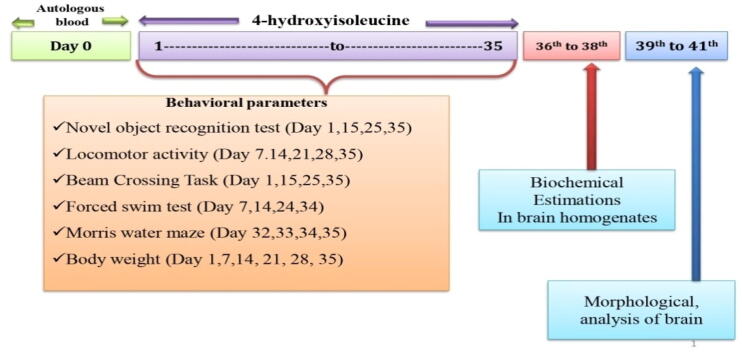
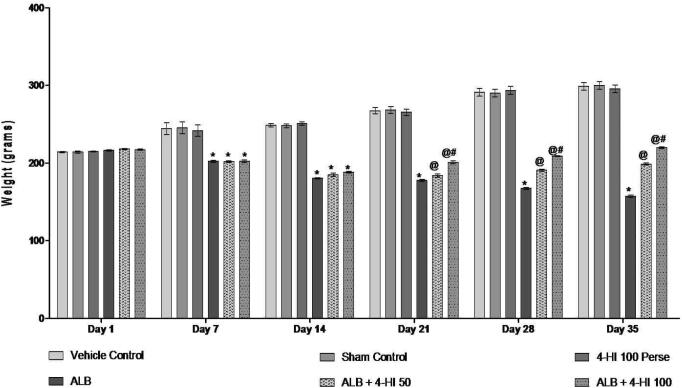
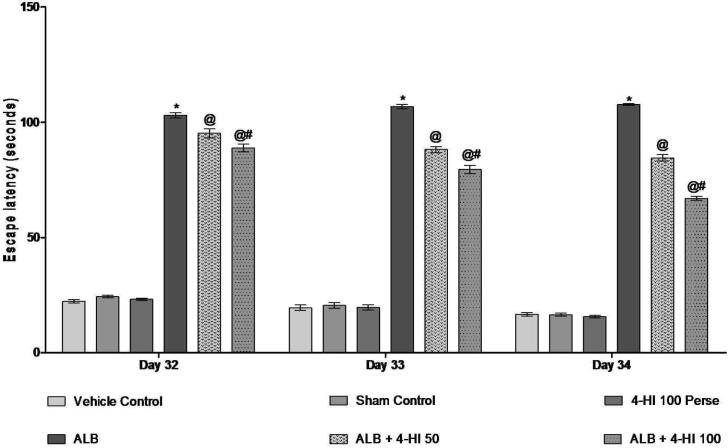
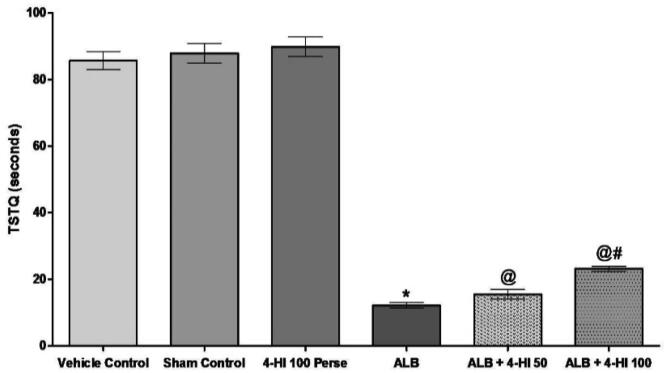
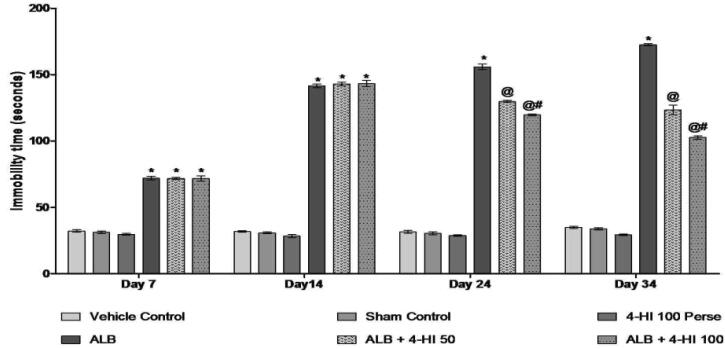
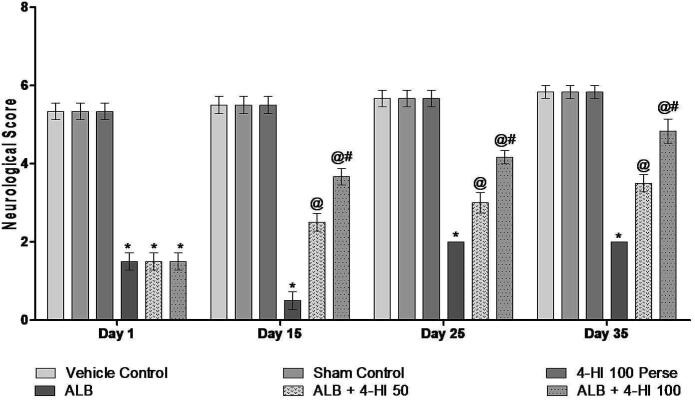
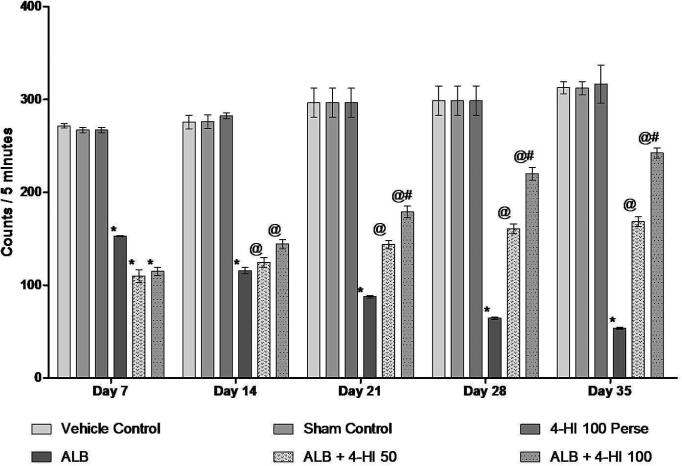
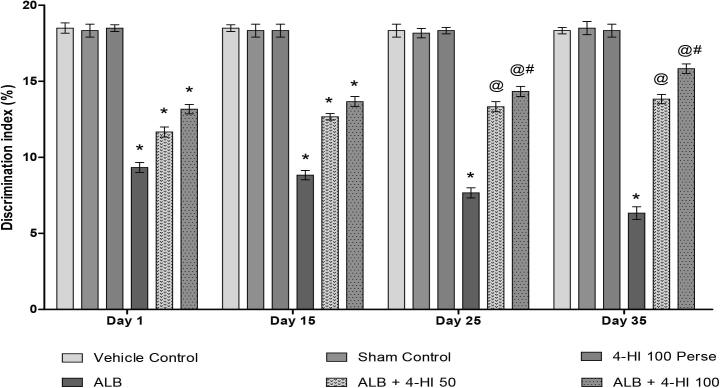
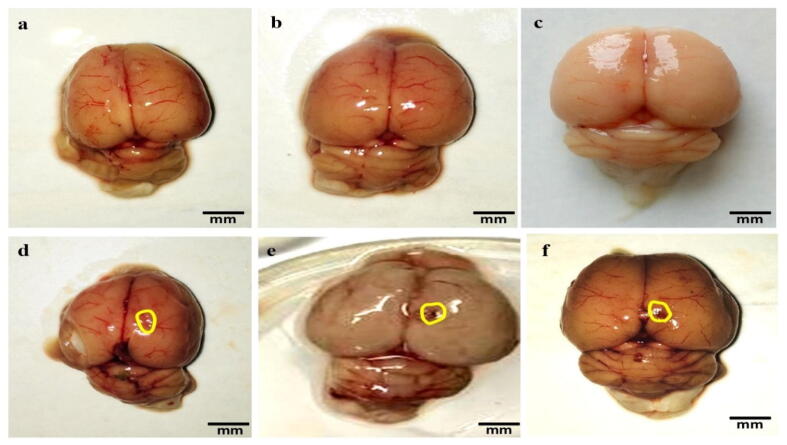
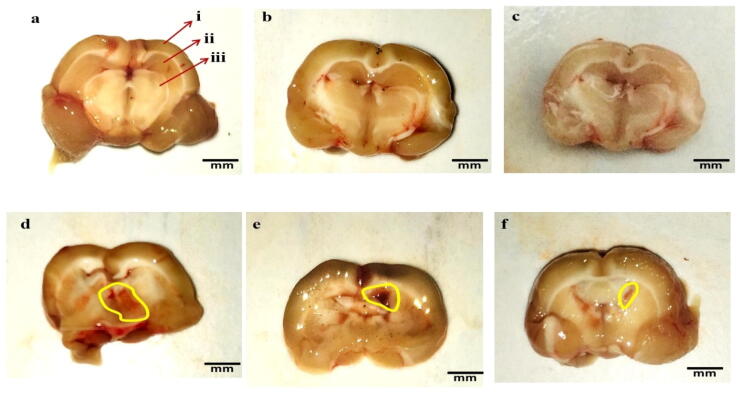
Intracerebral hemorrhage (ICH) is a severe form of brain injury, which is a major cause of mortality in humans. Hydrocephalus and cerebral hematoma lead to severe neurological deficits. A single autologous blood (ALB) injection in rats' brains induces hemorrhage and other conditions that regularly interfere with the standard treatment of several cellular and molecular pathways. Several studies have found that IGF-1/GLP-1 decreases the production of inflammatory markers in peripheral tissues, while some have found that they also have pro-inflammatory functions. Since these receptors are down-regulated in hemorrhagic situations, we looked into the potential neuroprotective effect of 4-hydroxyisoleucine (4-HI); 50 mg/kg and 100 mg/kg, an active compound Trigonellafoenum-graecum, on post-hemorrhagic deficits in rats. Long-term oral administration of 4-HI for 35 days has improved behavioral and neurochemical deficits and severe pathological changes and improved cellular and molecular markers, apoptotic markers in the ALB-induced ICH experimental model. Furthermore, the findings revealed that 4-HI also improved the levels of other neurotransmitters (Ach, DOPA, GABA, glutamate); inflammatory cytokines (TNF-alpha, IL-1β, IL-17), and oxidative stress markers (MDA, nitrite, LDH, AchE, SOD, CAT, GPx, GSH) in the brain when evaluated after Day 35. There is no proven treatment available for the prevention of post-brain hemorrhage and neurochemical malfunction; available therapy is only for symptomatic relief of the patient. Thus, 4-HI could be a potential clinical approach for treating post-brain haemorrhage and neurochemical changes caused by neurological damage. Furthermore, 4-HI may be linked to other standard therapeutic therapies utilized in ICH as a potential pharmacological intervention.
脑出血(ICH)是一种严重的脑损伤形式,是人类死亡的主要原因。脑积水和脑血肿会导致严重的神经功能缺损。在大鼠脑内单次注射自体血(ALB)会引发出血及其他状况,这些状况会经常干扰多种细胞和分子途径的标准治疗。多项研究发现,胰岛素样生长因子-1(IGF-1)/胰高血糖素样肽-1(GLP-1)可降低外周组织中炎症标志物的产生,而一些研究则发现它们也具有促炎功能。由于这些受体在出血情况下会下调,我们研究了4-羟基异亮氨酸(4-HI);50毫克/千克和100毫克/千克,一种来自胡芦巴的活性化合物,对大鼠出血后缺损的潜在神经保护作用。在ALB诱导的脑出血实验模型中,长期口服4-HI 35天可改善行为和神经化学缺损、严重的病理变化,并改善细胞和分子标志物、凋亡标志物。此外,研究结果显示,在第35天评估时,4-HI还改善了大脑中其他神经递质(乙酰胆碱、多巴、γ-氨基丁酸、谷氨酸)、炎性细胞因子(肿瘤坏死因子-α、白细胞介素-1β、白细胞介素-17)和氧化应激标志物(丙二醛、亚硝酸盐、乳酸脱氢酶、乙酰胆碱酯酶、超氧化物歧化酶、过氧化氢酶、谷胱甘肽过氧化物酶、谷胱甘肽)的水平。目前尚无经证实的预防脑出血后神经化学功能障碍的治疗方法;现有的治疗仅用于缓解患者的症状。因此,4-HI可能是治疗脑出血后及神经损伤引起的神经化学变化的一种潜在临床方法。此外,4-HI可能与脑出血中使用的其他标准治疗方法相关联,作为一种潜在的药物干预措施。