Center for Microbial Pathogenesis, Abigail Wexner Research Institute, Nationwide Children's Hospital, Columbus, OH, United States.
Division of Rheumatology, Nationwide Children's Hospital, Columbus, OH, United States.
Front Immunol. 2021 Oct 26;12:739430. doi: 10.3389/fimmu.2021.739430. eCollection 2021.
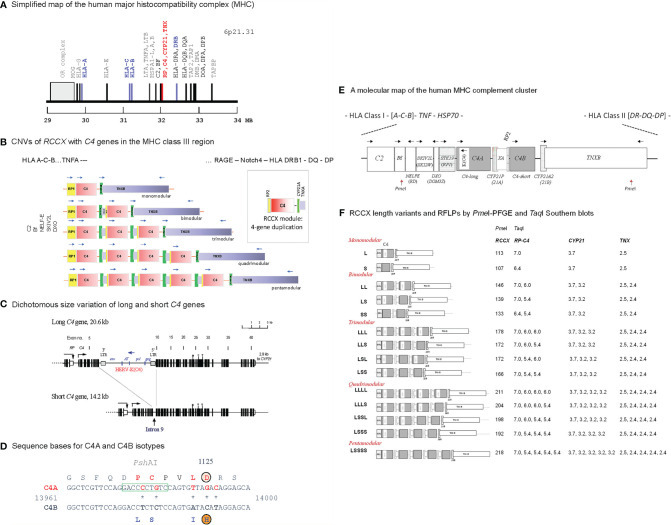
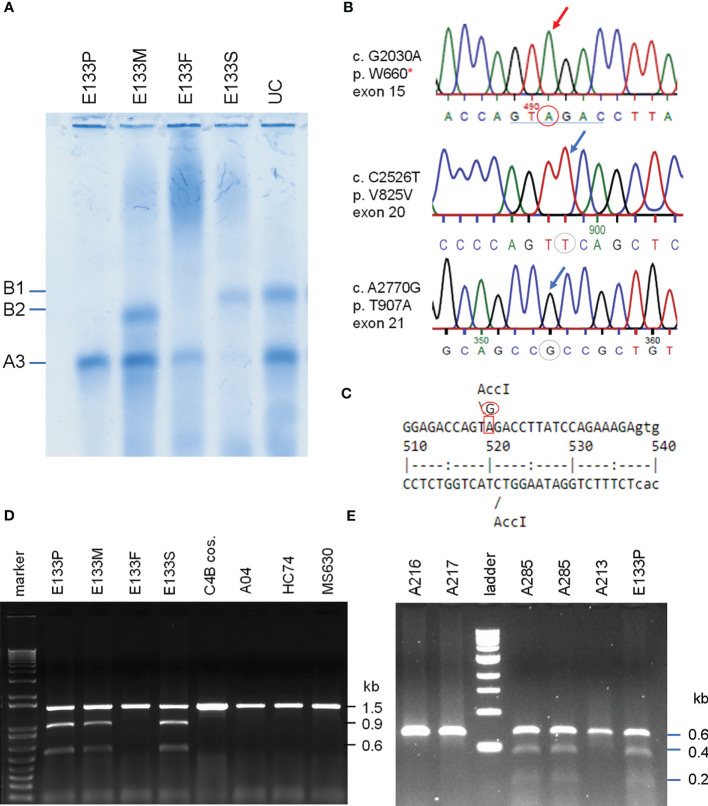
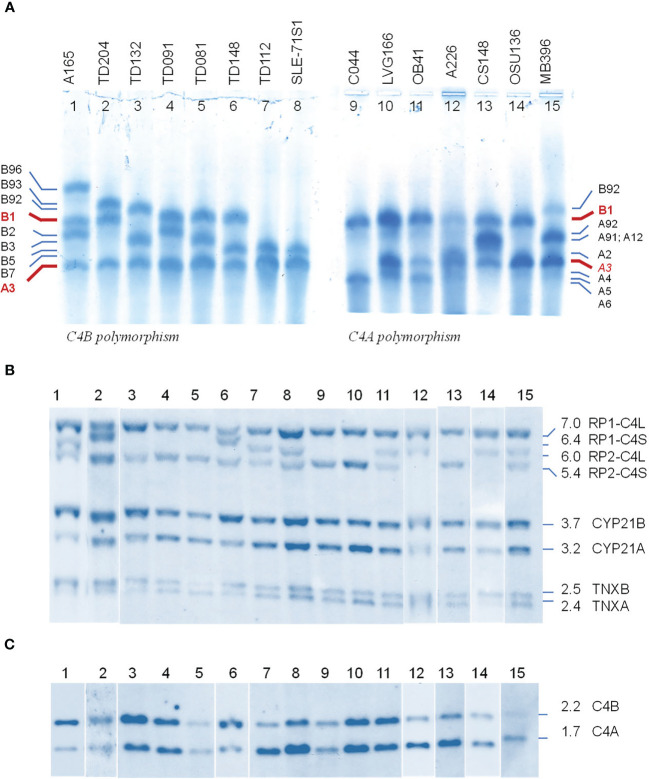
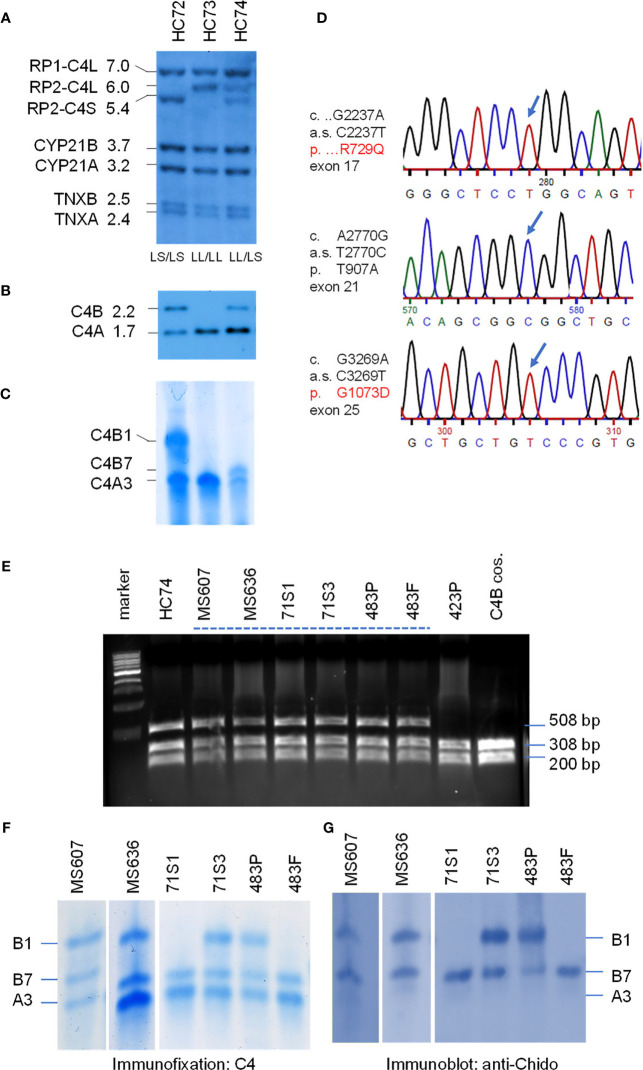
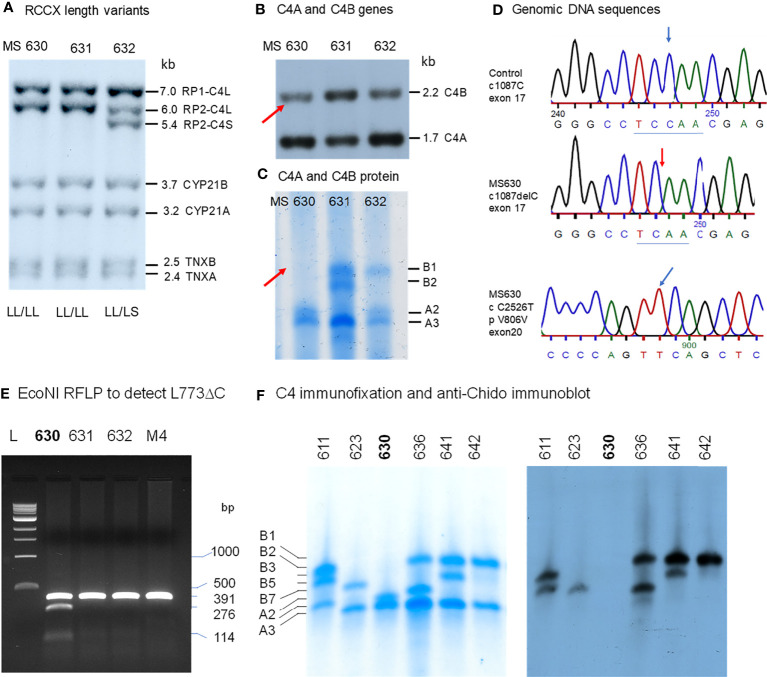
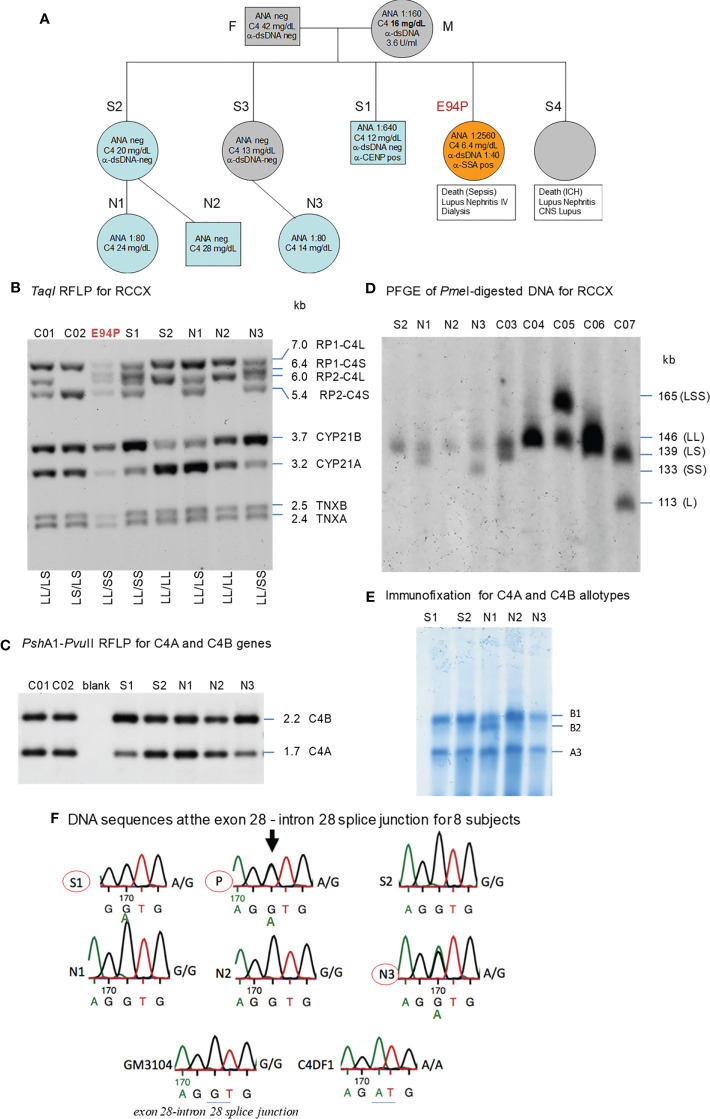
Human complement C4 is one of the most diverse but heritable effectors for humoral immunity. To help understand the roles of C4 in the defense and pathogenesis of autoimmune and inflammatory diseases, we determined the bases of polymorphisms including the frequent genetic deficiency of C4A and/or C4B isotypes. We demonstrated the diversities of C4A and C4B proteins and their gene copy number variations (CNVs) in healthy subjects and patients with autoimmune disease, such as type 1 diabetes, systemic lupus erythematosus (SLE) and encephalitis. We identified subjects with (a) the fastest migrating C4B allotype, B7, or (b) a deficiency of C4B protein caused by genetic mutation in addition to gene copy-number variation. Those variants and mutants were characterized, sequenced and specific techniques for detection developed. Novel findings were made in four case series. First, the amino acid sequence determinant for C4B7 was likely the R729Q variation at the anaphylatoxin-like region. Second, in healthy White subject MS630, a C-nucleotide deletion at codon-755 led to frameshift mutations in his single gene, which was a private mutation. Third, in European family E94 with multiplex lupus-related mortality and low serum C4 levels, the culprit was a recurrent haplotype with and that segregated with two defective genes and identical mutations at the donor splice site of intron-28. Fourth, in East-Asian subject E133P with anti-NMDA receptor encephalitis, the gene had a mutation that changed tryptophan-660 to a stop-codon (W660x), which was present in a haplotype with and . The W660x mutation is recurrent among East-Asians with a frequency of 1.5% but not detectable among patients with SLE. A meticulous annotation of sequences revealed clusters of variations proximal to sites for protein processing, activation and inactivation, and binding of interacting molecules.
人类补体 C4 是体液免疫中最具多样性但可遗传的效应因子之一。为了帮助理解 C4 在自身免疫和炎症性疾病的防御和发病机制中的作用,我们确定了包括 C4A 和/或 C4B 同型物频繁遗传缺陷在内的多态性的基础。我们在健康受试者和自身免疫性疾病(如 1 型糖尿病、系统性红斑狼疮(SLE)和脑炎)患者中证明了 C4A 和 C4B 蛋白及其基因拷贝数变异(CNV)的多样性。我们鉴定了具有(a)迁移最快的 C4B 同种型 B7 的受试者,或(b)除基因拷贝数变异外,由基因突变引起的 C4B 蛋白缺陷的受试者。对这些变体和突变体进行了特征描述、测序,并开发了用于检测的特定技术。在四个病例系列中取得了新的发现。首先,C4B7 的氨基酸序列决定因素可能是补体片段类似物区域的 R729Q 变异。其次,在健康的白人受试者 MS630 中,密码子 755 处的 C 核苷酸缺失导致他单一基因的移码突变,这是一个个体突变。第三,在欧洲家族 E94 中,该家族存在与多发性狼疮相关的死亡率和低血清 C4 水平相关的复发性单倍型,该单倍型与两个缺陷的 基因和 28 号内含子供体位点的相同突变相关。第四,在东亚受试者 E133P 中,抗 N-甲基-D-天冬氨酸受体脑炎患者,该 基因的一个突变将色氨酸 660 变为终止密码子(W660x),该突变存在于与 和 相关的单倍型中。W660x 突变在东亚人中的频率为 1.5%,但在系统性红斑狼疮患者中无法检测到。对 序列的细致注释揭示了靠近蛋白加工、激活和失活以及相互作用分子结合位点的变异簇。