Department of Biochemistry and Molecular Biology, Khulna Agricultural University, Khulna 9100, Bangladesh.
Department of Biochemistry and Molecular Biology, Bangladesh Agricultural University, Mymensingh 2202, Bangladesh.
Int J Mol Sci. 2021 Oct 23;22(21):11445. doi: 10.3390/ijms222111445.
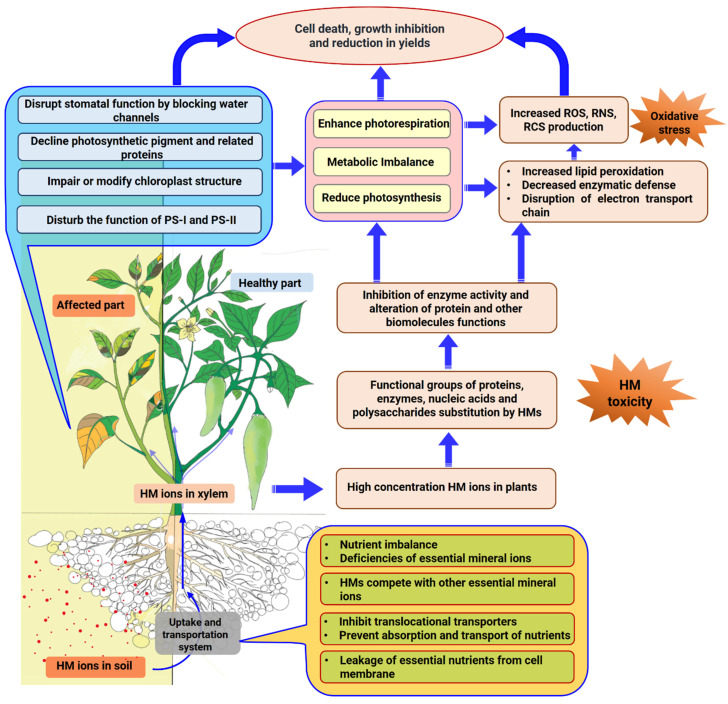
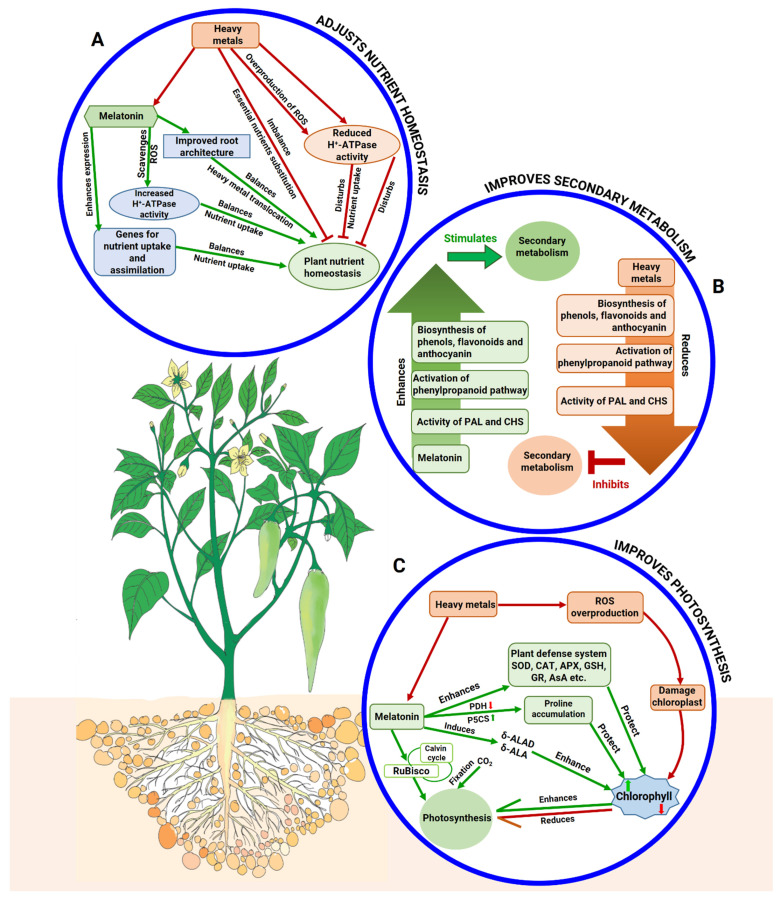
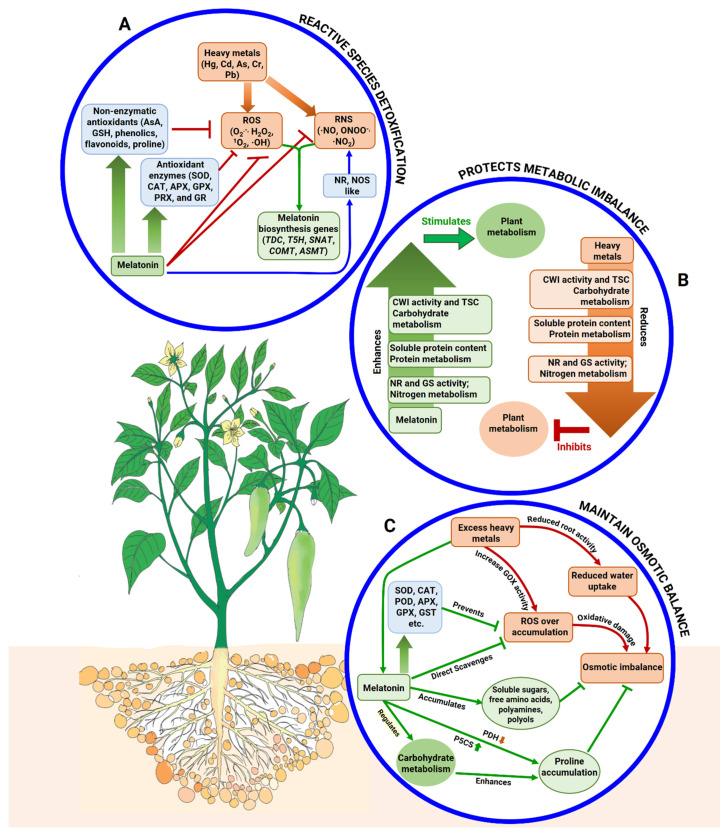
Heavy metal toxicity is one of the most devastating abiotic stresses. Heavy metals cause serious damage to plant growth and productivity, which is a major problem for sustainable agriculture. It adversely affects plant molecular physiology and biochemistry by generating osmotic stress, ionic imbalance, oxidative stress, membrane disorganization, cellular toxicity, and metabolic homeostasis. To improve and stimulate plant tolerance to heavy metal stress, the application of biostimulants can be an effective approach without threatening the ecosystem. Melatonin (-acetyl-5-methoxytryptamine), a biostimulator, plant growth regulator, and antioxidant, promotes plant tolerance to heavy metal stress by improving redox and nutrient homeostasis, osmotic balance, and primary and secondary metabolism. It is important to perceive the complete and detailed regulatory mechanisms of exogenous and endogenous melatonin-mediated heavy metal-toxicity mitigation in plants to identify potential research gaps that should be addressed in the future. This review provides a novel insight to understand the multifunctional role of melatonin in reducing heavy metal stress and the underlying molecular mechanisms.
重金属毒性是最具破坏性的非生物胁迫之一。重金属会对植物的生长和生产力造成严重损害,这是可持续农业面临的主要问题。它通过产生渗透胁迫、离子失衡、氧化应激、膜组织紊乱、细胞毒性和代谢稳态来影响植物的分子生理学和生物化学。为了提高和刺激植物对重金属胁迫的耐受性,生物刺激素的应用可以是一种有效的方法,而不会威胁到生态系统。褪黑素(N-乙酰-5-甲氧基色胺)作为一种生物刺激素、植物生长调节剂和抗氧化剂,通过改善氧化还原和养分稳态、渗透平衡以及初级和次级代谢,促进植物对重金属胁迫的耐受性。了解外源和内源性褪黑素介导的减轻植物重金属毒性的完整和详细的调控机制非常重要,这有助于确定未来应该解决的潜在研究空白。本综述提供了一个新的视角来理解褪黑素在减轻重金属胁迫中的多功能作用及其潜在的分子机制。