Clinic of General Surgery, Molecular Oncology and Immunotherapy, University Medical Center Rostock, University of Rostock, 18057 Rostock, Germany.
Int J Mol Sci. 2021 Oct 27;22(21):11597. doi: 10.3390/ijms222111597.
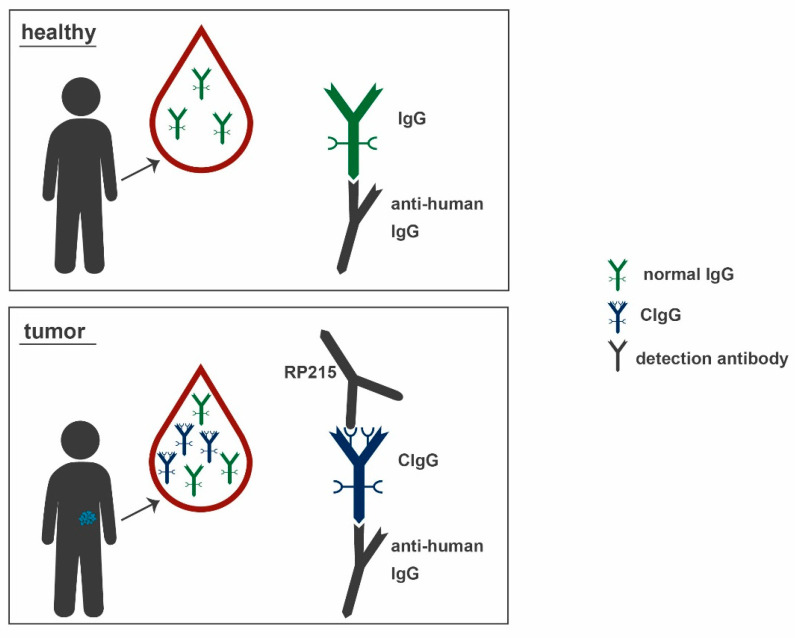
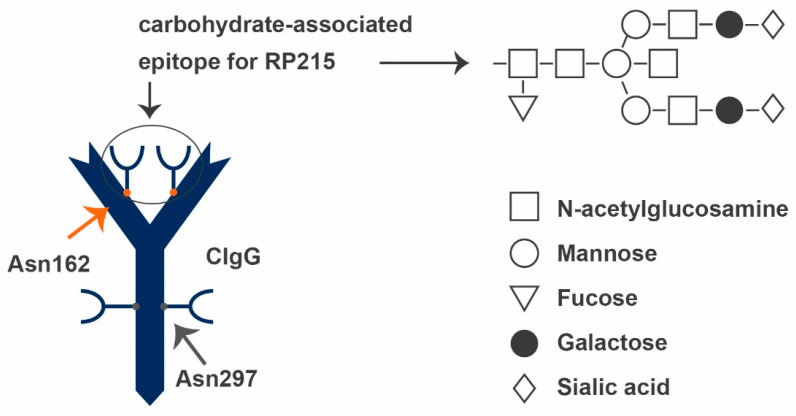
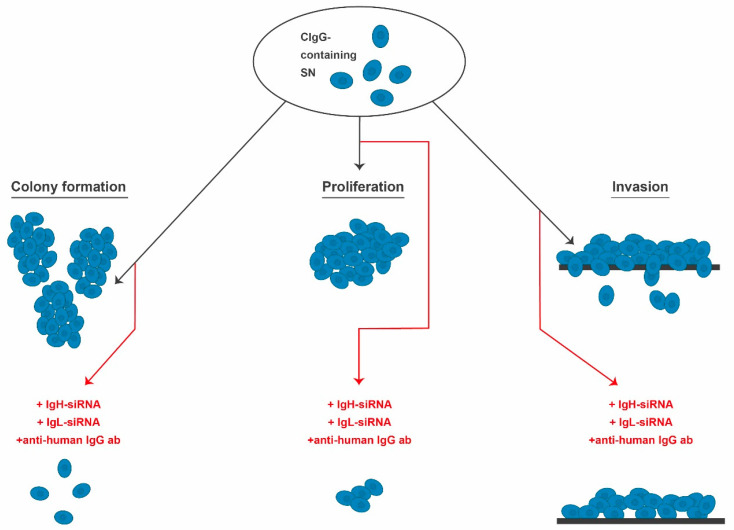
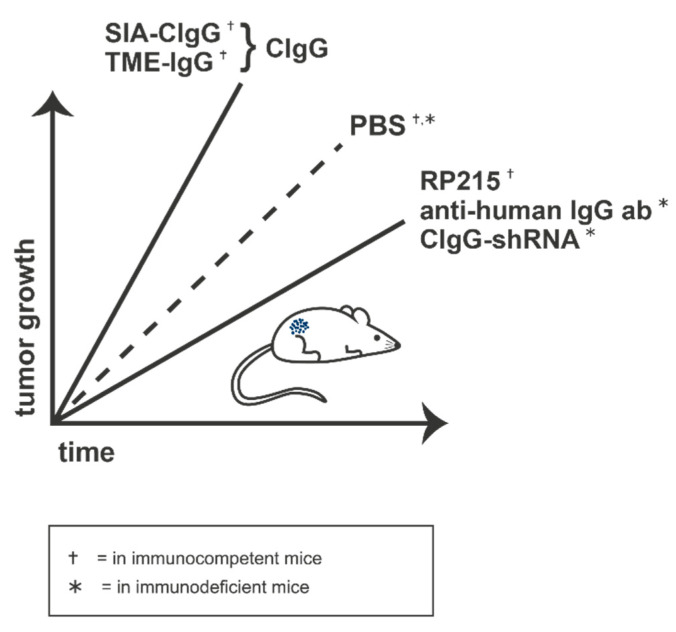
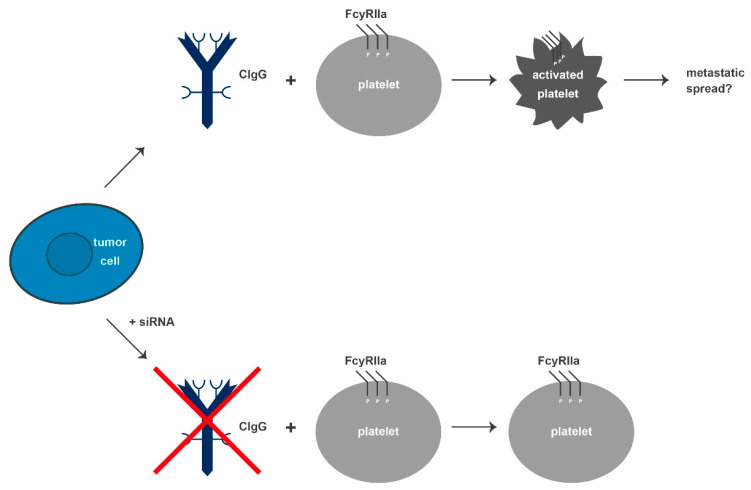
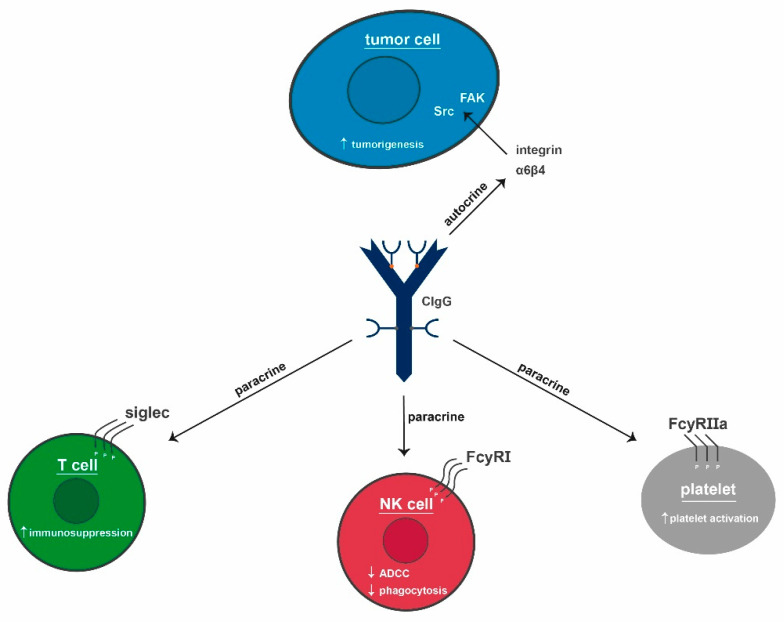
Human immunoglobulin G (IgG) is the primary component of the human serum antibody fraction, representing about 75% of the immunoglobulins and 10-20% of the total circulating plasma proteins. Generally, IgG sequences are highly conserved, yet the four subclasses, IgG1, IgG2, IgG3, and IgG4, differ in their physiological effector functions by binding to different IgG-Fc receptors (FcγR). Thus, despite a similarity of about 90% on the amino acid level, each subclass possesses a unique manner of antigen binding and immune complex formation. Triggering FcγR-expressing cells results in a wide range of responses, including phagocytosis, antibody-dependent cell-mediated cytotoxicity, and complement activation. Textbook knowledge implies that only B lymphocytes are capable of producing antibodies, which recognize specific antigenic structures derived from pathogens and infected endogenous or tumorigenic cells. Here, we review recent discoveries, including our own observations, about misplaced IgG expression in tumor cells. Various studies described the presence of IgG in tumor cells using immunohistology and established correlations between high antibody levels and promotion of cancer cell proliferation, invasion, and poor clinical prognosis for the respective tumor patients. Furthermore, blocking tumor-cell-derived IgG inhibited tumor cells. Tumor-cell-derived IgG might impede antigen-dependent cellular cytotoxicity by binding antigens while, at the same time, lacking the capacity for complement activation. These findings recommend tumor-cell-derived IgG as a potential therapeutic target. The observed uniqueness of Ig heavy chains expressed by tumor cells, using PCR with V(D)J rearrangement specific primers, suggests that this specific part of IgG may additionally play a role as a potential tumor marker and, thus, also qualify for the neoantigen category.
人免疫球蛋白 G(IgG)是人类血清抗体部分的主要成分,约占免疫球蛋白的 75%,占总循环血浆蛋白的 10-20%。一般来说,IgG 序列高度保守,但四个亚类 IgG1、IgG2、IgG3 和 IgG4 在与其不同的 IgG-Fc 受体(FcγR)结合方面,在生理效应功能上有所不同。因此,尽管在氨基酸水平上有大约 90%的相似性,但每个亚类都具有独特的抗原结合和免疫复合物形成方式。触发表达 FcγR 的细胞会导致一系列反应,包括吞噬作用、抗体依赖的细胞介导的细胞毒性和补体激活。教科书知识表明,只有 B 淋巴细胞能够产生抗体,这些抗体可以识别来自病原体和感染的内源性或肿瘤细胞的特定抗原结构。在这里,我们回顾了最近的发现,包括我们自己的观察结果,关于肿瘤细胞中错位 IgG 表达。各种研究使用免疫组织化学描述了肿瘤细胞中 IgG 的存在,并建立了抗体水平高与促进癌细胞增殖、侵袭和肿瘤患者不良临床预后之间的相关性。此外,阻断肿瘤细胞衍生的 IgG 抑制了肿瘤细胞。肿瘤细胞衍生的 IgG 可能通过结合抗原来阻碍抗原依赖性细胞毒性,同时缺乏补体激活的能力。这些发现将肿瘤细胞衍生的 IgG 推荐为一种潜在的治疗靶点。使用针对 V(D)J 重排特异性引物的 PCR 观察到肿瘤细胞表达的 Ig 重链的独特性表明,这种 IgG 的特定部分可能还具有作为潜在肿瘤标志物的作用,因此也符合新抗原类别。