Department of Dermatology, Universitätsklinikum Erlangen, Friedrich-Alexander-Universität Erlangen-Nürnberg (FAU), Hartmannstraße 14, 91052 Erlangen, Germany.
Comprehensive Cancer Center Erlangen European Metropolitan Area of Nuremberg (CCC ER-EMN), Östliche Stadtmauerstraße 30, 91054 Erlangen, Germany.
Int J Mol Sci. 2021 Nov 4;22(21):11951. doi: 10.3390/ijms222111951.
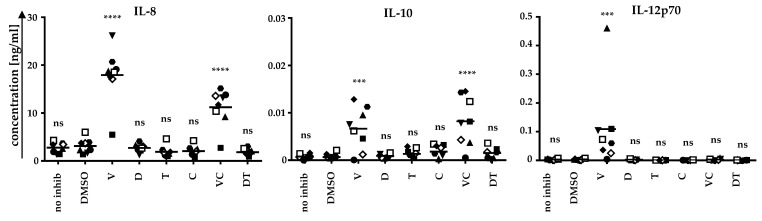
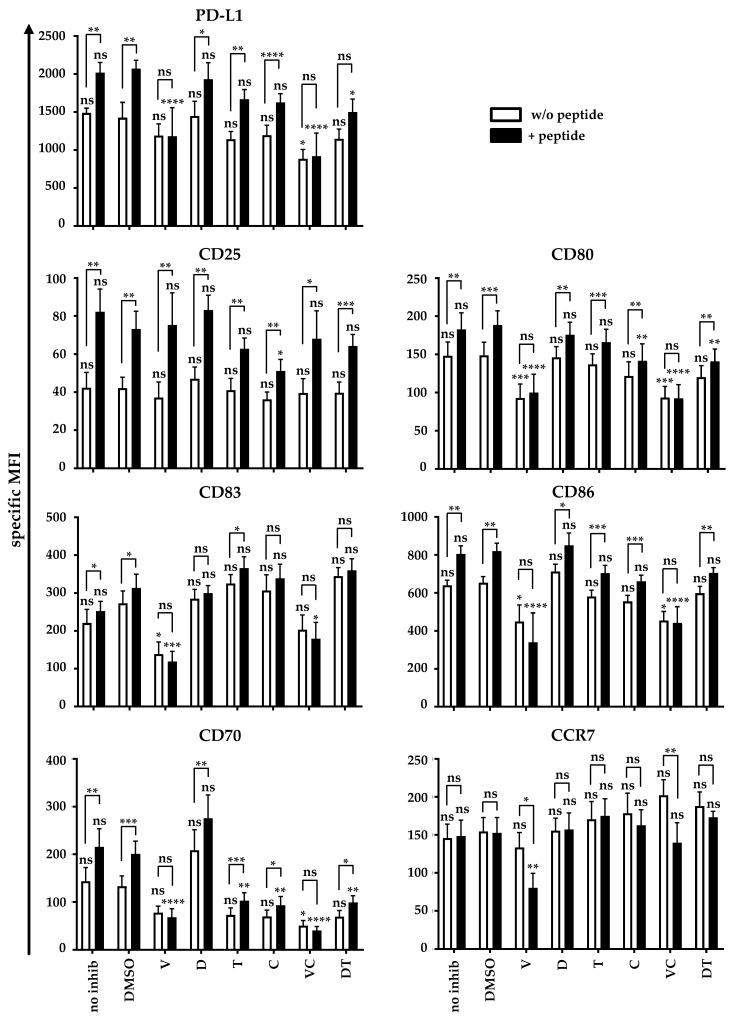
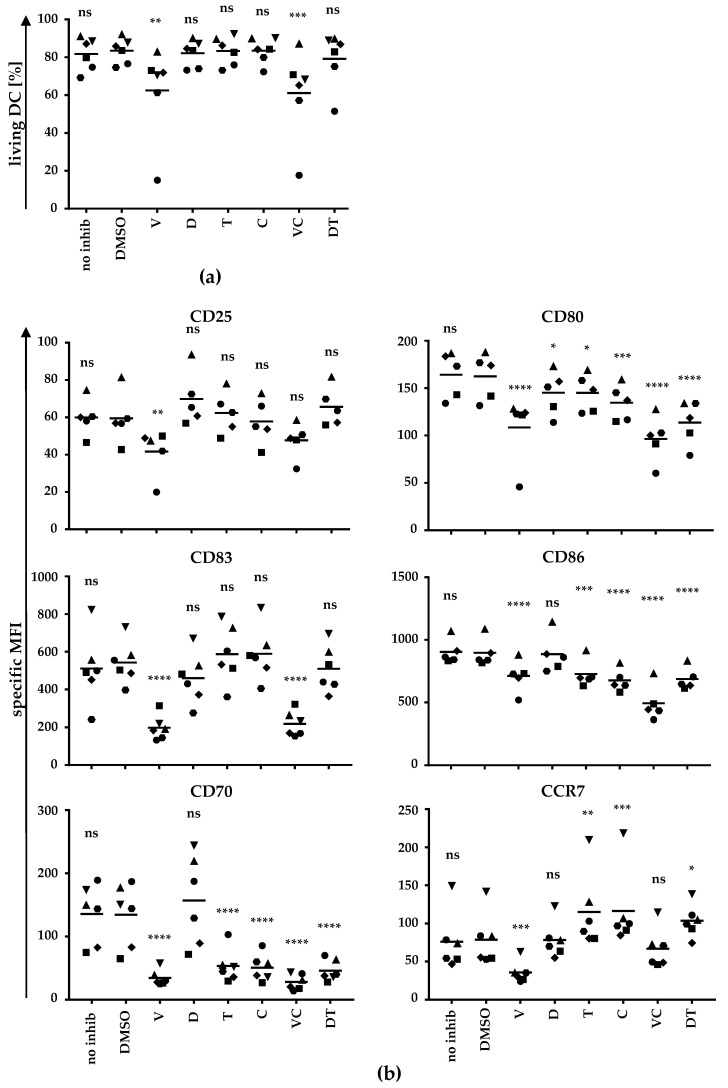
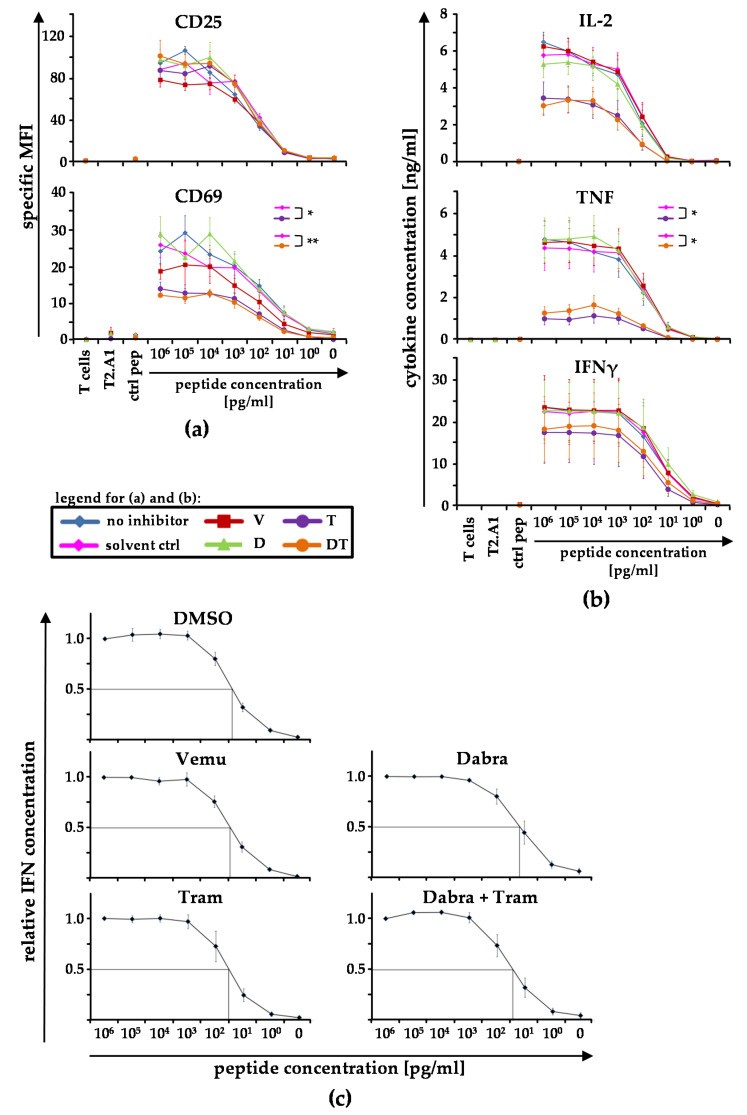
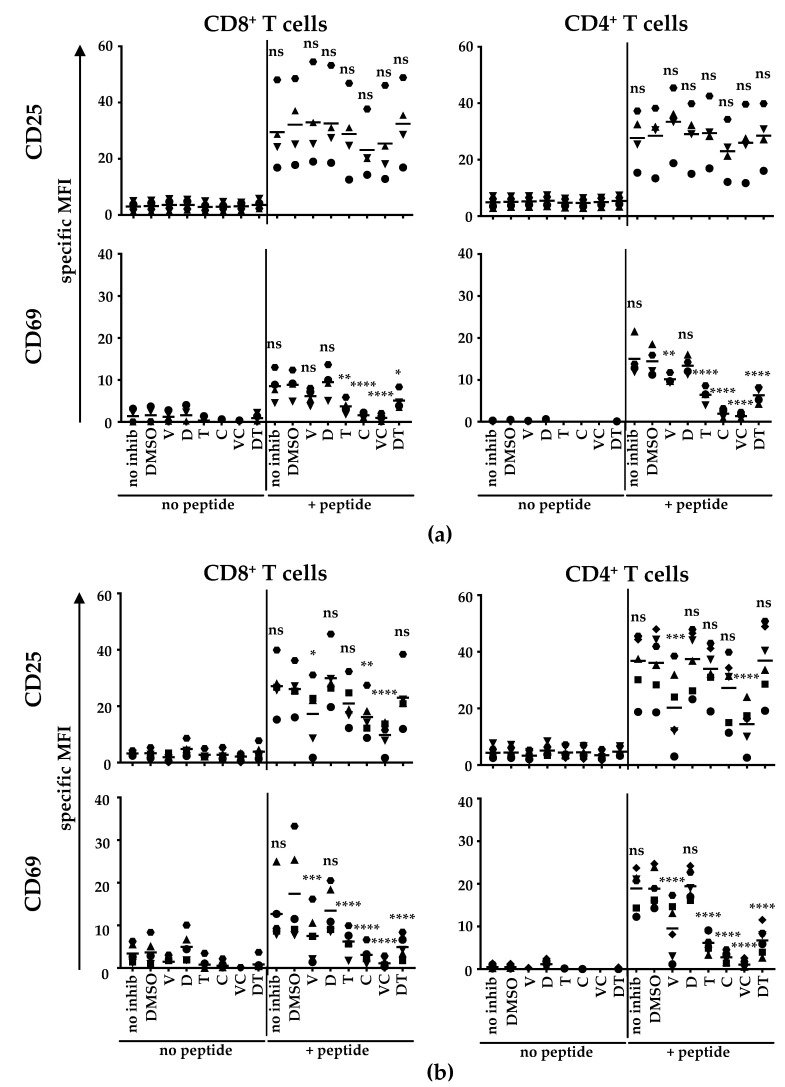
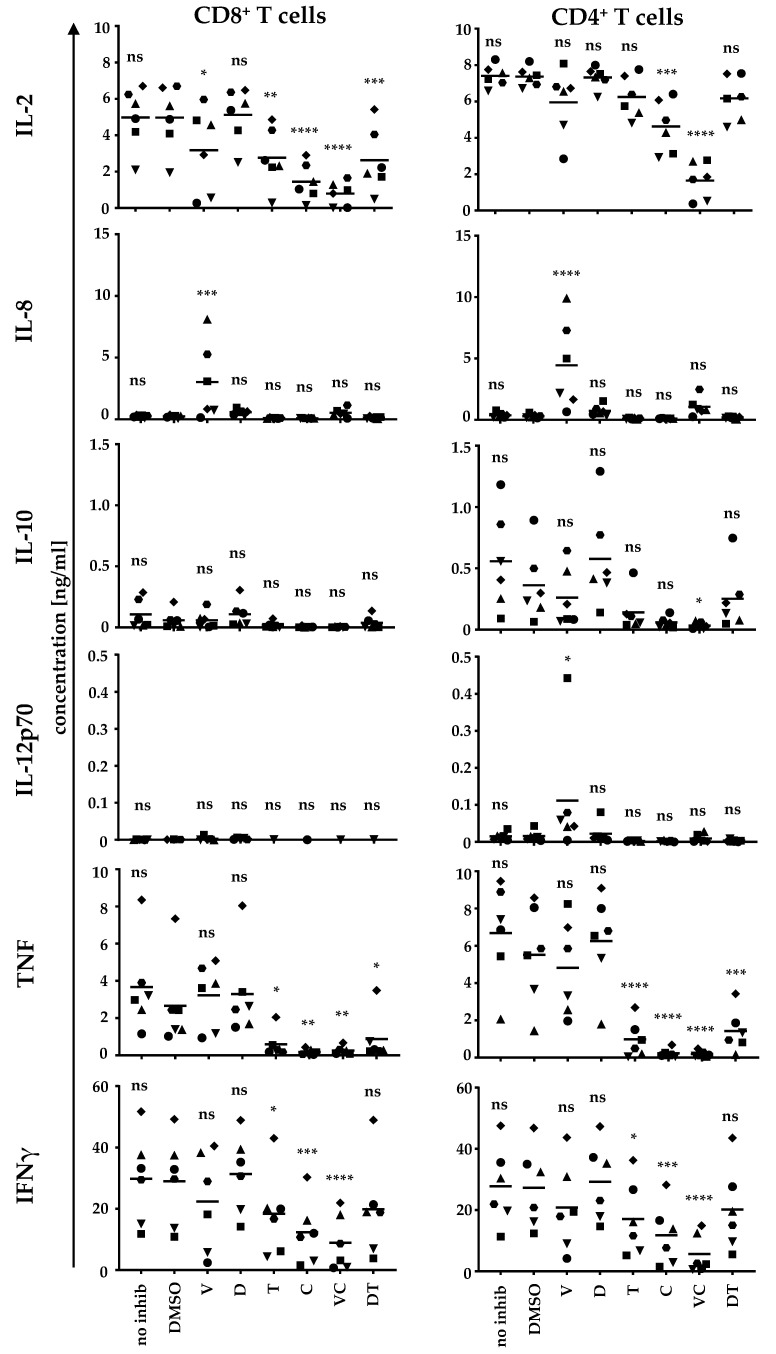
BRAF and MEK inhibitor (BRAFi/MEKi) combinations are currently the standard treatment for patients with BRAF mutant metastatic melanoma. Since the RAS/RAF/MEK/ERK-pathway is crucial for the function of different immune cells, we postulated an effect on their function and thus interference with anti-tumor immunity. Therefore, we examined the influence of BRAFi/MEKi, either as single agent or in combination, on the maturation of monocyte-derived dendritic cells (moDCs) and their interaction with T cells. DCs matured in the presence of vemurafenib or vemurafenib/cobimetinib altered their cytokine secretion and surface marker expression profile. Upon the antigen-specific stimulation of CD8 and CD4 T cells with these DCs or with T2.A1 cells in the presence of BRAFi/MEKi, we detected a lower expression of activation markers on and a lower cytokine secretion by these T cells. However, treatment with any of the inhibitors alone or in combination did not change the avidity of CD8 T cells in peptide titration assays with T2.A1 cells. T-helper cell/DC interaction is a bi-directional process that normally results in DC activation. Vemurafenib and vemurafenib/cobimetinib completely abolished the helper T-cell-mediated upregulation of CD70, CD80, and CD86 but not CD25 on the DCs. The combination of dabrafenib/trametinib affected DC maturation and activation as well as T-cell activation less than combined vemurafenib/cobimetinib did. Hence, for a potential combination with immunotherapy, our data indicate the superiority of dabrafenib/trametinib treatment.
BRAF 和 MEK 抑制剂(BRAFi/MEKi)联合治疗目前是 BRAF 突变转移性黑色素瘤患者的标准治疗方法。由于 RAS/RAF/MEK/ERK 通路对于不同免疫细胞的功能至关重要,我们推测它会对这些细胞的功能产生影响,从而干扰抗肿瘤免疫。因此,我们研究了 BRAFi/MEKi(单药或联合用药)对单核细胞来源的树突状细胞(moDC)成熟及其与 T 细胞相互作用的影响。在vemurafenib 或 vemurafenib/cobimetinib 存在的情况下成熟的 DC 改变了其细胞因子分泌和表面标记表达谱。在用这些 DC 或在 BRAFi/MEKi 存在的情况下用 T2.A1 细胞对 CD8 和 CD4 T 细胞进行抗原特异性刺激时,我们检测到这些 T 细胞上的激活标志物表达降低,细胞因子分泌减少。然而,用任何一种抑制剂单独或联合治疗都不会改变 CD8 T 细胞在 T2.A1 细胞肽滴定实验中的亲和力。辅助性 T 细胞/DC 相互作用是一个双向过程,通常导致 DC 激活。vemurafenib 和 vemurafenib/cobimetinib 完全抑制了辅助性 T 细胞介导的 CD70、CD80 和 CD86 的上调,但对 DC 上的 CD25 没有影响。dabrafenib/trametinib 的联合作用对 DC 成熟和激活以及 T 细胞激活的影响小于联合 vemurafenib/cobimetinib。因此,对于与免疫疗法的潜在联合治疗,我们的数据表明 dabrafenib/trametinib 治疗具有优越性。