Department of Geological Engineering, Faculty of Mining and Geology, VSB-Technical University of Ostrava, 17. listopadu 2172/15, 708 00 Ostrava Poruba, Czech Republic.
Department of Telecommunications, Faculty of Electrical Engineering and Computer Science, VSB-Technical University of Ostrava, 17. listopadu 2172/15, 708 00 Ostrava Poruba, Czech Republic.
Sensors (Basel). 2021 Oct 23;21(21):7027. doi: 10.3390/s21217027.
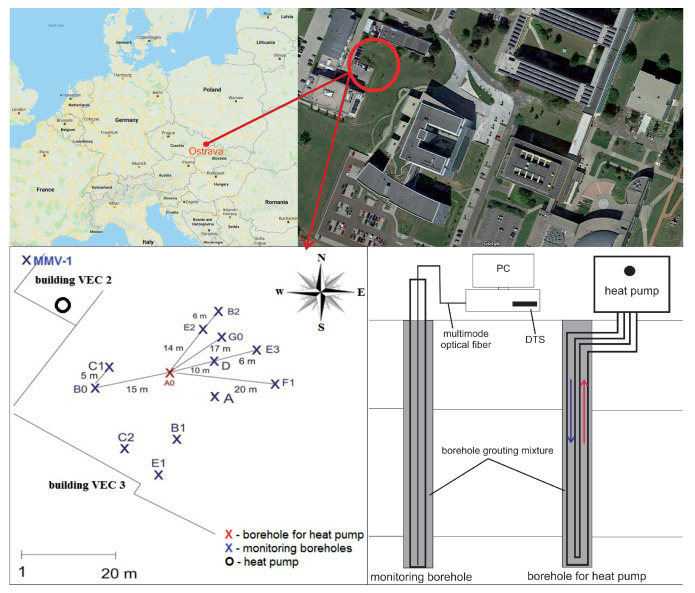
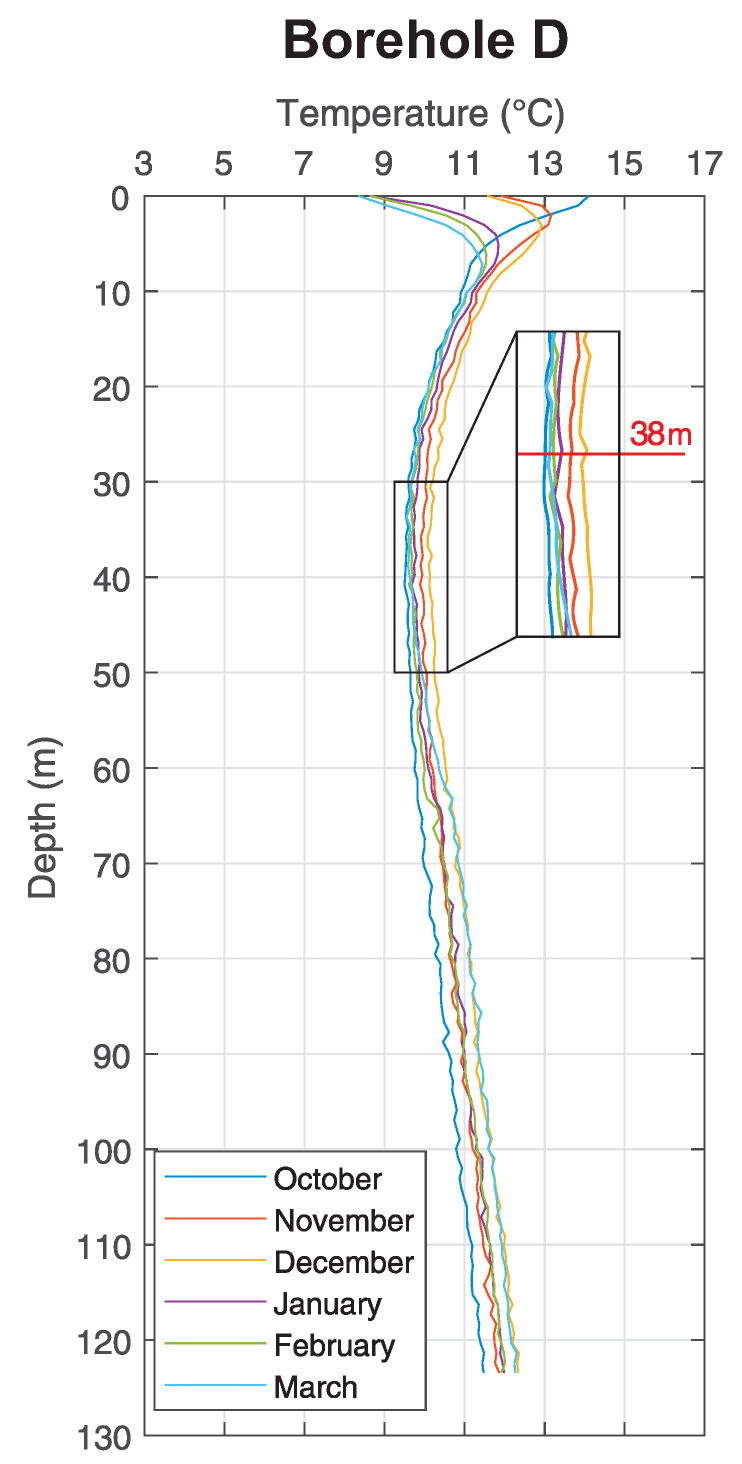
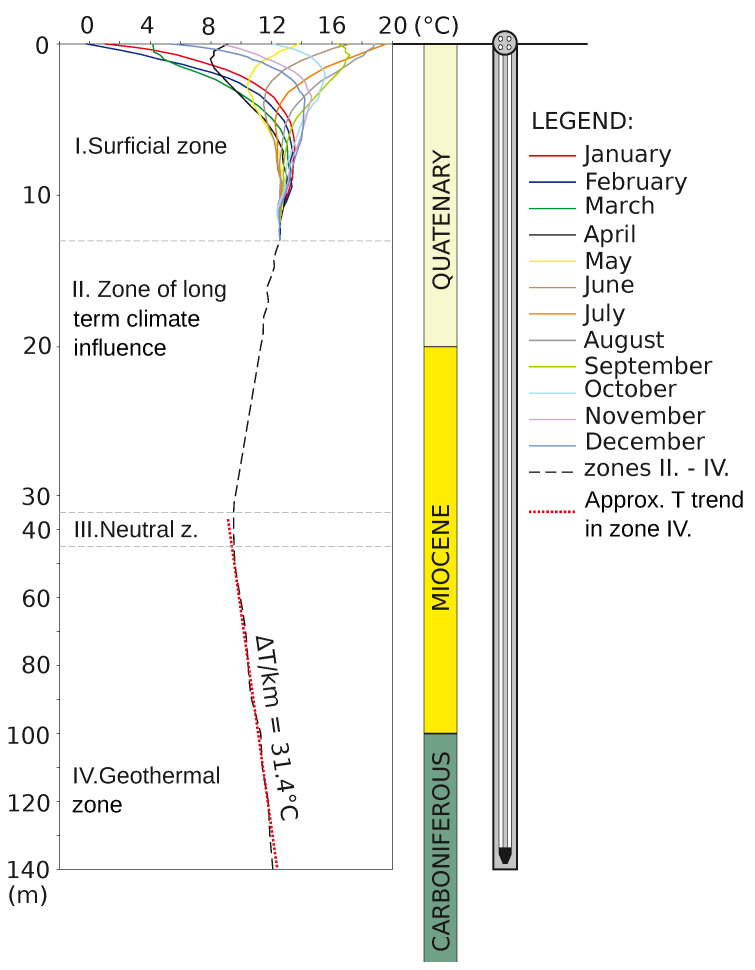
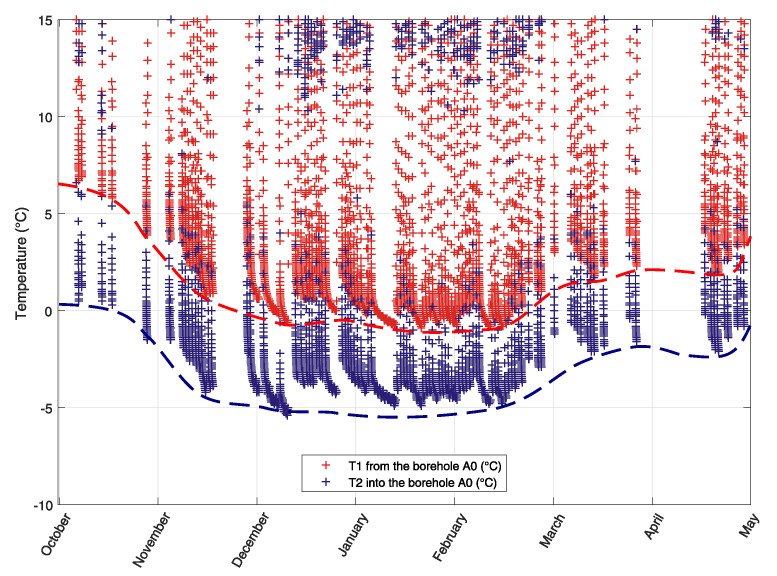
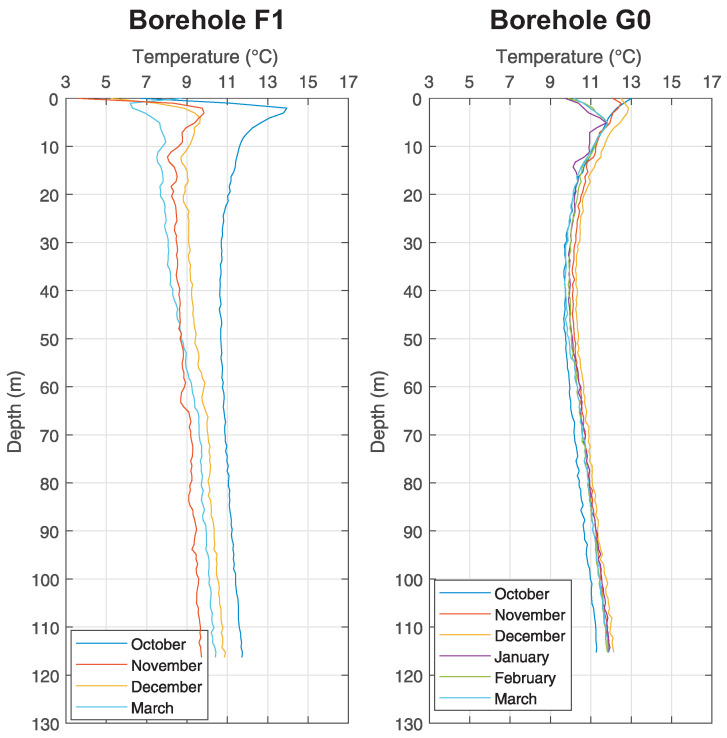
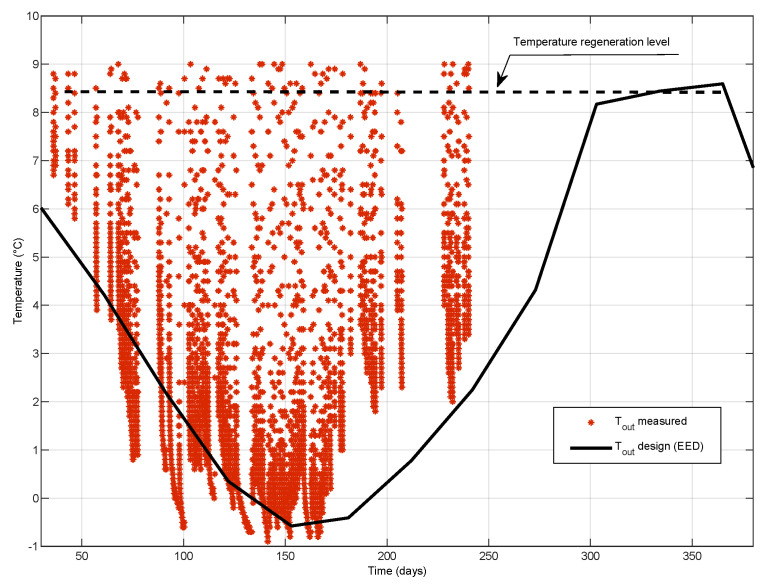
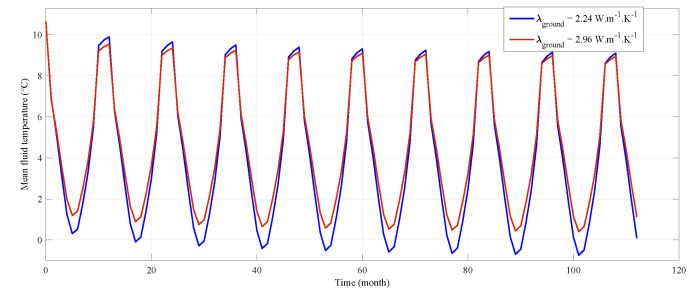
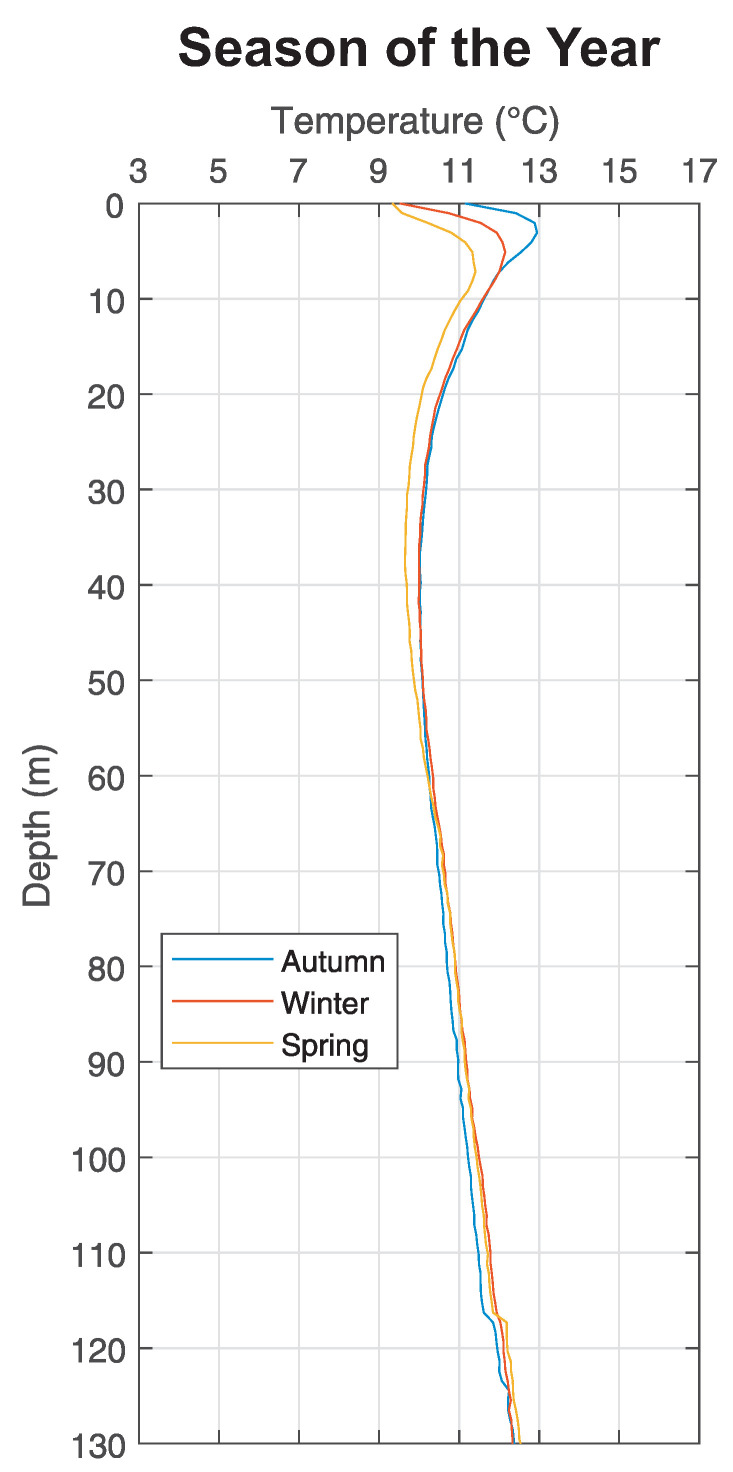
This research was undertaken to perform and evaluate the temperature measurement in the ground utilized as an energy source with the goal to determine whether significant temperature variations occur in the subsurface during the heating season. The research infrastructure situated on our University campus was used to assess any variations. The observations were made at the so called "Small Research Polygon" that consists of 8 monitoring boreholes (Borehole Heat Exchangers) situated around a borehole used as an energy source. During the heating season, a series of monthly measurements are made in the monitoring boreholes using a distributed temperature system (DTS). Raman back-scattered light is analysed using Optical Frequency Time Domain Reflectometry (OTDR). Our results indicate that no noticeable changes in temperature occur during the heating season. We have observed an influence of long-term variations of the atmospheric conditions up to the depth of a conventional BHE (≈100 m). The resulting uncertainty in related design input parameters (ground thermal conductivity) was evaluated by using a heat production simulation. Production data during one heating season at our research facilities were evaluated against the design of the system. It is possible to construct smaller geothermal installations with appropriate BHE design that will have a minimal impact on the temperature of the surrounding rock mass and the system performance.
本研究旨在对用作能源的地下温度进行测量和评估,目的是确定在供暖季节期间地下是否会发生显著的温度变化。我们利用位于大学校园的研究基础设施来评估任何变化。观测是在所谓的“小研究多边形”上进行的,该多边形由 8 个监测钻孔(钻孔换热器)组成,围绕一个用作能源的钻孔。在供暖季节,使用分布式温度系统(DTS)在监测钻孔中进行一系列每月测量。拉曼背向散射光使用光频域反射计(OTDR)进行分析。我们的结果表明,在供暖季节期间不会发生明显的温度变化。我们已经观察到大气条件的长期变化对常规 BHE(≈100 m)深度的影响。通过使用热产生模拟来评估相关设计输入参数(地面导热系数)的不确定性。利用我们研究设施的一个供暖季节的生产数据来评估系统的设计。可以构建具有适当 BHE 设计的较小地热装置,这将对周围岩体的温度和系统性能产生最小的影响。